
Former Service Members Seeking Discharge Upgrades Face Continued Challenges
Service members separated from the military without an honorable discharge have limited access to veterans’ benefits and may have trouble obtaining employment. Veterans who believe their discharge involved an error or injustice can apply to have review boards consider their case for a potential upgrade or clemency. Current and former Service members can also apply to have errors in their military records corrected.
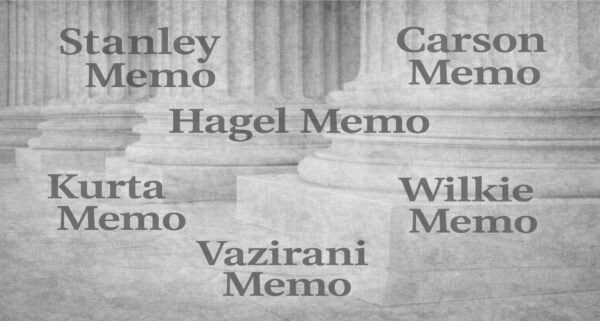
Since 2011, the Department of Defense has issued six guidance memoranda directing those review boards on how to conduct their review of these requests:
- The “Stanley Memo” (2011), on occasion of repeal of Don’t Ask, Don’t Tell, instructs boards to change discharge statuses, narrative reasons, and other derogatory information where veteran (1) discharged under DADT or prior policies and (2) no aggravating circumstances exist
- The “Hagel Memo” (2014) requiring the boards to take a trauma-informed “liberal consideration” approach when evaluating discharge upgrade requests from veterans with Post-Traumatic Stress Disorder (PTSD) and related conditions.
- The “Carson Memo” (2016) allows veterans with certain mental health conditions to apply to boards for correction no matter how long ago they were discharged, while also allowing previously-denied applicants to apply again with the benefit of the Hagel Memo.
- The “Kurta Memo” (2017) greatly expanded on the Hagel Memo “liberal consideration” standard and clarifies how PTSD, traumatic brain injury (TBI), military sexual trauma (MST) and other mental health conditions should be reviewed.
- The “Wilkie Memo” (2018) emphasized the importance of granting discharge upgrades to ensure fundamental fairness and required the boards to consider clemency and rehabilitation in their decision-making process
- The “Vazirani Memo” (2024) provided clarifying guidance regarding the application of “liberal consideration” in cases requesting correction in order to establish eligibility for medical retirement or medical separation benefits.
Despite more than a decade of these policy reforms, veterans still face inconsistent application of the standards referenced in these memoranda. For example, a 2025 GAO report found that discharge review boards and correction boards fail to apply “liberal consideration” consistently. Many veterans continue to experience delays, procedural errors, and unclear communication that can hinder access to benefits.
How Our Firm Can Help
We represent Service members, veterans, USPHS and NOAA officers, and federal employees nationwide in:
- Discharge upgrades
- BCMR/BCNR records corrections
- Federal adverse actions and MSPB appeals
- Security clearance and suitability issues
- Medical licensure and privileging disputes
If you believe your discharge or personnel records do not reflect the full story of your service, our attorneys can help you navigate the process and present the strongest possible case.
About the Law Offices of David P. Sheldon, PLLC
The Law Offices of David P. Sheldon, PLLC, based in Washington, D.C., represents military service members, federal employees, and uniformed officers nationwide. Our attorneys have decades of experience in military justice, administrative law, and defending the rights of those who serve. From courts-martial defense to correction of military records and retirement benefits appeals, we fight to ensure fairness and justice for every client.
Disclaimer
This article is for informational purposes only and does not constitute legal advice. Viewing this information does not create an attorney-client relationship.
Department of Defense Directory of Memorandums