
Speaking Truth to Command: Why Expanding Military Whistleblower Protections Is About More Than Reporting Misconduct
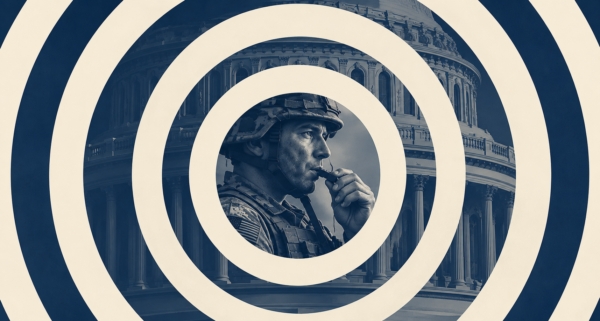
When a service member raises concerns about fraud, abuse, unsafe conditions, discrimination, or unlawful conduct, the expectation is simple: the military should investigate the problem, not punish the person who reported it. Yet for many men and women in uniform, experience has suggested otherwise. Careers have stalled, promotions have disappeared, leadership opportunities have vanished, and administrative actions have followed disclosures that were intended to protect the mission rather than undermine it.
The Senate’s proposed expansion of military whistleblower protections in this year’s National Defense Authorization Act (NDAA) is an acknowledgment that existing safeguards have not always achieved their intended purpose. While the legislation is still moving through the congressional process, it reflects a growing recognition that protecting those who report wrongdoing is essential to maintaining both military readiness and public confidence in the armed forces.
At its core, military whistleblower protection is governed by 10 U.S.C. § 1034, commonly known as the Military Whistleblower Protection Act. Unlike civilian federal employees, who rely on the federal Whistleblower Protection Act and an established administrative process, military members operate within a unique legal framework that balances constitutional authority, military discipline, and the chain of command. That balance has always been delicate.
The law allows service members to report violations of law, gross mismanagement, abuse of authority, substantial dangers to public health or safety, and other misconduct to members of Congress, Inspectors General, law enforcement agencies, or designated officials within the Department of Defense. In theory, retaliation for making those protected communications is prohibited.
In practice, retaliation is rarely obvious.
Very few commanders would openly admit that an officer or enlisted member is receiving a poor evaluation because they filed an Inspector General complaint or contacted Congress. Instead, retaliation often appears in far more subtle ways. A once-promising officer suddenly receives average performance reports. A senior noncommissioned officer is quietly removed from a leadership position. Promotion recommendations become less enthusiastic. Security clearance concerns emerge without warning. Administrative investigations begin to multiply. Individually, each action may appear legitimate. Collectively, they can permanently alter the trajectory of a military career.
That reality has long presented one of the greatest legal challenges in military whistleblower cases. The issue is seldom whether retaliation occurred in the ordinary sense of the word; rather, it is whether the service member can prove that an otherwise lawful personnel decision was actually motivated by a protected disclosure.
The Senate’s proposal appears designed to address some of these longstanding concerns by strengthening the legal framework surrounding military whistleblower complaints. Although the final language will likely evolve before passage, the direction is unmistakable: Congress is signaling that the existing system needs stronger safeguards and greater accountability.
If enacted, broader protections could expand the range of communications that qualify as protected disclosures while increasing oversight of adverse personnel actions that closely follow those reports. More importantly, the legislation could encourage investigators and reviewing authorities to ask a different question. Instead of focusing exclusively on whether a commander technically violated a statute, investigators may be asked to examine whether the adverse action would have occurred absent the protected disclosure itself.
That distinction is significant because retaliation rarely arrives wearing a name badge.
For military organizations, this discussion is about far more than employment rights. It is about institutional integrity. The military depend upon discipline and respect for the chain of command, but they also depend upon honesty. A culture that discourages reporting procurement fraud, medical safety concerns, leadership misconduct, or security failures ultimately weakens the very readiness that military discipline is intended to preserve. Effective organizations welcome accountability because accountability improves performance.
At the same time, stronger whistleblower protections should not be misunderstood as immunity from legitimate discipline. Service members remain subject to the Uniform Code of Military Justice, administrative regulations, and professional performance standards. Reporting misconduct does not shield an individual from accountability for unrelated performance deficiencies or violations of military law. Rather, these protections exist to ensure that lawful personnel actions are not used as a convenient pretext to punish those who have fulfilled their duty by reporting wrongdoing.
As attorneys, we have seen firsthand how difficult these cases can become. By the time a reprisal complaint is investigated, the damage is often already done. Promotion boards have met, assignments have changed, evaluations have become permanent records, and careers have taken a different direction. The legal process may eventually recognize that retaliation occurred, but restoring lost opportunities is often far more difficult than preventing retaliation in the first place.
“The strength of our military depends not only on discipline, but on the courage of service members who are willing to report misconduct when they see it. Whistleblower protections should ensure that truthfulness is rewarded, not punished, and that careers are judged on merit rather than retaliation.” David P. Sheldon
Ultimately, the Senate’s proposal should be viewed as more than another amendment to the National Defense Authorization Act. It represents an opportunity to reinforce a principle that is fundamental to military service: loyalty to the Constitution and the rule of law sometimes requires the courage to speak when remaining silent would be easier.
Whether these reforms succeed will not be measured by the number of pages added to the United States Code. They will be measured by whether a young lieutenant, a senior chief, or a field grade officer can report misconduct with confidence that integrity will not become a career-ending decision. The law can prohibit retaliation, but only a culture of accountability can truly eliminate it. If Congress intends to strengthen military whistleblower protections, the ultimate goal should not simply be more investigations; it should be restoring confidence that doing the right thing will never be treated as doing the wrong thing.
Disclaimer
This article is intended for informational purposes only and does not constitute legal advice or create an attorney-client relationship. Every case is fact-specific, and readers should consult qualified counsel regarding their individual circumstances.
About the Law Offices of David P. Sheldon, PLLC
The Law Offices of David P. Sheldon, PLLC, represents military service members, veterans, federal employees, USPHS Commissioned Corps officers, NOAA Corps officers, and other uniformed professionals in administrative, disciplinary, appellate, and federal litigation matters, including whistleblower retaliation claims, correction boards, medical boards, security clearances, and military justice proceedings.