
Why Retired JAGs Are Warning Against Mission Creep
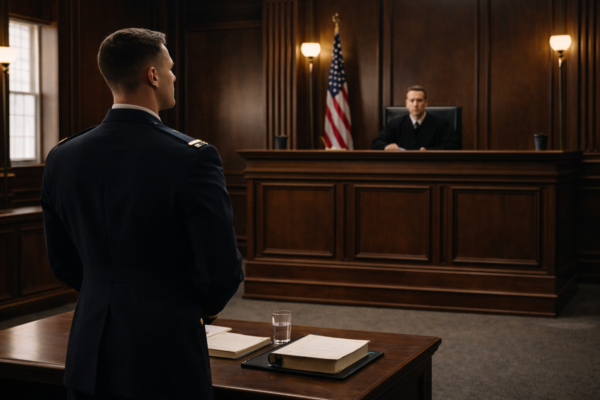
Across generations of American law, one principle has remained remarkably consistent: the military does not enforce civilian law.
It is a boundary rooted in the Constitution, reinforced by statute, and preserved by professional norms within the armed forces. When retired Judge Advocates raise concerns that military lawyers are being reassigned to prosecute non-military offenses, they are not simply debating bureaucratic policy. They are warning about the erosion of a structural safeguard in American democracy.
Their concerns deserve careful attention.
The Traditional Role of the JAG Corps
Judge Advocates occupy a unique position in the American legal system. They serve simultaneously as commissioned officers and attorneys bound by professional ethical obligations. Their responsibilities historically center on advising commanders on military operations and the law of armed conflict, prosecuting and defending cases under the Uniform Code of Military Justice, and protecting the legal rights of service members.
The JAG Corps exists to serve the military justice system. Its core purpose is to support commanders and ensure the fair administration of justice for those serving in uniform.
The Uniform Code of Military Justice reflects that limited jurisdiction. In most circumstances it governs service members, reservists on active duty, and in rare circumstances civilians accompanying forces during wartime. It does not serve as a vehicle for prosecuting ordinary civilian crimes.
Expanding the role of military lawyers beyond that framework raises fundamental legal and constitutional questions.
The Legal Boundary Between Military and Civilian Law Enforcement
At the center of this debate lies one of the most important but frequently misunderstood statutes in American law: the Posse Comitatus Act.
Passed in 1878, the law restricts the use of federal military forces in civilian law enforcement unless expressly authorized by Congress or the Constitution. The statute reflects a deep historical concern about the dangers of military power being used to enforce domestic law.
The United States has traditionally maintained a clear division between military authority and civilian policing. While the military may provide logistical support or technical assistance to civilian agencies in certain circumstances, direct law enforcement functions have historically remained outside its mission.
This separation protects both institutions. Civilian law enforcement remains accountable to civilian courts and communities, while the military remains focused on national defense.
When military lawyers are reassigned to prosecute civilian cases, the line between these two systems begins to blur.
A Legal Gray Area
The legal picture becomes more complicated when military attorneys are temporarily detailed to civilian agencies.
For decades, some Judge Advocates have served as Special Assistant U.S. Attorneys for cases involving crimes committed on military installations or involving service members. Congress eventually authorized such arrangements after concerns arose that these assignments might otherwise conflict with statutory restrictions on military involvement in civilian law enforcement.
But critics argue that current proposals extend far beyond those limited exceptions.
When military attorneys are assigned to prosecute purely civilian crimes or adjudicate immigration matters unrelated to military service, the connection to military jurisdiction becomes increasingly difficult to justify. Even where legal technicalities may allow such assignments, critics warn that the broader constitutional principles behind the Posse Comitatus Act are being stretched.
This is the concern often described as mission creep.
Why Former JAGs Are Speaking Out
Retired Judge Advocates rarely enter public policy debates without serious cause. Their warnings in this context reflect institutional concerns developed through decades of experience inside the military justice system.
Their objections generally fall into three areas.
Civilian Justice Should Remain Civilian
The American legal system is structured around civilian courts enforcing civilian laws. When military officers begin prosecuting ordinary crimes or participating in civilian adjudication, that structural distinction begins to erode.
Even if legally authorized under narrow exceptions, the perception of military involvement in domestic law enforcement can undermine public trust in both institutions.
Military Readiness and Legal Expertise
Judge Advocates already carry significant responsibilities inside the armed forces. They advise commanders on operational law, train troops on legal compliance during military operations, and manage complex court-martial litigation.
Diverting those attorneys into civilian prosecutions risks weakening the military justice system itself.
Civil–Military Balance
Perhaps the most significant concern raised by former military lawyers is constitutional.
American democracy has long guarded against the militarization of domestic governance. The separation between civilian authority and military power protects both the legitimacy of the armed forces and the independence of civilian legal institutions.
The military’s legitimacy depends in part on remaining outside the political and prosecutorial functions of civilian government.
When those roles begin to overlap, even for administrative convenience, the balance that has existed for generations becomes less certain.
A Question of Prudence
Even if some uses of military attorneys could be justified under statutory exceptions or temporary assignments, legality alone does not resolve the question.
The deeper issue is institutional prudence.
Should the military justice system be used to supplement civilian prosecutorial resources?
History suggests caution.
The legal framework that separates military authority from civilian law enforcement did not arise accidentally. It developed through experience and through deliberate legislative choices meant to prevent the concentration of power in military institutions.
Retired Judge Advocates raising concerns today are drawing on that history.
Their warning is not merely about statutory interpretation. It is about protecting the integrity of both the military justice system and civilian courts.
The Stakes for Service Members
For service members themselves, the issue carries additional significance.
Judge Advocates serve as both prosecutors and defenders within the military justice system. They advise commanders, protect the rights of the accused, and ensure that the UCMJ is applied fairly.
If those legal professionals are increasingly diverted into civilian enforcement roles, the system designed to safeguard service members could face resource pressures that weaken its effectiveness.
Military justice exists to ensure fairness and discipline within the armed forces. Diluting that mission risks unintended consequences for those who serve.
A Line Worth Defending
For more than a century, American law has drawn a careful line between military power and civilian law enforcement.
The Posse Comitatus Act, the Uniform Code of Military Justice, and the traditions of the Judge Advocate General’s Corps all reflect the same principle: the military defends the nation, while civilian institutions enforce the law.
When those roles begin to merge, even for practical reasons, the implications extend beyond administrative convenience.
They touch on the balance between military authority and civilian governance that defines the American constitutional system.
That is why retired Judge Advocates are raising concerns.
And why policymakers would be wise to consider the warning carefully.
References and Citations
Stars and Stripes. “Retired JAGs Question Use of Military Lawyers to Prosecute Non-Military Crimes.” March 10, 2026.
Posse Comitatus Act, 18 U.S.C. § 1385.
Uniform Code of Military Justice, 10 U.S.C. §§ 801–946.
U.S. Department of Defense Directive 5525.5, DoD Cooperation with Civilian Law Enforcement Officials.
Brennan Center for Justice. “The Posse Comitatus Act Explained.”
National Immigration Law Center. “FAQ on the Use of the Military for Immigration Enforcement.”
American Immigration Council. “Military Lawyers Serving as Immigration Judges: Legal Concerns.”
U.S. Supreme Court. Solorio v. United States, 483 U.S. 435 (1987).
U.S. Supreme Court. Reid v. Covert, 354 U.S. 1 (1957).
Disclaimer
This article is provided for informational and commentary purposes only and does not constitute legal advice. The opinions expressed are intended to contribute to discussion on issues affecting military justice, civil-military relations, and the rights of those who serve. Individuals seeking legal advice should consult a qualified attorney regarding their specific circumstances.
About the Law Offices of David P. Sheldon, PLLC
The Law Offices of David P. Sheldon, PLLC, based in Washington, DC, represents service members, veterans, and federal employees worldwide in matters involving military justice, security clearance defense, administrative boards, federal employment law, and constitutional rights. The firm advocates for those who serve the nation in uniform and in federal service.