
Why Service Members Must Take Control of Their Discharge Story Before It’s Too Late
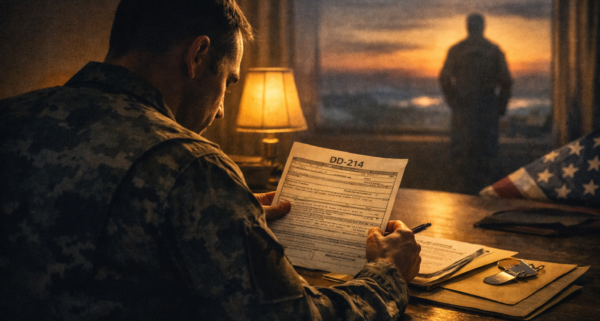
When a service member leaves the military, the final paperwork does more than close a chapter, it defines what comes next. Benefits, healthcare, employment, dignity, and recognition of sacrifice all hinge on what is written, or omitted, in those final records.
A 2025 report by the U.S. Government Accountability Office makes one thing clear: the system designed to review and correct discharge decisions is inconsistent, often unclear, and heavily dependent on documentation that may never have been properly recorded in the first place.
That reality places a burden where it should never have been, on the service member to ensure their story is preserved before separation.
A System Built on Records—Even When Records Are Incomplete
The military discharge process is not simply administrative. It is evidentiary.
According to GAO-25-107354, service members who receive anything less than an honorable discharge may face lasting barriers to employment, healthcare, and earned benefits.
While review boards exist to correct injustices, the GAO found:
- Inconsistent application of standards across branches
- Uneven consideration of PTSD, TBI, and military sexual trauma
- Limited explanation of decisions
- Delays and unpredictable timelines
Between 2018 and 2024, more than 21,000 discharge upgrade cases were reviewed, with approval rates ranging widely from 18% to 49%.
This is not just a gap in process. It is a gap in certainty.
The Most Dangerous Gap: What Never Gets Documented
For many service members, the greatest risk is not what happened in service, but what was never written down.
Injury is minimized. Symptoms are pushed aside. Trauma is endured silently.
But discharge boards rely heavily on existing documentation, service treatment records, personnel files, and VA records. If those records are incomplete, the system rarely fills in the gaps.
That means:
- Late diagnoses carry less weight
- Personal statements may be discounted without corroboration
- Behavioral issues tied to trauma may be judged without context
Your record becomes your voice. And silence in that record can follow you for decades.
Your Rights in the Discharge Process
- The Right to Accurate Medical Documentation
You have the right to seek medical evaluation and ensure all conditions are documented before separation.
This includes:
- Physical injuries
- Mental health conditions such as PTSD or anxiety
- Chronic or recurring pain
Without documentation, these conditions may not be considered later, even if they are service-related.
- The Right to Raise Contributing Conditions
Department of Defense policy requires “liberal consideration” for cases involving trauma or mental health.
But the GAO found this standard is not consistently applied.
That means you must:
- Document the condition
- Connect it clearly to service
- Ensure it is reflected in your official records
- The Right to Access and Retain Your Records
Before separation, every service member should obtain:
- DD Form 214 (review carefully before signing)
- Complete service treatment records
- Full personnel file
Do not assume these records will be preserved accurately or be easy to retrieve later.
- The Right to Challenge an Unjust Discharge
You may apply to:
- Discharge Review Boards (within 15 years)
- Boards for Correction of Military Records
But GAO findings confirm:
- Outcomes vary widely
- Timelines are inconsistent
- Decisions are not always clearly explained
Correction is possible, but it is not predictable.
The Reality: Build Your Record Before You Need It
The lesson is simple, and urgent:
Do not wait.
Document injuries. Report symptoms. Request evaluations. Review your records.
Because once you leave service, you are no longer building your record, you are trying to overcome it.
And the system does not make that easy.
Every service member carries a story of service and sacrifice.
But the system does not preserve stories. It preserves records.
And in the end, it is the record, not the memory, that determines what comes next.
About the Law Offices of David P. Sheldon, PLLC
The Law Offices of David P. Sheldon, PLLC, based in Washington, DC, represents military service members, veterans, and federal employees worldwide. The firm focuses on military justice, discharge upgrades, medical retirement, security clearance defense, and federal employment rights, advocating for those who serve.
Disclaimer
This article is for informational purposes only and does not constitute legal advice. Each case is unique, and individuals should consult qualified legal counsel regarding their specific circumstances.