
After Years of Legal Barriers, Client Secures Critical Breakthrough in Mandamus Fight to Restore Full Appellate Review

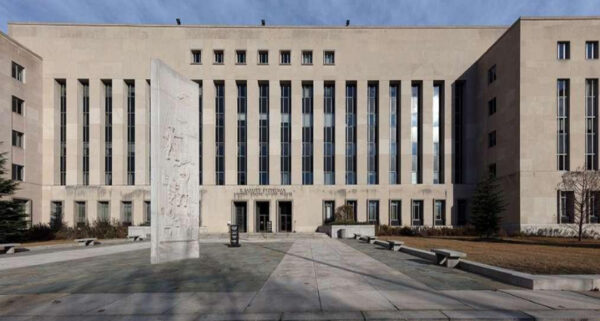
DC Barrett Perryman Courthouse

In a case defined by extraordinary perseverance and complex jurisdictional obstacles, a former Guantanamo detainee represented by Senior Military Defense Attorney Annie W. Morgan of the Law Offices of David P. Sheldon, PLLC, has taken a major step forward in the effort to secure the full measure of appellate review guaranteed under federal law.

For more than a decade, the client has fought, often against procedural roadblocks not of their own making, to obtain a lawful review of their conviction by the United States Court of Military Commission Review (USCMCR), as required under 10 U.S.C. § 950f(d). Despite years of delay, shifting interpretations of waiver rules, repeated abeyances, and a novel assertion of the fugitive disentitlement doctrine, the client has refused to abandon the pursuit of lawful, congressionally mandated review.

Today’s development underscores one truth: the client’s courage, resilience, and insistence on the rule of law have kept this case alive when institutions failed to act.

A Story of Unusual Persistence in the Face of Systemic Delay

The client’s path to justice has been anything but direct. Though Congress established mandatory appellate review for military commission cases, the procedural history of this matter has been marked by:

  • Multiple delays and long periods of abeyance at the USCMCR
  • Government-created procedural roadblocks to obtain the record necessary for appeal, requiring mandamus intervention
  • A eventual dismissal based on the fugitive disentitlement doctrine, despite the client’s transfer being conducted under a formal diplomatic agreement—not flight, evasion, or refusal to appear and client remaining subject to lawful extradition

At every stage, the client remained steadfast. At every barrier, the client continued to assert the right Congress guarantees.

“This case has always been about ensuring that the Rule of Law is honored,” said Annie Morgan. “Our client has shown extraordinary strength in the face of procedural obstacles that should never have occurred. Their resilience is the reason we are still moving forward. And we will continue to fight until the statutory right to review is finally fulfilled.”

Why This Case Matters

This fight extends well beyond a single appeal. At its core, it speaks to:

  • The long-standing brokenness of the military commissions systems;
  • The duty of tribunals to exercise the jurisdiction Congress mandates; and
  • The fundamental principle that no person, no matter the forum, should lose their rights due to administrative delay or misapplied doctrine.

Congress was explicit:
The USCMCR “shall review the record in each case submitted to it.” (10 U.S.C. § 950f(d)).

When agencies fail to act, the courts must intervene. That is the purpose of mandamus—and the reason this client’s fight continues.

ABOUT THE LAW OFFICES OF DAVID P. SHELDON, PLLC

The Law Offices of David P. Sheldon, PLLC is a premier national practice focused on military law, federal employment, veteran’s rights, and the defense of service members across all uniformed services. Our team litigates before military commissions, federal courts, the Board for Correction of Military Records, the MSPB, and agencies across the United States. We are committed to protecting those who serve.

DISCLAIMER

This press release provides general information regarding ongoing litigation and does not offer legal advice. No confidential client details have been disclosed. Past results do not guarantee future outcomes.

 

Government Pushes Reconsideration in Airman’s Landmark Reversal- Defense Holds Ground

Montana Air

Government Pushes Reconsideration in Airman’s Landmark Reversal — Defense Holds Ground

Just weeks after the Court of Appeals for the Armed Forces (CAAF) issued a unanimous ruling overturning the wrongful conviction of Senior Airman whose life was derailed by withheld evidence, the government is attempting to roll back the decision.

On September 15, 2025, the CAAF found that prosecutors violated Brady v. Maryland by withholding exculpatory evidence and destroying investigative files, ultimately denying SrA Bryce Roan a fair trial. That ruling restored his rank, pay, and dignity after years of injustice.

Now, the Air Force Government Trial and Appellate Division has filed a Petition for Reconsideration, arguing that the Court overlooked evidence and that the exoneration was premature.

The Government’s Position

In its October 8 reply, the government contends that SrA Roan “failed to show” any admissible proof that dimethylhexylamine (DMHA), the ingredient found in the pre-workout powder central to the case, could cause a false positive for cocaine. The brief dismisses the cumulative evidence recognized by the Court, claiming the “missing link” in Roan’s defense is scientific proof and that no witness could testify that DMHA could trigger such a false reading.

The government further asserts that because Roan’s roommate, SSgt N.W., did not use the DMHA defense after being granted a continuance in his own trial, the theory lacks credibility, arguing that if the defense were viable, it would have been used then.

The Defense Fires Back

In a powerful response filed October 6, the defense team led by Senior Military Defense Attorney Annie W. Morgan, rejected the government’s attempt to relitigate settled law.  She argued that the request for reconsideration was nothing more than “a refusal to accept accountability,” emphasizing that Supreme Court precedent requires courts to assess all suppressed evidence cumulatively, not isolate it piecemeal.

“Reconsideration is not a second bite at the apple,” the defense brief stated. “It is an audacious attempt to recast accountability as error.”

The defense brief reaffirms that the withheld evidence, including destroyed files, undisclosed interviews, and internal Air Force communications that stripped Roan of the ability to raise an innocent ingestion defense. The filing underscores that it was government misconduct, not defense deficiency, that created the evidentiary gap the government claims was overlooked.

“Having failed to disclose, failed to preserve, and failed to confront its obligations,” wrote, “the Government now faults this Court for holding it accountable.”

What’s Next

With both sides’ briefs now before the CAAF, the nation’s highest military court will determine whether to grant reconsideration or stand by its unanimous ruling. For SrA Roan, the case is about more than legal precedent, it’s about reclaiming a life and career nearly lost to bureaucratic indifference and prosecutorial overreach.

About the Law Offices of David P. Sheldon, PLLC

The Law Offices of David P. Sheldon, PLLC, based in Washington, D.C., is a leading firm representing service members, federal employees, and veterans before military and federal courts. The firm is nationally recognized for its work defending those whose rights and careers have been jeopardized by unjust actions within the military justice system.

Disclaimer

This release is for informational purposes only and does not constitute legal advice. Past results do not guarantee similar outcomes.