Speaking Truth to Command: Why Expanding Military Whistleblower Protections Is About More Than Reporting Misconduct

Congress to Strengthen Whistleblower Protections for Military Personnel

When a service member raises concerns about fraud, abuse, unsafe conditions, discrimination, or unlawful conduct, the expectation is simple: the military should investigate the problem, not punish the person who reported it. Yet for many men and women in uniform, experience has suggested otherwise. Careers have stalled, promotions have disappeared, leadership opportunities have vanished, and administrative actions have followed disclosures that were intended to protect the mission rather than undermine it.

The Senate’s proposed expansion of military whistleblower protections in this year’s National Defense Authorization Act (NDAA) is an acknowledgment that existing safeguards have not always achieved their intended purpose. While the legislation is still moving through the congressional process, it reflects a growing recognition that protecting those who report wrongdoing is essential to maintaining both military readiness and public confidence in the armed forces.

At its core, military whistleblower protection is governed by 10 U.S.C. § 1034, commonly known as the Military Whistleblower Protection Act. Unlike civilian federal employees, who rely on the federal Whistleblower Protection Act and an established administrative process, military members operate within a unique legal framework that balances constitutional authority, military discipline, and the chain of command. That balance has always been delicate.

The law allows service members to report violations of law, gross mismanagement, abuse of authority, substantial dangers to public health or safety, and other misconduct to members of Congress, Inspectors General, law enforcement agencies, or designated officials within the Department of Defense. In theory, retaliation for making those protected communications is prohibited.

In practice, retaliation is rarely obvious.

Very few commanders would openly admit that an officer or enlisted member is receiving a poor evaluation because they filed an Inspector General complaint or contacted Congress. Instead, retaliation often appears in far more subtle ways. A once-promising officer suddenly receives average performance reports. A senior noncommissioned officer is quietly removed from a leadership position. Promotion recommendations become less enthusiastic. Security clearance concerns emerge without warning. Administrative investigations begin to multiply. Individually, each action may appear legitimate. Collectively, they can permanently alter the trajectory of a military career.

That reality has long presented one of the greatest legal challenges in military whistleblower cases. The issue is seldom whether retaliation occurred in the ordinary sense of the word; rather, it is whether the service member can prove that an otherwise lawful personnel decision was actually motivated by a protected disclosure.

The Senate’s proposal appears designed to address some of these longstanding concerns by strengthening the legal framework surrounding military whistleblower complaints. Although the final language will likely evolve before passage, the direction is unmistakable: Congress is signaling that the existing system needs stronger safeguards and greater accountability.

If enacted, broader protections could expand the range of communications that qualify as protected disclosures while increasing oversight of adverse personnel actions that closely follow those reports. More importantly, the legislation could encourage investigators and reviewing authorities to ask a different question. Instead of focusing exclusively on whether a commander technically violated a statute, investigators may be asked to examine whether the adverse action would have occurred absent the protected disclosure itself.

That distinction is significant because retaliation rarely arrives wearing a name badge.

For military organizations, this discussion is about far more than employment rights. It is about institutional integrity. The military depend upon discipline and respect for the chain of command, but they also depend upon honesty. A culture that discourages reporting procurement fraud, medical safety concerns, leadership misconduct, or security failures ultimately weakens the very readiness that military discipline is intended to preserve. Effective organizations welcome accountability because accountability improves performance.

At the same time, stronger whistleblower protections should not be misunderstood as immunity from legitimate discipline. Service members remain subject to the Uniform Code of Military Justice, administrative regulations, and professional performance standards. Reporting misconduct does not shield an individual from accountability for unrelated performance deficiencies or violations of military law. Rather, these protections exist to ensure that lawful personnel actions are not used as a convenient pretext to punish those who have fulfilled their duty by reporting wrongdoing.

As attorneys, we have seen firsthand how difficult these cases can become. By the time a reprisal complaint is investigated, the damage is often already done. Promotion boards have met, assignments have changed, evaluations have become permanent records, and careers have taken a different direction. The legal process may eventually recognize that retaliation occurred, but restoring lost opportunities is often far more difficult than preventing retaliation in the first place.

“The strength of our military depends not only on discipline, but on the courage of service members who are willing to report misconduct when they see it. Whistleblower protections should ensure that truthfulness is rewarded, not punished, and that careers are judged on merit rather than retaliation.” David P. Sheldon

Ultimately, the Senate’s proposal should be viewed as more than another amendment to the National Defense Authorization Act. It represents an opportunity to reinforce a principle that is fundamental to military service: loyalty to the Constitution and the rule of law sometimes requires the courage to speak when remaining silent would be easier.

Whether these reforms succeed will not be measured by the number of pages added to the United States Code. They will be measured by whether a young lieutenant, a senior chief, or a field grade officer can report misconduct with confidence that integrity will not become a career-ending decision. The law can prohibit retaliation, but only a culture of accountability can truly eliminate it. If Congress intends to strengthen military whistleblower protections, the ultimate goal should not simply be more investigations; it should be restoring confidence that doing the right thing will never be treated as doing the wrong thing.

Disclaimer

This article is intended for informational purposes only and does not constitute legal advice or create an attorney-client relationship. Every case is fact-specific, and readers should consult qualified counsel regarding their individual circumstances.

About the Law Offices of David P. Sheldon, PLLC

The Law Offices of David P. Sheldon, PLLC, represents military service members, veterans, federal employees, USPHS Commissioned Corps officers, NOAA Corps officers, and other uniformed professionals in administrative, disciplinary, appellate, and federal litigation matters, including whistleblower retaliation claims, correction boards, medical boards, security clearances, and military justice proceedings.


“Our Pay Is Earned, Not Optional”: USPHS Retirees Take Legal Action Against U.S. Government

USPHS Retirees File for Retiree Benefits and Backpay

U.S. Public Health Service Retirees File Class Action Against the United States Over Unpaid Retirement Benefits During Shutdown.

Case Memorandum and Filing

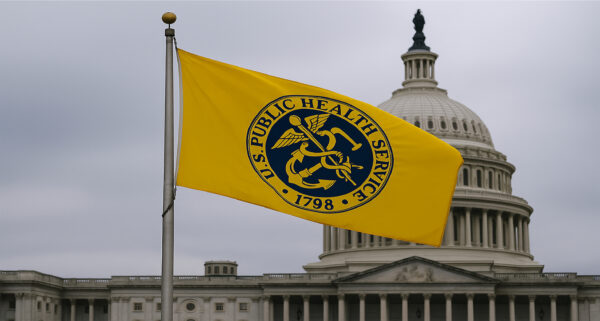
WASHINGTON, D.C. — The Law Offices of David P. Sheldon, PLLC has filed a class action lawsuit in the U.S. Court of Federal Claims on behalf of retired officers of the U.S. Public Health Service (USPHS) whose retirement pay has been withheld during the ongoing government shutdown.

Filed on November 10, 2025, the Complaint asserts that the U.S. Government violated federal statutes that mandate monthly retired pay to USPHS officers. The suit, Commander William Michael Futch, et.al v. United States (Case No. 25-1915 C), seeks certification as a class action under Rule 23 of the Rules of the Court of Federal Claims (RCFC 23) and requests that the Court compel the United States to pay all withheld retired pay and future payments owed under 42 U.S.C. § 212.

“Retired officers of the U.S. Public Health Service have served this nation with distinction, many in hospitals, prisons, and public health emergencies,” said David P. Sheldon, founder of the firm. “Their earned retirement pay is not discretionary. It is guaranteed by law. The government’s refusal to pay them during the shutdown is both unlawful and unjust.”

The case is assigned to Judge Elaine D. Kaplan, former Chief Judge of the Court of Federal Claims and former Acting Director of the U.S. Office of Personnel Management. Judge Kaplan will determine whether to certify the matter as a class action and oversee subsequent notice to eligible class members.

If the Court certifies the class, all USPHS retirees who were not paid, during the current shutdown will be eligible to opt in as members. Once certified, the Court, not the firm, will oversee how class notices are issued, how members join, and how any settlement or judgment is distributed.

The Complaint invokes the Tucker Act (28 U.S.C. § 1491) and the Equal Access to Justice Act (28 U.S.C. § 2412), arguing that USPHS retirement statutes are money-mandating and require the United States to pay monthly retired pay regardless of appropriations lapses.

Next Steps for Potential Class Members

Potential class members—including all retired USPHS officers and eligible survivors—should:

  • Review the memorandum outlining the filing and court process.
  • Monitor communications for the Court’s certification and official notice.
  • Be prepared to opt in following Court instructions once notice is issued.
  • Direct questions or participation inquiries to class.action@militarydefense.com.

About the Law Offices of David P. Sheldon, PLLC

Based in Washington, D.C., The Law Offices of David P. Sheldon, PLLC represents members of the armed forces and all of the nation’s uniformed services in complex military and federal employment matters. The firm’s attorneys litigate before the U.S. Court of Federal Claims, Boards for Correction of Military Records, and federal appellate courts, advocating for the rights of service members, retirees, and federal employees nationwide.

📞 Media Contact:
Law Offices of David P. Sheldon, PLLC
100 M Street SE, Suite 600 | Washington, DC 20003
📧 class.action@militarydefense.com 📞 202-546-9575
🌐 www.militarydefense.com

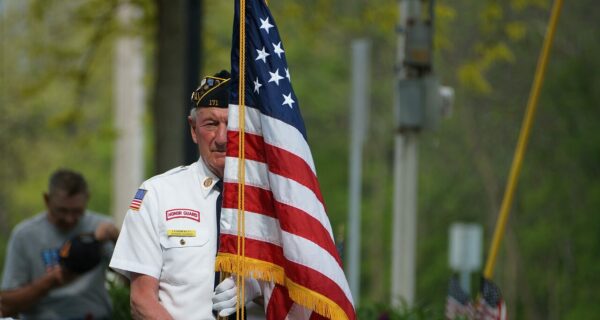
Honoring Every American Who Has Worn the Uniform —This Veterans Day, We Stand With You

Honor Veterans

On Veterans Day, we reflect on more than flags, parades or ceremony. We remember the

promise made by every man and woman who raised their right hand and said: “I will serve.”


From the boots on the ground to the officers and enlisted in the skies, from those on active duty

today to those who served decades ago, across the Army, Navy, Air Force, Marine Corps,

Space Force, Coast Guard, the Commissioned Corps of the United State Public Health Service

and those who serve in the National Oceanic Atmospheric Agency, those who serve in

uniforms carry our nation’s trust forward.


At the Law Offices of David P. Sheldon, PLLC, we’re honored to represent federal employees,

uniformed service members, veterans, and their families. We see every day the sacrifices that

accompany service — the hours away from home, the deployments, the weight of responsibility,

and the toll it takes on families.


And yet, for too many of our uniformed service members, including officers in the United States

Public Health Service Commissioned Corps (USPHS) and National Oceanic and Atmospheric

Administration Commissioned Officer Corps (NOAA Corps) that promise of service is coupled

with a broken promise of retirement. The fact is: they answered the call. They upheld the oath.

They trusted the system. And too often, they find themselves held back from full retirement

benefits.


That’s why we have launched our class-action effort, to make USPHS and NOAA retirees whole.

Because respect for service does not end when the uniform comes off. Respect must extend to

the benefits earned, the years of commitment kept.


This Veterans Day, let’s do more than say “thank you.”


Let’s act. Let’s honor the oath. Let’s secure dignity in retirement for those who stood watch for

our country and our communities.


If you are a uniformed service member — current, former, or transitioning — and believe your

retirement benefits have been delayed, withheld or mis-administered, now is the time to reach

out. Secure your voice. Join the effort.


From all of us at the Law Offices of David P. Sheldon, PLLC: Thank you for your service. We

honor you. We advocate for you. And we remain committed to holding the promise of retirement

true — because you kept your promise of service.  Let’s ensure your service is honored — not just with words, but with justice.


About Us:

The Law Offices of David P. Sheldon, PLLC represents federal employees, uniformed service

members, veterans, and their families across matters including disability retirement, military

justice, whistleblower relief, and class-action benefits litigation. This communication is for

informational purposes only and does not constitute legal advice. Please consult an attorney

before making decisions regarding your legal rights.

Government Pushes Reconsideration in Airman’s Landmark Reversal- Defense Holds Ground

Montana Air

Government Pushes Reconsideration in Airman’s Landmark Reversal — Defense Holds Ground

Just weeks after the Court of Appeals for the Armed Forces (CAAF) issued a unanimous ruling overturning the wrongful conviction of Senior Airman whose life was derailed by withheld evidence, the government is attempting to roll back the decision.

On September 15, 2025, the CAAF found that prosecutors violated Brady v. Maryland by withholding exculpatory evidence and destroying investigative files, ultimately denying SrA Bryce Roan a fair trial. That ruling restored his rank, pay, and dignity after years of injustice.

Now, the Air Force Government Trial and Appellate Division has filed a Petition for Reconsideration, arguing that the Court overlooked evidence and that the exoneration was premature.

The Government’s Position

In its October 8 reply, the government contends that SrA Roan “failed to show” any admissible proof that dimethylhexylamine (DMHA), the ingredient found in the pre-workout powder central to the case, could cause a false positive for cocaine. The brief dismisses the cumulative evidence recognized by the Court, claiming the “missing link” in Roan’s defense is scientific proof and that no witness could testify that DMHA could trigger such a false reading.

The government further asserts that because Roan’s roommate, SSgt N.W., did not use the DMHA defense after being granted a continuance in his own trial, the theory lacks credibility, arguing that if the defense were viable, it would have been used then.

The Defense Fires Back

In a powerful response filed October 6, the defense team led by Senior Military Defense Attorney Annie W. Morgan, rejected the government’s attempt to relitigate settled law.  She argued that the request for reconsideration was nothing more than “a refusal to accept accountability,” emphasizing that Supreme Court precedent requires courts to assess all suppressed evidence cumulatively, not isolate it piecemeal.

“Reconsideration is not a second bite at the apple,” the defense brief stated. “It is an audacious attempt to recast accountability as error.”

The defense brief reaffirms that the withheld evidence, including destroyed files, undisclosed interviews, and internal Air Force communications that stripped Roan of the ability to raise an innocent ingestion defense. The filing underscores that it was government misconduct, not defense deficiency, that created the evidentiary gap the government claims was overlooked.

“Having failed to disclose, failed to preserve, and failed to confront its obligations,” wrote, “the Government now faults this Court for holding it accountable.”

What’s Next

With both sides’ briefs now before the CAAF, the nation’s highest military court will determine whether to grant reconsideration or stand by its unanimous ruling. For SrA Roan, the case is about more than legal precedent, it’s about reclaiming a life and career nearly lost to bureaucratic indifference and prosecutorial overreach.

About the Law Offices of David P. Sheldon, PLLC

The Law Offices of David P. Sheldon, PLLC, based in Washington, D.C., is a leading firm representing service members, federal employees, and veterans before military and federal courts. The firm is nationally recognized for its work defending those whose rights and careers have been jeopardized by unjust actions within the military justice system.

Disclaimer

This release is for informational purposes only and does not constitute legal advice. Past results do not guarantee similar outcomes.

Army Chaplain Files New ABCMR Petition Following Court Victory

Army Chaplain Fights for Justice

A Step Forward in Restoring Honor and Correcting Injustice

An Army Chaplain has filed a new application with the Army Board for Correction of Military Records (ABCMR) seeking the removal of a General Officer Memorandum of Reprimand (GOMOR) from her official record. This filing follows her decisive federal court victory earlier this summer, when the U.S. District Court for the District of Columbia found that the Army’s prior refusal to grant relief was “arbitrary and capricious” and remanded her case to the Board

A Career of Service, a Battle for Justice

The Chaplain’s story is one of resilience, faith, and dedication to the soldiers she served. After joining active duty in 2016, she rose to become a Battalion Chaplain in the 101st Airborne Division. Her record included consistent high marks for performance and leadership, along with deep personal commitments to the spiritual and moral well-being of her troops

In 2022, following an administrative dispute with a subordinate soldier, she received a GOMOR. While the Army initially attempted to end her career, a Board of Inquiry later determined she should be retained, recognizing that her conduct did not rise to the level of separation. Even so, the reprimand remained in her permanent record, a stain that hindered her advancement despite subsequent “highly qualified” evaluations and strong endorsements from peers and leaders

In February 2024, the ABCMR itself unanimously recommended removing the reprimand, citing her remorse, strong performance, and the unfair severity of the GOMOR. But in April 2024, that recommendation was overturned by the Deputy Assistant Secretary of the Army. The Chaplain challenged the decision in federal court, and on July 14, 2025, the District Court sided with her, ordering the case returned to the Board for proper reconsideration

Moving the Ball Forward

Now, with her latest ABCMR filing, the Chaplain is seeking to finish what began three years ago: the full restoration of her record and her honor.

“This case is about more than one reprimand,” said her attorney of the Law Offices of David P. Sheldon, PLLC. “It is about ensuring that a decorated chaplain’s career is not defined by an isolated incident, especially after she has demonstrated unwavering integrity, remorse, and continued excellence in service.”

For the Chaplain, the filing is not simply about personal vindication. It is about correcting the record so that her service is remembered for what it truly is faithful, compassionate, and dedicated to the soldiers she was called to serve.

About the Law Offices of David P. Sheldon, PLLC

The Law Offices of David P. Sheldon, PLLC, based in Washington, D.C., is nationally recognized for its representation of service members, veterans, and federal employees. The firm has extensive experience in military law, corrections of military records, courts-martial defense, and federal employment litigation.

Disclaimer

This press release is for informational purposes only and does not constitute legal advice. Viewing this information does not create an attorney-client relationship.

Privacy and Power: National Guard Protections Under the Privacy Act Remain Vital in Today’s Environment

Federalizing the Reserves
Photo By Tech. Sgt. Andrew Enriquez –
This image was released by the United States National Guard with the ID 250815-Z-EZ983-1008

In 2009, the D.C. Circuit Court of Appeals confronted a seemingly technical, but critically important question: Does the Privacy Act protect members of federally recognized National Guard units when they are not on active federal duty?

The case, In re Sealed Case, No. 07-5251 (D.C. Cir. 2009), involved a Vermont Army National Guard member whose sensitive personal information was improperly disclosed. Represented by David P. Sheldon, the appellant challenged the government’s attempt to carve out the National Guard from the Privacy Act’s protections whenever guardsmen were not on federal activation orders.

The government argued that state Guard units, when not federalized, were “state entities” beyond the Privacy Act. The district court agreed and dismissed the case. On appeal, however, the D.C. Circuit reversed, holding that the statutory structure of Title 10 and the Privacy Act compelled the opposite conclusion: a National Guard unit is always part of the Army National Guard of the United States (ARNGUS), which in turn is a reserve component of the Department of the Army, a “military department” expressly covered by the Privacy Act.

Judge Kavanaugh’s Concurrence

The panel opinion was authored by Judge David Tatel, with a separate concurring opinion by Judge Brett Kavanaugh. Judge Kavanaugh agreed with the outcome but emphasized a streamlined statutory approach. He underscored that the Department of the Army is plainly an “agency” under the Privacy Act and that federally recognized Guard units, by definition, fall under the Army’s umbrella. His concurrence dismissed attempts to overcomplicate the statutory analysis, warning that Congress had already spoken clearly: Guard units federally recognized under Title 10 remain tied to the Army’s command structure and thus remain subject to federal obligations under the Privacy Act.

David P. Sheldon’s Argument

In oral and written arguments, David P. Sheldon advanced the principle that privacy protections must travel with the soldier, regardless of whether a Guard unit is under state or federal command. “The dignity of service members requires no less than full protection of their private information, whether they are standing guard at home or serving abroad,” Sheldon argued in the case.

That position carried the day, shaping precedent for thousands of Guard members across the nation.

Why It Matters Today

The reasoning in In re Sealed Case resonates even more strongly in the present environment:

  1. Expanded Federal Utilization of the Guard.  Guard units are increasingly activated for missions that blur federal and state roles—border enforcement, pandemic response, natural disaster relief, and civil unrest. Their entwinement with federal operations makes the distinction between “state” and “federal” duty even less meaningful. Kavanaugh’s statutory reading—that federally recognized units are always part of ARNGUS—fits today’s operational realities.
  2. Growing Data Vulnerabilities.  With AI systems, electronic health records, and broad interagency data sharing, the risk of wrongful disclosure or algorithmic error in Guard members’ personal information has grown exponentially. The Privacy Act, designed to check exactly these risks, must remain robust.
  3. Current Administration’s Military Policies.  Recent administrations, including the current one, have leaned heavily on Guard forces for politically sensitive missions. Attempts to sidestep federal accountability by pointing to “state status” would threaten Guard members’ rights at precisely the moment they need federal protection most.

Conclusion

The D.C. Circuit’s 2009 decision, argued by David P. Sheldon and joined in judgment by Judge Brett Kavanaugh remains good law. Its logic has only gained strength. The Privacy Act applies to the National Guard not as a matter of policy preference, but because Congress has mandated it. In an age of unprecedented reliance on the Guard and unprecedented risks to personal data, this precedent serves as a vital safeguard for those who serve.

References & Resources

  • In re Sealed Case, No. 07-5251, 551 F.3d 1047 (D.C. Cir. 2009). govinfo.gov 
  • Perpich v. Department of Defense, 496 U.S. 334 (1990).  Justia USSC
  • Privacy Act of 1974, 5 U.S.C. § 552a. Justice.gov
  • Title 10, U.S. Code §§ 101(a)(6), 10101, 10105, 10106, 10107. govinfo.gov
  • Army Regulation 340-21, The Army Privacy Program. Download
  • Defense Privacy Board, Applicability of the Privacy Act to National Guard Records (1992). PCLT

Disclaimer

This publication is for informational purposes only and does not constitute legal advice. Reading this article does not create an attorney-client relationship. Service members and federal employees facing Privacy Act or related issues should consult with qualified legal counsel regarding their specific circumstances.

About the Law Offices of David P. Sheldon, PLLC

Based in Washington, D.C., the Law Offices of David P. Sheldon, PLLC is a nationally recognized firm dedicated to defending the rights of service members, federal employees, and veterans. From courts-martial to federal employment disputes, medical retirement cases, and Privacy Act litigation, our attorneys combine deep knowledge of military and federal law with an unwavering commitment to justice.

Federal Employee Protections Weaken as Federal Workers Lose Bargaining Rights

Courts Allow for Cancelling Collective Bargaining

A recent court decision has made it harder for federal employees to protect their jobs and working conditions.

On August 1, 2025, a federal appeals court said that 21 federal agencies can cancel union contracts and take away employee bargaining rights. These rights helped workers speak up about unfair treatment, file complaints, and work with their agencies to solve problems. Now, those protections are at risk—especially for employees working in national security–related jobs like Defense, State, Treasury, and HHS.

This ruling comes at a time when many federal employees are already facing massive layoffs (called RIFs) and sudden changes in leadership. Some agencies have removed top officials, while others are quietly planning job cuts. This has made federal jobs more uncertain than ever.

What Did the Court Say?

The court allowed agencies to cancel collective bargaining agreements, which are like contracts between workers and their employers. These agreements often include:

  • Protections against unfair firings
  • Ways to challenge poor treatment
  • Rules about promotions and job assignments

Now, agencies can remove these protections without negotiating with unions.

Why It Matters

This ruling has real consequences:

  • You might not be able to challenge unfair treatment as easily.
  • Agencies can change your job, move you, or even fire you—without union help.
  • If you’ve been affected by a RIF, your chances to fight back could be more limited.

Even if you’re a good worker, your agency may cut your position or change your role without much notice. And with union protections weakened, you may have fewer tools to protect your rights.

What’s Being Done?

The Law Offices of David P Sheldon, PLLC in Washington, D.C., will speak at a national Federal Employment Law Town Hall on August 19. The event is hosted by the Military Law Practitioners Network (MLPN) and will offer legal insight for federal workers like you. David P Sheldon and Annie Morgan will be panelists at the Virtual Town Hall.

David P. Sheldon
As the founder of a nationally recognized federal and military law firm based in Washington, D.C., Mr. Sheldon has decades of experience representing service members and federal employees in complex legal forums, including MSPB, federal courts, and Boards for Correction of Military Records. He is a trusted advocate in RIF appeals, wrongful discharge, and employment record correction.

Annie Morgan
A Senior Military Attorney at the Law Offices of David P. Sheldon, Annie Morgan brings extensive litigation experience on behalf of service members and federal workers. Her work includes advocating before military boards and defending clients facing termination, discharge review, and misconduct allegations.

The Law Offices of David P Sheldon, PLLC has spent decades defending federal employees, veterans, and service members. The firm helps workers:

  • Challenge unfair RIFs
  • Appeal terminations
  • Clear their records
  • Fight for reinstatement and back pay

The upcoming panel will explain what your rights are, what the courts are doing, and how you can still protect yourself—even as the law changes.

What You Can Do Now

  • Know your rights – Even with union limits, laws like Title 5 and the Merit Systems Protection Board (MSPB) still offer protections.
  • Keep good records – Save emails, memos, and anything related to your job, duties, or changes in your position.
  • Talk to a lawyer – Especially if you were affected by a RIF or believe you were unfairly targeted.

Join the Free Town Hall Event

Monday, August 19, 2025
2:00 PM EST
Zoom (Virtual Event) Link
https://us02web.zoom.us/j/2604808511?pwd=R3lyWnFHUjc2eW5vR01RUXBUK2F0UT09&omn=81483855549

Meeting ID: 260 480 8511
Passcode: 1Rehvs

Hosted by the Military Law Practitioners Network (MLPN)
Submit your questions in advance!


About the Law Offices of David P Sheldon, PLLC

The firm is based in Washington, D.C. T fights for service members and federal workers in all forums—MSPB, federal courts, military boards, and more. If your job is on the line, he and his team know how to defend it.

Disclaimer: This opinion is for informational purposes only and does not create an attorney-client relationship. For legal advice specific to your case, speak with an attorney.

When One Piece of Paper Destroys a Career: The Hidden Danger of a Reprimand

He was the kind of officer others looked up to. Showed up early, stayed late, and took care of his troops. When something needed fixing, he made sure it got done. He was tough, but fair and exactly the kind of leader you want in charge when things get hard. And that’s what got him in trouble.

After years of service, countless sacrifices, and a spotless record, one memo changed everything. A General Officer Memorandum of Reprimand, a GOMOR, landed in his official file, accusing him of “toxic leadership.” What did that mean? No one could really say. The phrase has no clear definition. It’s often thrown around when commanders simply don’t like a particular subordinate. Maybe the officer was too direct. Maybe he pushed his team harder than others. Maybe he didn’t play political games.

And just like that, his career stalled.

GOMORs, unlike regular counseling or feedback, are powerful and dangerous. They don’t just sit in a drawer. They go into your permanent record. They can make you ineligible for promotions, prevent you from transferring, or even push you out of the military completely. They can be used as a quiet way to end someone’s career, without any real due process, evidence, or chance to defend yourself.

The worst part? It’s happening more and more. Officers are getting labeled with “toxic leadership” or “loss of confidence” a vague term that carries heavy weight. Many of these officers are the ones who hold their teams accountable, who push for excellence, who challenge the status quo. But when leadership changes, or when someone higher up decides they want a different kind of personality in the position, the hammer falls.

One reprimand. One accusation. And suddenly, years of service are on the line.

That’s where the Law Offices of David P. Sheldon steps in.

Senior Military Attorney David P. Sheldon and his team have seen it all, officers who are blindsided, confused, and scared. They’ve worked with clients who were told they had no future, no promotion, and no choice but to resign. But with the right legal strategy, things can change.

Sometimes that means fighting to remove the GOMOR altogether. Other times it means correcting the record, filing an appeal, or pushing back against a board that rubber-stamped a punishment without asking questions. The team at David P. Sheldon’s, PLLC firm knows the system inside and out and they know how to affirm the service member’s rights to fair career adjudication.

They’ve helped officers get unfair reprimands removed, promotions reinstated, and careers put back on track. And in cases where the system isn’t accurate, they’ve taken the fight all the way to federal court. Because no one should lose everything they’ve worked for because of one biased letter or a leadership change that didn’t go their way.

The military is built on rules. But sometimes, those rules are applied unfairly. And when that happens, you need someone in your corner who knows how to fight back.

If you or someone you know is facing a GOMOR or LOR, especially one based on incorrect or vague claims or office politics, don’t wait. The earlier you act, the more options you have. One memo shouldn’t define your service, your future, or your legacy.

The Law Offices of David P. Sheldon is here to help you protect all that you’ve earned. Because your career shouldn’t end with a whisper in the hallway, it should be honored for the years of dedication you gave to this country.

About the Law Offices of David P. Sheldon, PLLC:

Based in Washington, D.C., the Law Offices of David P. Sheldon, PLLC is a nationally respected military and federal employment law firm. Led by founder David Sheldon, the firm represents service members in GOMOR rebuttals, LOR removal, promotion restoration, discharge upgrades, security clearance appeals, and correction of military records. With decades of combined experience, the firm is committed to defending those who defend our nation.

www.militarydefense.com

Legal Disclaimer:

This content is provided for informational purposes only and does not constitute legal advice. No attorney-client relationship is created by viewing or sharing this content. For legal advice regarding your specific situation, please consult with a licensed attorney.


Army Veteran Seeks Purple Heart, Combat Action Badge, and Medical Retirement in High-Stakes Legal Remand

A decorated Army sergeant wounded in combat and medically separated with only partial recognition of his injuries is seeking long-overdue justice through a remand application now before the Army Board for Correction of Military Records (ABCMR). The veteran, who served two combat tours during Operation Iraqi Freedom, has petitioned for the correction of his military records to include a full medical retirement, retroactive award of the Purple Heart and Combat Action Badge, and all associated benefits.

The filing follows a recent Order by the United States District Court for the District of Columbia, which, on May 6, 2025, remanded the sergeant’s case back to the ABCMR for reconsideration. The Court acted on a joint motion between the veteran and the Secretary of the Army, acknowledging serious questions about the Army’s prior denials of relief.

Represented by the Law Offices of David P. Sheldon, PLLC, the veteran argues that the Army failed to recognize or adequately rate multiple combat-related injuries, despite clear evidence of wounds sustained during enemy engagements, traumatic brain injuries (TBI), post-traumatic stress disorder (PTSD), and exposure to toxic burn pits.

“This remand is not just an opportunity to revisit the record, it’s a second chance to deliver long-denied recognition and justice to a soldier who risked everything for his country,” said the firm. “The failure to properly document and award combat-related injuries continues to be a systemic issue that disproportionately affects those who served in high-risk environments without the benefit of thorough or consistent record-keeping.”

The veteran’s petition details incidents including a stabbing by an Iraqi combatant, repeated blast exposures, and a severe knee injury, as well as psychological trauma documented by the Department of Veterans Affairs as service-connected. Despite these facts, the veteran received only a 10% disability rating upon separation and was denied the awards that would typically accompany such injuries under Army Regulation 600-8-22.

The filing also invokes the “liberal consideration” standard under 10 U.S.C. § 1552(h), which requires that claims involving PTSD or TBI related to combat be reviewed with deference to the service member’s experience and credible evidence.

If this veteran had remained with his original unit a few months longer, he likely would have received the Combat Action Badge when it was retroactively issued. The only thing that separated him from eligibility was paperwork, not merit or service.

The ABCMR is now tasked with reconsidering the veteran’s application in light of the Court’s order, new medical evidence, and expert findings. A favorable ruling could result in back pay, a corrected discharge status, and permanent disability retirement, a rare but vital remedy for service members whose sacrifices have been overlooked.


About the Law Offices of David P. Sheldon, PLLC
Located in Washington, DC, the Law Offices of David P. Sheldon, PLLC is a nationally recognized law firm specializing in military and federal employment law. The firm has successfully represented service members, veterans, and federal employees across all branches of the armed forces in matters involving courts-martial, security clearance appeals, military record corrections, medical retirement, and whistleblower protections. With decades of experience and a reputation for aggressive and principled advocacy, the firm is committed to defending the constitutional and statutory rights of those who serve.

Law Offices of David P. Sheldon, PLLC
(202) 546-9575
lhttps://militarydefense.com


DISCLAIMER:
This press release is for informational purposes only and does not constitute legal advice. The Law Offices of David P. Sheldon, PLLC does not represent the individual named in the remand application unless otherwise stated. Statements made herein are based on publicly filed legal documents and do not reveal confidential client information.