
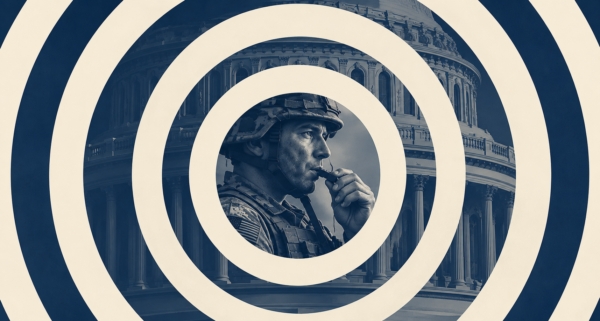
Speaking Truth to Command: Why Expanding Military Whistleblower Protections Is About More Than Reporting Misconduct

Congress to Strengthen Whistleblower Protections for Military Personnel

When a service member raises concerns about fraud, abuse, unsafe conditions, discrimination, or unlawful conduct, the expectation is simple: the military should investigate the problem, not punish the person who reported it. Yet for many men and women in uniform, experience has suggested otherwise. Careers have stalled, promotions have disappeared, leadership opportunities have vanished, and administrative actions have followed disclosures that were intended to protect the mission rather than undermine it.

The Senate’s proposed expansion of military whistleblower protections in this year’s National Defense Authorization Act (NDAA) is an acknowledgment that existing safeguards have not always achieved their intended purpose. While the legislation is still moving through the congressional process, it reflects a growing recognition that protecting those who report wrongdoing is essential to maintaining both military readiness and public confidence in the armed forces.

At its core, military whistleblower protection is governed by 10 U.S.C. § 1034, commonly known as the Military Whistleblower Protection Act. Unlike civilian federal employees, who rely on the federal Whistleblower Protection Act and an established administrative process, military members operate within a unique legal framework that balances constitutional authority, military discipline, and the chain of command. That balance has always been delicate.

The law allows service members to report violations of law, gross mismanagement, abuse of authority, substantial dangers to public health or safety, and other misconduct to members of Congress, Inspectors General, law enforcement agencies, or designated officials within the Department of Defense. In theory, retaliation for making those protected communications is prohibited.

In practice, retaliation is rarely obvious.

Very few commanders would openly admit that an officer or enlisted member is receiving a poor evaluation because they filed an Inspector General complaint or contacted Congress. Instead, retaliation often appears in far more subtle ways. A once-promising officer suddenly receives average performance reports. A senior noncommissioned officer is quietly removed from a leadership position. Promotion recommendations become less enthusiastic. Security clearance concerns emerge without warning. Administrative investigations begin to multiply. Individually, each action may appear legitimate. Collectively, they can permanently alter the trajectory of a military career.

That reality has long presented one of the greatest legal challenges in military whistleblower cases. The issue is seldom whether retaliation occurred in the ordinary sense of the word; rather, it is whether the service member can prove that an otherwise lawful personnel decision was actually motivated by a protected disclosure.

The Senate’s proposal appears designed to address some of these longstanding concerns by strengthening the legal framework surrounding military whistleblower complaints. Although the final language will likely evolve before passage, the direction is unmistakable: Congress is signaling that the existing system needs stronger safeguards and greater accountability.

If enacted, broader protections could expand the range of communications that qualify as protected disclosures while increasing oversight of adverse personnel actions that closely follow those reports. More importantly, the legislation could encourage investigators and reviewing authorities to ask a different question. Instead of focusing exclusively on whether a commander technically violated a statute, investigators may be asked to examine whether the adverse action would have occurred absent the protected disclosure itself.

That distinction is significant because retaliation rarely arrives wearing a name badge.

For military organizations, this discussion is about far more than employment rights. It is about institutional integrity. The military depend upon discipline and respect for the chain of command, but they also depend upon honesty. A culture that discourages reporting procurement fraud, medical safety concerns, leadership misconduct, or security failures ultimately weakens the very readiness that military discipline is intended to preserve. Effective organizations welcome accountability because accountability improves performance.

At the same time, stronger whistleblower protections should not be misunderstood as immunity from legitimate discipline. Service members remain subject to the Uniform Code of Military Justice, administrative regulations, and professional performance standards. Reporting misconduct does not shield an individual from accountability for unrelated performance deficiencies or violations of military law. Rather, these protections exist to ensure that lawful personnel actions are not used as a convenient pretext to punish those who have fulfilled their duty by reporting wrongdoing.

As attorneys, we have seen firsthand how difficult these cases can become. By the time a reprisal complaint is investigated, the damage is often already done. Promotion boards have met, assignments have changed, evaluations have become permanent records, and careers have taken a different direction. The legal process may eventually recognize that retaliation occurred, but restoring lost opportunities is often far more difficult than preventing retaliation in the first place.

“The strength of our military depends not only on discipline, but on the courage of service members who are willing to report misconduct when they see it. Whistleblower protections should ensure that truthfulness is rewarded, not punished, and that careers are judged on merit rather than retaliation.” David P. Sheldon

Ultimately, the Senate’s proposal should be viewed as more than another amendment to the National Defense Authorization Act. It represents an opportunity to reinforce a principle that is fundamental to military service: loyalty to the Constitution and the rule of law sometimes requires the courage to speak when remaining silent would be easier.

Whether these reforms succeed will not be measured by the number of pages added to the United States Code. They will be measured by whether a young lieutenant, a senior chief, or a field grade officer can report misconduct with confidence that integrity will not become a career-ending decision. The law can prohibit retaliation, but only a culture of accountability can truly eliminate it. If Congress intends to strengthen military whistleblower protections, the ultimate goal should not simply be more investigations; it should be restoring confidence that doing the right thing will never be treated as doing the wrong thing.

Disclaimer

This article is intended for informational purposes only and does not constitute legal advice or create an attorney-client relationship. Every case is fact-specific, and readers should consult qualified counsel regarding their individual circumstances.

About the Law Offices of David P. Sheldon, PLLC

The Law Offices of David P. Sheldon, PLLC, represents military service members, veterans, federal employees, USPHS Commissioned Corps officers, NOAA Corps officers, and other uniformed professionals in administrative, disciplinary, appellate, and federal litigation matters, including whistleblower retaliation claims, correction boards, medical boards, security clearances, and military justice proceedings.

 

Veteran Military Attorney Karen Hecker Rejoins the Law Offices of David P. Sheldon, PLLC

Karen Hecker joins Law Offices of David P Sheldon, PLLC

Veteran Military Attorney Karen Hecker Rejoins the Law Offices of David P. Sheldon, PLLC

Washington, D.C. – The Law Offices of David P. Sheldon, PLLC proudly announces the return of Karen Hecker, a distinguished military and federal litigation attorney, who brings more than four decades of combined legal experience in military justice, appellate defense, and federal agency counsel service.

Before retiring from federal service in 2025, Ms. Hecker served for 21 years as an Associate General Counsel with the Department of Defense Office of General Counsel, where she managed complex, high-impact litigation on behalf of the Department and its senior leadership. Her work spanned international law, personnel and health policy, fiscal matters, and military justice under the Uniform Code of Military Justice.

Karen’s government career followed 24 years as an Air Force Judge Advocate (JAG), culminating in her retirement as a Colonel in 2017 after service on active duty and in the Reserves. Her military tenure included three years as a trial defense counsel, which also involved representing cadets as Military Cadet Counsel at the United States Air Force Academy, followed by eight years as an appellate defense counsel, representing service members before both the Air Force Court of Criminal Appeals and the Court of Appeals for the Armed Forces.

She later served as Deputy Staff Judge Advocate and Staff Judge Advocate at two operational bases, and ultimately as a judge on the Air Force Court of Criminal Appeals, where she presided over military appellate cases. Before her retirement, Karen also served as agency counsel for the Air Force Board for Correction of Military Records and during Officer Grade Determination reviews.

Returning to the firm where she previously practiced from 2001 to 2004, Karen joins as a Senior Litigation Attorney, bringing exceptional insight and experience to the firm’s representation of military and federal employees across all branches of service.

“Karen’s return to our firm is a tremendous asset for our clients,” said David P. Sheldon, founder and principal attorney. “Her depth of experience, leadership, and integrity exemplify our mission—to deliver justice and restore honor to those who serve.”

In her personal time, Karen enjoys boating on the Chesapeake Bay and volunteering with a local animal rescue organization.

USPHS Commander Seeks Correction of Records After Disputed Reprimand and Denial of Relief by Surgeon General

A U.S. Public Health Service (USPHS) Commander is fighting to restore the officer’s reputation and career following a reprimand, contending it was unjust, retaliatory, and issued outside the bounds of lawful authority. The case, filed with the Board for Correction of Public Health Service Commissioned Corps Records (BCMR), argues that the Letter of Reprimand (LOR) issued in October 2023, was procedurally and legally flawed.

Represented by attorney Annie Morgan of the Law Offices of David P. Sheldon, PLLC, the Commander’s filing asserts that the LOR was issued not only in violation of Commissioned Corps policy (CCI 211.04 and CCI 211.07) but was also motivated by retaliation after the officer raised concerns about understaffing and promotion irregularities within the Bureau of Health Services at the Eloy Detention Center.

According to the complaint, the officer formally requested relief through the Surgeon General’s redress process, submitting evidence of improper conduct, lack of authority by the issuing official, and violations of due process. But the Surgeon General, VADM Vivek Murthy, ultimately declined to grant relief, stating that “the evidence presented does not demonstrate a violation of law, executive order, regulation, or policy,” nor was the issuance “arbitrary and capricious.”

Attorney Morgan disputes this finding. “The facts clearly show that the reprimand was issued by someone without the lawful authority to do so. It followed weeks of the Commander raising staffing concerns and requesting help. Instead of support, the officer was punished for performing the duties assigned—and that’s precisely why the BCMR exists: to correct these injustices,” said Morgan.

The Commander’s petition to the BCMR requests:

  • Rescission of the LOR;
  • Expungement from the officer’s official record;
  • Restoration of lost specialty pay and backpay; and,
  • Any other equitable relief the Board finds appropriate.

The filing includes legal arguments grounded in the Administrative Procedure Act, Privacy Act, and internal USPHS regulations. The Commander also provided documentation showing that the decisions regarding patient scheduling were consistent with operational policy during a staffing shortfall—not acts of misconduct.

The case represents a broader concern for many USPHS officers navigating opaque disciplinary procedures that can derail careers, especially when whistleblowing or reporting internal issues.

About the Law Offices of David P. Sheldon, PLLC:
Located in Washington, D.C., the Law Offices of David P. Sheldon, PLLC is a premier military and federal employment law firm. With more than two decades of experience, the firm defends service members and federal employees in cases involving courts-martial, administrative separations, security clearances, and record corrections.

Disclaimer:
This release is for informational purposes only and does not constitute legal advice. Each case is unique, and outcomes will vary depending on specific facts and circumstances.

When One Piece of Paper Destroys a Career: The Hidden Danger of a Reprimand

He was the kind of officer others looked up to. Showed up early, stayed late, and took care of his troops. When something needed fixing, he made sure it got done. He was tough, but fair and exactly the kind of leader you want in charge when things get hard. And that’s what got him in trouble.

After years of service, countless sacrifices, and a spotless record, one memo changed everything. A General Officer Memorandum of Reprimand, a GOMOR, landed in his official file, accusing him of “toxic leadership.” What did that mean? No one could really say. The phrase has no clear definition. It’s often thrown around when commanders simply don’t like a particular subordinate. Maybe the officer was too direct. Maybe he pushed his team harder than others. Maybe he didn’t play political games.

And just like that, his career stalled.

GOMORs, unlike regular counseling or feedback, are powerful and dangerous. They don’t just sit in a drawer. They go into your permanent record. They can make you ineligible for promotions, prevent you from transferring, or even push you out of the military completely. They can be used as a quiet way to end someone’s career, without any real due process, evidence, or chance to defend yourself.

The worst part? It’s happening more and more. Officers are getting labeled with “toxic leadership” or “loss of confidence” a vague term that carries heavy weight. Many of these officers are the ones who hold their teams accountable, who push for excellence, who challenge the status quo. But when leadership changes, or when someone higher up decides they want a different kind of personality in the position, the hammer falls.

One reprimand. One accusation. And suddenly, years of service are on the line.

That’s where the Law Offices of David P. Sheldon steps in.

Senior Military Attorney David P. Sheldon and his team have seen it all, officers who are blindsided, confused, and scared. They’ve worked with clients who were told they had no future, no promotion, and no choice but to resign. But with the right legal strategy, things can change.

Sometimes that means fighting to remove the GOMOR altogether. Other times it means correcting the record, filing an appeal, or pushing back against a board that rubber-stamped a punishment without asking questions. The team at David P. Sheldon’s, PLLC firm knows the system inside and out and they know how to affirm the service member’s rights to fair career adjudication.

They’ve helped officers get unfair reprimands removed, promotions reinstated, and careers put back on track. And in cases where the system isn’t accurate, they’ve taken the fight all the way to federal court. Because no one should lose everything they’ve worked for because of one biased letter or a leadership change that didn’t go their way.

The military is built on rules. But sometimes, those rules are applied unfairly. And when that happens, you need someone in your corner who knows how to fight back.

If you or someone you know is facing a GOMOR or LOR, especially one based on incorrect or vague claims or office politics, don’t wait. The earlier you act, the more options you have. One memo shouldn’t define your service, your future, or your legacy.

The Law Offices of David P. Sheldon is here to help you protect all that you’ve earned. Because your career shouldn’t end with a whisper in the hallway, it should be honored for the years of dedication you gave to this country.

About the Law Offices of David P. Sheldon, PLLC:

Based in Washington, D.C., the Law Offices of David P. Sheldon, PLLC is a nationally respected military and federal employment law firm. Led by founder David Sheldon, the firm represents service members in GOMOR rebuttals, LOR removal, promotion restoration, discharge upgrades, security clearance appeals, and correction of military records. With decades of combined experience, the firm is committed to defending those who defend our nation.

www.militarydefense.com

Legal Disclaimer:

This content is provided for informational purposes only and does not constitute legal advice. No attorney-client relationship is created by viewing or sharing this content. For legal advice regarding your specific situation, please consult with a licensed attorney.


Melissa Diaz Successfully Passes the District of Columbia Bar

The Law Firm of David P. Sheldon PLLC is proud to announce the very successful completion and accomplishment of Melissa Diaz, passing the District of Columbia’s bar with flying colors!  In 2022, Melissa joined the firm where she has been a valued law team member. With the completion of the bar, upon admission, she will officially become a District of  Columbia licensed attorney. Melissa continues  to serve our clients with her very high level of professionalism, integrity and outstanding enthusiasm.

Congratulations on your success, Melissa!  BZ!