Know Your Status, Know Your Orders: What Service Members Must Understand Before Domestic Deployment

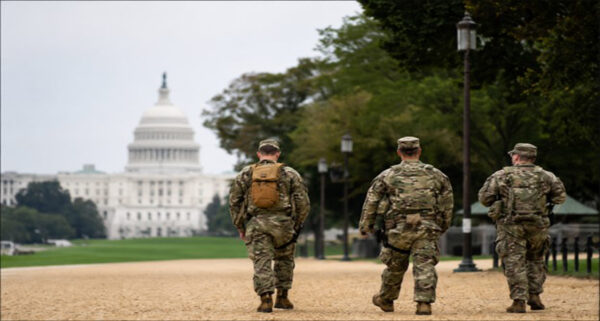
National Guard can be seen walking around the Capital in DC

When the Mission Changes, So Do the Rules

A service member gets the call.

But this time, it is not for overseas deployment, combat operations, or traditional military training. Instead, the mission sounds different: support public safety, assist local authorities, protect infrastructure, respond to civil unrest, help during natural disasters, or provide emergency assistance at home.

Questions begin to surface quickly.

Can they legally deploy me for this?
Are we acting as military personnel, or law enforcement?
Do I have authority to stop or detain civilians?
Can I be assigned work outside my specialty?
What happens if something feels legally wrong?

These are not political questions.

They are professional ones.

As hurricanes, border missions, wildfire response, public health emergencies, and civil disturbance operations have increased, military members, especially Reservists, National Guard personnel are increasingly being asked to support missions that feel very different from what they expected when they joined.

For service members, one simple rule matters more than ever:

Know your status. Know your mission. Know your authority. And document concerns early.

Those four principles can help protect careers, preserve legal rights, and prevent service members from finding themselves caught in legal uncertainty after a mission ends.

The Same Uniform Does Not Always Mean the Same Authority

One of the biggest misunderstandings surrounding domestic military missions is this:

The legal authority behind a mission depends on your status, not simply the uniform you are wearing.

Two service members standing side by side in uniform may have very different legal authorities depending on who activated them and under what law.

Understanding your legal status matters.

State Active Duty: Governor-Controlled Missions

When National Guard members are activated by a governor under state law, they are generally operating in State Active-Duty status.

These missions often include:

  • wildfire response
  • flood and hurricane recovery
  • evacuation assistance
  • emergency medical support
  • search and rescue
  • public safety operations during emergencies

In many states, National Guard members under state authority may lawfully assist with public safety functions and, depending on state law, may even support law enforcement activities.

The Governor, not the President, typically controls the mission.

Title 32: State Command, Federal Funding

Under Title 32 of the United States Code, National Guard members remain under state control while receiving federal funding.

Title 32 missions commonly include:

  • airport security
  • border operations
  • public health response
  • disaster relief
  • infrastructure support

During the COVID-19 pandemic, many Guard members operated under Title 32 authority to support testing, vaccinations, logistics, transportation, and overwhelmed healthcare systems.

Although federally funded, service members in Title 32 status generally remain under the governor’s command. 10 U.S.C. Title 32 Overview

Title 10: Federal Military Authority

When Guard members are federalized, or when active-duty military personnel are used domestically, they generally operate under Title 10 authority.

This matters because of a law called the Posse Comitatus Act, which limits the military’s role in domestic civilian law enforcement.

In general, federal troops are not police officers.

That means military personnel ordinarily cannot:

  • conduct civilian arrests
  • investigate civilian crimes
  • search homes without lawful authority
  • engage in ordinary civilian policing

Federal forces may still lawfully provide:

  • security for federal property
  • transportation support
  • engineering assistance
  • medical aid
  • logistics and supply distribution
  • communications support
  • emergency response coordination

The legal difference is important:

Supporting civilian authorities is often lawful. Replacing civilian law enforcement is a very different legal question.

The Posse Comitatus Act, enacted after Reconstruction, remains one of the most important legal boundaries governing domestic military use. 18 U.S.C. § 1385 – Posse Comitatus Act

“That’s Not My MOS” Usually Is Not the Legal Issue

Many service members understandably wonder:

“This isn’t what I signed up for.”

The reality is that military members are routinely assigned work outside their normal specialties.

An intelligence officer may support logistics.

An infantry member may assist with wildfire response.

A mechanic may help distribute supplies during an emergency.

Medical personnel may work outside normal treatment settings.

The military often requires flexibility.

The better legal question is not:

“Is this part of my MOS?”

The better question is:

“Is this mission lawful, authorized, and within the legal limits of my authority?”

Military necessity can expand duties.

It does not eliminate legal boundaries.

Service Members Still Have a Duty to Recognize Unlawful Orders

The military expects obedience to lawful orders.

But military service has always included another duty:

The obligation to recognize and refuse manifestly unlawful orders.

This is not politics.

This is professionalism.

The Uniform Code of Military Justice (UCMJ) requires obedience to lawful orders, but military law has long recognized that service members cannot shield themselves behind obviously unlawful conduct. Courts and military justice systems have repeatedly reinforced that unlawful acts cannot be justified simply because “I was following orders.” Manual for Courts-Martial (2024 Edition)

Most domestic missions are lawful and necessary.

Military personnel routinely save lives during disasters, stabilize communities, and provide critical support during emergencies.

But questions arise when military support begins to resemble ordinary policing, or when service members are unclear about their legal authority.

Service members should professionally seek clarification if they are ordered to:

  • detain civilians without clear authority
  • conduct searches lacking legal authorization
  • use force outside established rules
  • perform actions exceeding mission guidance

That does not mean refusing lawful orders because something feels uncomfortable.

It means understanding the mission before acting.

Know When the Law Changes: The Insurrection Act Exception

One important exception exists.

The Insurrection Act allows the President to use military personnel domestically under specific circumstances, including rebellion, insurrection, or situations where federal law cannot otherwise be enforced.

When lawfully invoked, military personnel may be authorized to perform functions that would ordinarily be restricted under the Posse Comitatus Act. However, the legal threshold is high, and historically such use has been rare. 10 U.S.C. §§ 251–255 – Insurrection Act Authorities

For service members, the lesson is simple:

Know what legal authority governs your mission.

The rules can change quickly.

Document Concerns Early and Not After an Investigation Starts

This may be the most important lesson of all.

Too often, service members wait until an incident becomes an investigation before trying to reconstruct what happened.

By then:

  • emails are gone
  • memories fade
  • orders become harder to verify
  • witnesses transfer or separate

If something appears legally unclear, service members should document concerns early.

That does not mean becoming confrontational or refusing lawful orders.

It means acting professionally and protecting yourself.

Practical steps may include:

  • asking for clarification regarding mission authority
  • requesting written guidance when available
  • understanding rules of engagement or use-of-force policies
  • maintaining copies of orders when permitted
  • documenting dates, instructions, and chain-of-command guidance
  • preserving relevant written communications

A simple truth applies:

The worst time to question legal authority is after someone has already become the subject of an investigation.

Documentation is not insubordination.

Documentation protects service members when missions later become subject to legal review.

Why This Matters Now

Domestic military missions are no longer rare.

Recent litigation involving the deployment of National Guard personnel in Washington, D.C., has renewed legal debate about how, when, and under what authority Guard members may be used in public safety roles. Courts continue to examine the boundaries between lawful military support and impermissible domestic law enforcement functions.

These legal questions matter because service members can later face scrutiny for actions taken during legally complex missions.

When courts, agencies, governors, and federal officials disagree about authority, military members should understand the legal framework behind their mission and document concerns early if uncertainty exists.

Final Thought: Know the Mission Before the Mission Knows You

Most service members answer the call without hesitation.

They show up during disasters. They protect communities. They assist Americans in moments of crisis.

Domestic missions are often lawful, necessary, and honorable.

But service members should never assume that because they were handed a mission, every legal question has already been resolved for them.

When military and civilian roles overlap, clarity matters.

Before stepping into any domestic deployment, remember four simple rules:

Know your status. Know your mission. Know your authority. And document concerns early.

Doing so may protect not only your career—but also your integrity and the public trust placed in America’s armed forces.

Additional Reading:

Primary Legal Authorities

Current Legal Commentary & Reporting


Disclaimer:

This article is for informational purposes only and does not constitute legal advice. Reading this article does not create an attorney-client relationship with the Law Offices of David P. Sheldon, PLLC. Service members facing questions regarding deployment authority, lawful orders, investigations, adverse actions, or military administrative concerns should seek qualified legal counsel.

About the Law Offices of David P. Sheldon, PLLC

The Law Offices of David P. Sheldon, PLLC represents military service members, veterans, federal employees, and uniformed personnel worldwide in military justice, courts-martial defense, military discharge upgrades, correction of military records, medical retirement (MEB/PEB), federal employment law, security clearance matters, and appellate litigation. Based in Washington, D.C., the firm advocates for active-duty service members, National Guard personnel, Reservists, and veterans navigating complex legal challenges affecting their careers, benefits, and futures.

Learn more at: militarydefense.com

Seeking Fairness After Service: AFBCMR Petition Challenges Unjust Record and Sentence Consequences

Federal Lawsuit Filed

A former United States Air Force officer has petitioned the Air Force Board for the Correction of Military Records (AFBCMR) to correct military records that continue to carry the weight of a flawed disciplinary outcome long after service to the nation ended.

The application asks the Board to confront a core question of military justice: what happens when punishment outlives fairness.

The petition details how administrative and sentencing actions-imposed years earlier produced lasting professional and personal harm that no longer reflect the service member’s actual conduct, rehabilitation, or record of post-service responsibility. The request seeks correction of records to remove or mitigate consequences that remain disproportionate to the underlying offense and inconsistent with constitutional due process, evolving military justice standards, and equity principles applied in similar cases.

This case is not about relitigating guilt. It is about whether the military’s permanent records should continue to impose penalties that the justice system itself has already recognized as excessive, procedurally flawed, or no longer warranted.

When a Sentence Never Ends

According to the filing, the service member completed all imposed punishment years ago. Yet collateral consequences embedded in official Air Force records have continued to follow them into civilian life, affecting employment prospects, reputation, and future opportunities for service and contribution.

The petition explains that sentencing errors and post-trial irregularities compounded the harm, including reliance on disciplinary outcomes that were later questioned or modified but never fully corrected in the official record. The result is a permanent administrative shadow that extends far beyond the intended scope of punishment.

At its core, the request urges the AFBCMR to exercise its statutory authority to correct injustice where rigid adherence to past records no longer serves fairness, discipline, or the integrity of the military justice system.

Why This Case Matters Beyond One Record

AFBCMR cases rarely make headlines, but they shape how the military balances accountability with rehabilitation. The petition underscores a broader concern shared by many former service members: that even after completing punishment, administrative records can continue to function as a second, unofficial sentence.

The filing emphasizes that military justice is not meant to be purely punitive. It is intended to be corrective, proportional, and consistent with constitutional protections. When records fail to reflect that balance, the AFBCMR exists as the final safeguard.

The petition focuses squarely on the service member’s experience, the lasting impact of the record, and the need for equitable correction under governing law.

What Happens Next

The AFBCMR will review the application, supporting memorandum, and exhibits submitted with the petition. If the Board grants relief, the correction could restore accuracy to the official record and eliminate ongoing consequences that no longer serve justice or military discipline.

For many former service members, AFBCMR decisions represent the final opportunity for institutional acknowledgment that fairness must sometimes prevail over permanence.

About the Law Offices of David P. Sheldon, PLLC

The Law Offices of David P. Sheldon, PLLC is a Washington, DC–based military and federal employment law firm representing service members, veterans, and federal employees worldwide in courts-martial, administrative boards, record correction cases, security clearance matters, and constitutional challenges.

Disclaimer

This press release is provided for informational purposes only and does not constitute legal advice. Past outcomes do not guarantee future results. The client’s identity has been withheld to protect privacy.


What the Erosion of the MSPB Means for Federal and Military Fairness

MSPB
The MSPB system exists, but who is it serving now?”

When Independence Becomes Illusion: What the Erosion of the MSPB Means for Federal and Military Fairness

For nearly half a century, Congress intended the Merit Systems Protection Board to serve as a quiet but essential guardian of fairness, an independent forum where federal employees could challenge unjust personnel actions without fear of political retaliation. That independence was not an accident. It was a deliberate legislative choice, born of historical abuses, designed to ensure that careers in public service would rise or fall on merit, not on politics.

Today, that vision is in jeopardy.

In recent months, a series of developments, judicial, administrative, and structural have converged to fundamentally weaken the MSPB’s ability to function as Congress intended. What was once an independent adjudicatory body increasingly resembling a procedural bottleneck: nominally restored, but substantively constrained.

The D.C. Circuit’s January 9 decision declining to rehear Harris v. Bessent marked a quiet but consequential turning point. By allowing a panel decision to stand that casts doubt on statutory protection shielding MSPB members from at-will presidential removal, the court effectively signaled that the Board’s independence is constitutionally suspect. The reasoning rests on the idea that the MSPB exercises “substantial executive power” and therefore must be directly accountable to the president. That framing collapses the distinction Congress carefully built between executive enforcement and neutral adjudication.

As Lawfare observed in its recent analysis, this reasoning places the MSPB squarely in the crosshairs of modern separation-of-powers doctrine. Once the Board is treated as an extension of executive authority rather than a buffer against it, the premise of impartial review begins to erode. Independence becomes performative, existing in name, but not in function.

This erosion did not occur in a vacuum. For much of the past year, the MSPB lacked a quorum altogether, rendering it unable to issue final decisions. During that period, federal workers successfully argued in court that pursuing administrative relief would be futile. Judges agreed. Lawsuits moved forward. For a brief moment, access to Article III courts provided a meaningful alternative when the administrative system failed.

That window has now largely closed.

With the Senate’s confirmation of a new Board member restoring a quorum, the MSPB is technically operational again. But restoration of form does not equal restoration of justice. The Board returns burdened by a massive backlog and operating under a legal cloud that undermines its structural independence. For tens of thousands of federal employees, this means a return to mandatory administrative exhaustion, long delays, uncertain outcomes, and limited judicial review before ever setting foot in a courtroom.

For civil servants, this is more than an inconvenience. It is a narrowing of practical access to justice.

And for military service members, the implications are even more sobering.

Although uniformed service members often navigate separate statutory regimes, the logic now applied to the MSPB does not stop at civilian agencies. Military correction boards, discharge review boards, and administrative tribunals operate on similar assumptions of deference and internal review. When courts weaken the independence of civilian adjudicatory bodies, the ripple effects reinforce a broader judicial posture: one that increasingly favors executive control over independent review in personnel matters.

Congress never intended merit-based protections to function this way. The MSPB was designed as a shield, not a speed bump. It was meant to provide fair, neutral adjudication precisely because courts recognized the danger of politicized employment decisions within government. By insulating Board members and empowering them to decide cases free from executive pressure, Congress sought to preserve both fairness and public trust.

What we are witnessing now is a slow inversion of that design.

A board that can be restructured, influenced, or constrained through removal power and judicial reinterpretation cannot credibly promise impartiality. A system that forces employees into years-long administrative limbo before permitting judicial review does not meaningfully protect due process. And a legal framework that treats adjudicators as mere extensions of executive authority undermines the very concept of neutral review.

This moment calls for clarity, not partisanship.

If fairness and independence remain core values in federal service, Congress must confront the gap between its original intent and present reality. That may require statutory reform, clearer jurisdictional pathways to federal court, or renewed protections for adjudicatory independence. Without such action, the merit system risks becoming an artifact of history rather than a living safeguard.

For federal employees and service members alike, justice delayed and independence diluted is justice denied.

About Military Defense Law

Military Defense Law is published by the Law Offices of David P. Sheldon, PLLC, providing analysis and advocacy on military justice, federal employment law, and the constitutional rights of those who serve.

Disclaimer

This article is for informational purposes only and does not constitute legal advice. Reading this article does not create an attorney-client relationship. Individuals facing adverse personnel actions should consult qualified legal counsel regarding their specific circumstances.

Citations & References

A Season of Gratitude for Those Who Serve and Those Still Waiting

Sentiment for Holidays

As families gather during the holiday season, it is a time to pause and express gratitude—for service, for sacrifice, and for the quiet resilience of those who continue to serve even when recognition comes slowly, if at all.

Across the military and federal workforce, many service members and employees spend this time of year navigating unresolved challenges: pending medical evaluations, delayed retirement decisions, discharge reviews still under consideration, or careers placed on hold by administrative processes that move far more slowly than life itself. These are not abstract issues. They shape families’ futures, financial stability, and a sense of dignity earned through years of service.

This season invites reflection not only on what has been given, but on what is still owed—fair process, timely decisions, and lawful treatment. Gratitude does not require silence about the systems that affect those who serve. Instead, it can take the form of patient advocacy, careful attention to detail, and a commitment to ensuring that every case is reviewed on its merits.

For many, the holidays arrive without resolution. Yet service continues—often quietly, often unseen. Families adapt. Careers wait. And hope persists that the coming year will bring clarity, fairness, and accountability.

At this time of year, we extend our sincere thanks to service members, veterans, federal employees, and their families. Your service matters. Your patience is not unnoticed. And your right to fair treatment under the law remains essential—during the holidays and beyond.

Military Promotion Case Before the D.C. Circuit: Mitchell v. Phelan

SCOTUS on VA Appeals

Update: The live recording Oral Argument Mitchell v Phelan.
Friday, November 21, 2025 9:30 A.M.
Judges Pillard, Walker, Edwards Case 1: 25-5013 Ernest Mitchell v. John Phelan

The Law Offices of David P. Sheldon, PLLC, announced that the firm will present oral argument before the U.S. Court of Appeals for the District of Columbia Circuit on Friday, November 21, 2025, in the case Ernest F. Mitchell v. John Phelan, Secretary of the Navy (Case No. 25-5013).

At issue in this appeal is whether the Navy violated federal law when it delayed a service member’s promotion beyond the statutory 18-month limit set by 10 U.S.C. § 624(d)(5)—and whether that delay automatically entitled Lieutenant Mitchell to promotion “by operation of law.” The case also challenges the Navy’s decision to issue a “detachment for cause”, alleging it was based on arbitrary findings inconsistent with military regulations and fairness standards.

Mitchell, a decorated officer with over a decade of service, was selected and Senate-confirmed for promotion to Lieutenant Commander before the Navy delayed his advancement following a minor disciplinary action. Despite a Board of Inquiry’s recommendation that he remain in service, his promotion was later withdrawn—prompting a challenge before the Board for Correction of Naval Records (BCNR), the U.S. District Court for the District of Columbia, and now the D.C. Circuit Court of Appeals.

The firm will argue on behalf of LT Mitchell, emphasized the broader implications of the appeal:

“This case isn’t only about one officer’s career,” David Sheldon said. “It’s about ensuring that the military follows its own laws and deadlines and that service members are not punished twice for the same incident. Congress set an 18-month limit on promotion delays for a reason: to guarantee accountability and prevent arbitrary career destruction.”  “It’s also about the plain meaning of the statute.”

The appellant’s brief argues that once the Navy exceeded the statutory delay period, Mitchell was automatically promoted by operation of law, and that the Board for Correction of Naval Records acted arbitrarily and capriciously when it failed to correct this injustice.

The appeal also challenges the Navy’s expansive interpretation of “substandard performance” under MILPERSMAN 1611-020, arguing that no definition of “gross negligence” or “complete disregard of duty” fits the record of an officer consistently rated “Promotable” or “Above Standards” in multiple fitness reports.

Oral argument is scheduled for 9:30 A.M. on November 21, 2025, before a three-judge panel at the E. Barrett Prettyman U.S. Courthouse in Washington, D.C. The outcome could set an important precedent on promotion timelines, executive appointment authority, and due process protections for officers across the armed services.


About the Law Offices of David P. Sheldon, PLLC

The Law Offices of David P. Sheldon, PLLC, based in Washington, D.C., represents military service members, veterans, and federal employees worldwide in courts-martial, boards of inquiry, BCNR and BCMR appeals, and federal court litigation. The firm is nationally recognized for its advocacy in military justice, administrative appeals, and constitutional due process.

Disclaimer

This release is for informational purposes only and does not constitute legal advice. Past performance does not guarantee future results. Viewing or responding to this release does not create an attorney-client relationship.

Navy Officer’s Federal Appeal Challenges Arbitrary Promotion Denial and Career-Saving Records Dispute

Plaintiff Seeks Judicial Review After Navy’s Unjust Delay and Career Impact

A significant appeal has been filed with the U.S. Court of Appeals for the D.C. Circuit challenging the Navy’s prolonged delay and subsequent denial of a career-critical promotion, which the plaintiff argues occurred in direct violation of federal statute. Represented by the Law Offices of David P. Sheldon, PLLC, the plaintiff, a decorated Navy Lieutenant, asserts that the Navy’s Board for Correction of Naval Records acted arbitrarily and capriciously by ignoring mandatory promotion timelines and mischaracterizing his service record.

At the heart of the case is the Navy’s failure to promote the plaintiff within the statutory deadline prescribed by 10 U.S.C. § 624(d)(5), which limits appointment delays to 18 months. The plaintiff’s promotion was delayed nearly 21 months, a violation the Navy itself acknowledged but refused to remedy. Despite exemplary service and a family legacy of military dedication, the plaintiff’s promotion was denied, and he was subjected to an adverse personnel action stemming from a minor 2019 incident aboard the USS Howard, an incident which his command later agreed did not warrant separation from service. The District Court acknowledged the Navy’s statutory breach but held that no enforceable duty existed to promote the plaintiff. The appeal argues this interpretation defies both congressional intent and longstanding precedent affirming the obligation of correction boards to rectify such injustices.

“The Navy delayed this officer’s rightful promotion well beyond what Congress allows,” said the lead counsel. “The law is clear: such delays may not exceed 18 months, and when they do, the promotion should occurs by operation of law. Our client’s rights, and his career, have been unjustly compromised.”

The lawsuit also challenges the Navy’s decision to uphold a detachment for cause action, which alleged “gross negligence” despite the plaintiff maintaining a record of exceeding performance standards for much of his career, including multiple commendations.

This case is not just about one officer’s career. It’s about ensuring that service members can rely on the laws Congress enacts to protect them from arbitrary administrative overreach.

The appeal seeks to overturn the District Court’s ruling and compel the Navy to correct the plaintiff’s record and recognize his promotion as having occurred by operation of law.

 ABOUT THE LAW OFFICES OF DAVID P. SHELDON, PLLC

Located in Washington, D.C., the Law Offices of David P. Sheldon, PLLC, is a premier military and federal litigation firm representing service members and federal employees nationwide. The firm advocates in matters of military justice, administrative law, correction of records, security clearance defense, and federal employment disputes.

DISCLAIMER:

The information contained in this release is provided for informational purposes only and does not constitute legal advice. No attorney-client relationship is formed by this communication.