When the Mission Changes, So Do the Rules
A service member gets the call.
But this time, it is not for overseas deployment, combat operations, or traditional military training. Instead, the mission sounds different: support public safety, assist local authorities, protect infrastructure, respond to civil unrest, help during natural disasters, or provide emergency assistance at home.
Questions begin to surface quickly.
Can they legally deploy me for this?
Are we acting as military personnel, or law enforcement?
Do I have authority to stop or detain civilians?
Can I be assigned work outside my specialty?
What happens if something feels legally wrong?
These are not political questions.
They are professional ones.
As hurricanes, border missions, wildfire response, public health emergencies, and civil disturbance operations have increased, military members, especially Reservists, National Guard personnel are increasingly being asked to support missions that feel very different from what they expected when they joined.
For service members, one simple rule matters more than ever:
Know your status. Know your mission. Know your authority. And document concerns early.
Those four principles can help protect careers, preserve legal rights, and prevent service members from finding themselves caught in legal uncertainty after a mission ends.
The Same Uniform Does Not Always Mean the Same Authority
One of the biggest misunderstandings surrounding domestic military missions is this:
The legal authority behind a mission depends on your status, not simply the uniform you are wearing.
Two service members standing side by side in uniform may have very different legal authorities depending on who activated them and under what law.
Understanding your legal status matters.
State Active Duty: Governor-Controlled Missions
When National Guard members are activated by a governor under state law, they are generally operating in State Active-Duty status.
These missions often include:
- wildfire response
- flood and hurricane recovery
- evacuation assistance
- emergency medical support
- search and rescue
- public safety operations during emergencies
In many states, National Guard members under state authority may lawfully assist with public safety functions and, depending on state law, may even support law enforcement activities.
The Governor, not the President, typically controls the mission.
Title 32: State Command, Federal Funding
Under Title 32 of the United States Code, National Guard members remain under state control while receiving federal funding.
Title 32 missions commonly include:
- airport security
- border operations
- public health response
- disaster relief
- infrastructure support
During the COVID-19 pandemic, many Guard members operated under Title 32 authority to support testing, vaccinations, logistics, transportation, and overwhelmed healthcare systems.
Although federally funded, service members in Title 32 status generally remain under the governor’s command. 10 U.S.C. Title 32 Overview
Title 10: Federal Military Authority
When Guard members are federalized, or when active-duty military personnel are used domestically, they generally operate under Title 10 authority.
This matters because of a law called the Posse Comitatus Act, which limits the military’s role in domestic civilian law enforcement.
In general, federal troops are not police officers.
That means military personnel ordinarily cannot:
- conduct civilian arrests
- investigate civilian crimes
- search homes without lawful authority
- engage in ordinary civilian policing
Federal forces may still lawfully provide:
- security for federal property
- transportation support
- engineering assistance
- medical aid
- logistics and supply distribution
- communications support
- emergency response coordination
The legal difference is important:
Supporting civilian authorities is often lawful. Replacing civilian law enforcement is a very different legal question.
The Posse Comitatus Act, enacted after Reconstruction, remains one of the most important legal boundaries governing domestic military use. 18 U.S.C. § 1385 – Posse Comitatus Act
“That’s Not My MOS” Usually Is Not the Legal Issue
Many service members understandably wonder:
“This isn’t what I signed up for.”
The reality is that military members are routinely assigned work outside their normal specialties.
An intelligence officer may support logistics.
An infantry member may assist with wildfire response.
A mechanic may help distribute supplies during an emergency.
Medical personnel may work outside normal treatment settings.
The military often requires flexibility.
The better legal question is not:
“Is this part of my MOS?”
The better question is:
“Is this mission lawful, authorized, and within the legal limits of my authority?”
Military necessity can expand duties.
It does not eliminate legal boundaries.
Service Members Still Have a Duty to Recognize Unlawful Orders
The military expects obedience to lawful orders.
But military service has always included another duty:
The obligation to recognize and refuse manifestly unlawful orders.
This is not politics.
This is professionalism.
The Uniform Code of Military Justice (UCMJ) requires obedience to lawful orders, but military law has long recognized that service members cannot shield themselves behind obviously unlawful conduct. Courts and military justice systems have repeatedly reinforced that unlawful acts cannot be justified simply because “I was following orders.” Manual for Courts-Martial (2024 Edition)
Most domestic missions are lawful and necessary.
Military personnel routinely save lives during disasters, stabilize communities, and provide critical support during emergencies.
But questions arise when military support begins to resemble ordinary policing, or when service members are unclear about their legal authority.
Service members should professionally seek clarification if they are ordered to:
- detain civilians without clear authority
- conduct searches lacking legal authorization
- use force outside established rules
- perform actions exceeding mission guidance
That does not mean refusing lawful orders because something feels uncomfortable.
It means understanding the mission before acting.
Know When the Law Changes: The Insurrection Act Exception
One important exception exists.
The Insurrection Act allows the President to use military personnel domestically under specific circumstances, including rebellion, insurrection, or situations where federal law cannot otherwise be enforced.
When lawfully invoked, military personnel may be authorized to perform functions that would ordinarily be restricted under the Posse Comitatus Act. However, the legal threshold is high, and historically such use has been rare. 10 U.S.C. §§ 251–255 – Insurrection Act Authorities
For service members, the lesson is simple:
Know what legal authority governs your mission.
The rules can change quickly.
Document Concerns Early and Not After an Investigation Starts
This may be the most important lesson of all.
Too often, service members wait until an incident becomes an investigation before trying to reconstruct what happened.
By then:
- emails are gone
- memories fade
- orders become harder to verify
- witnesses transfer or separate
If something appears legally unclear, service members should document concerns early.
That does not mean becoming confrontational or refusing lawful orders.
It means acting professionally and protecting yourself.
Practical steps may include:
- asking for clarification regarding mission authority
- requesting written guidance when available
- understanding rules of engagement or use-of-force policies
- maintaining copies of orders when permitted
- documenting dates, instructions, and chain-of-command guidance
- preserving relevant written communications
A simple truth applies:
The worst time to question legal authority is after someone has already become the subject of an investigation.
Documentation is not insubordination.
Documentation protects service members when missions later become subject to legal review.
Why This Matters Now
Domestic military missions are no longer rare.
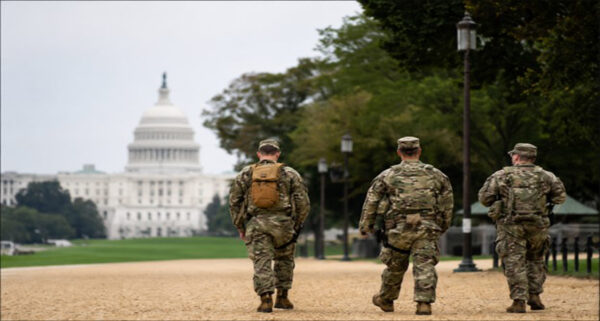
Recent litigation involving the deployment of National Guard personnel in Washington, D.C., has renewed legal debate about how, when, and under what authority Guard members may be used in public safety roles. Courts continue to examine the boundaries between lawful military support and impermissible domestic law enforcement functions.
These legal questions matter because service members can later face scrutiny for actions taken during legally complex missions.
When courts, agencies, governors, and federal officials disagree about authority, military members should understand the legal framework behind their mission and document concerns early if uncertainty exists.
Final Thought: Know the Mission Before the Mission Knows You
Most service members answer the call without hesitation.
They show up during disasters. They protect communities. They assist Americans in moments of crisis.
Domestic missions are often lawful, necessary, and honorable.
But service members should never assume that because they were handed a mission, every legal question has already been resolved for them.
When military and civilian roles overlap, clarity matters.
Before stepping into any domestic deployment, remember four simple rules:
Know your status. Know your mission. Know your authority. And document concerns early.
Doing so may protect not only your career—but also your integrity and the public trust placed in America’s armed forces.
Additional Reading:
Primary Legal Authorities
Current Legal Commentary & Reporting
Disclaimer:
This article is for informational purposes only and does not constitute legal advice. Reading this article does not create an attorney-client relationship with the Law Offices of David P. Sheldon, PLLC. Service members facing questions regarding deployment authority, lawful orders, investigations, adverse actions, or military administrative concerns should seek qualified legal counsel.
About the Law Offices of David P. Sheldon, PLLC
The Law Offices of David P. Sheldon, PLLC represents military service members, veterans, federal employees, and uniformed personnel worldwide in military justice, courts-martial defense, military discharge upgrades, correction of military records, medical retirement (MEB/PEB), federal employment law, security clearance matters, and appellate litigation. Based in Washington, D.C., the firm advocates for active-duty service members, National Guard personnel, Reservists, and veterans navigating complex legal challenges affecting their careers, benefits, and futures.
Learn more at: militarydefense.com