
A Veteran’s Journey to Justice: A Client Testimonial on Fighting for a Military Discharge Upgrade

Before my discharge in 2015, I began working with David P. Sheldon in hopes of lessening the burden that comes with an unplanned discharge. Through the following years, he and his team continued to work with me to pursue the results we were hoping for.

Even after several setbacks, we continued to fight together. They made navigating the discharge upgrade process as seamless as possible and were always direct about what was required from me.

I truly appreciate all the hard work they put in to help me achieve my goals. I truly believe I could not have done it without their help.

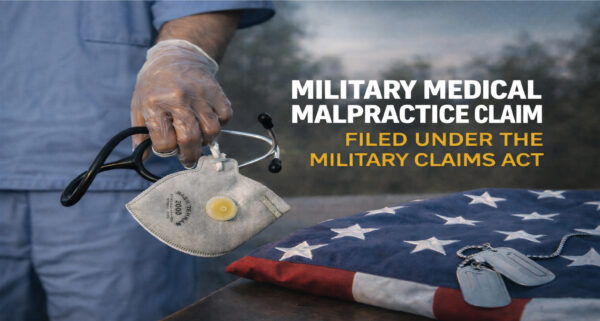
A Preventable Loss: Military Medical Negligence Claim Filed Under the Military Claims Act

MAC Medical Malpractice Filing

The Law Offices of David P. Sheldon, PLLC has filed a Military Claims Act (MCA) medical malpractice claim on behalf of the estate of a U.S. Army service member whose life was cut short following documented cardiac warning signs that were never acted upon by military medical providers.

The claim, filed with the U.S. Army Claims Service, alleges that a Department of Defense healthcare provider failed to follow mandatory military medical regulations during the service member’s separation physical, despite clear and repeated indicators of serious cardiovascular distress. Less than a year after leaving active duty, the service member died suddenly from congestive heart failure at just 35 years old.

“This is not a case about hindsight,” said Dylan Thayer, Military Criminal Defense Attorney with the Law Offices of David P. Sheldon, PLLC. “This is a case about missed red flags, ignored regulations, and a medical system that failed to intervene when intervention was both required and possible.”

Ignored Warnings, Mandatory Rules Overlooked

According to the claim, the service member reported multiple symptoms during his separation physical that are widely recognized as classic precursors to major adverse cardiac events, including shortness of breath, chest pressure, heart palpitations, dizziness, and blood pressure abnormalities. Under Army Regulation 40-501 and Department of Defense separation health policies, these symptoms required referral for further evaluation and entry into the Disability Evaluation System (DES).

That referral never occurred.

No cardiology consult was ordered. No diagnostic testing followed. No medical board was initiated.

An independent, board-certified cardiologist later reviewed the records and concluded that basic, standard-of-care interventions would likely have identified a treatable condition, potentially preventing the fatal outcome. The expert characterized the failure to act as especially egregious given modern cardiovascular medicine, noting that sudden cardiac death under these circumstances is now considered a “never event.”

A Case With Broader Implications

While the claim concerns one service member, the issues raised are far from isolated. The case highlights ongoing systemic risks faced by separating service members whose medical concerns are dismissed or deferred at the most vulnerable transition point of their military careers.

The Military Claims Act, enacted to provide a remedy for service members harmed by military medical malpractice, exists precisely for cases like this where negligence occurs incident to service, but accountability has historically been elusive.

“This filing is about more than one family’s loss,” Thayer added. “It’s about enforcing the rules that are supposed to protect service members before they take the uniform off — not after it’s too late.”

About the Military Claims Act

The Military Claims Act (10 U.S.C. § 2733a) allows service members or their estates to seek compensation for personal injury or death caused by medical malpractice at military treatment facilities. The statute requires proof that a Department of Defense healthcare provider breached the applicable standard of care and that the breach was the proximate cause of harm.

About the Law Offices of David P. Sheldon, PLLC

The Law Offices of David P. Sheldon, PLLC, based in Washington, DC, is a nationally recognized firm representing service members, veterans, and federal employees in matters involving military justice, medical malpractice under the MCA, disability and retirement rights, courts-martial defense, and constitutional claims. The firm has decades of experience holding government systems accountable when they fail those who serve.

DISCLAIMER

This press release discusses allegations contained in a pending administrative claim. All allegations remain subject to adjudication. No findings of liability have been made.


The Silence That Killed Her: How the Army Missed a Soldier’s Cancer and Then Denied Her Justice

Maria Martinez A Life Cut Short By Military Malpractice
Photo of Maria Martinez before.             Her Father Carrying Maria, His Daughter, Down Stairs 
By the Law Offices of David P. Sheldon, PLLC

April 24, 2025 | Washington, D.C.

Maria was 23 years old when she first told her primary care provider something was wrong.

She had a known BRCA2 mutation, a family history steeped in breast and ovarian cancer, and symptoms that no one could ignore, nipple retraction, a persistent rash, chest pain, and shortness of breath that worsened by the day. She followed every protocol. She asked for care. And she trusted the system built to protect her.

But the system, the Army’s medical bureaucracy, failed her.

Again and again, Maria returned to her military clinic at Fort Bliss. A civilian breast specialist, concerned about her condition, recommended an MRI to rule out Paget’s disease, a rare form of breast cancer. But the order was incorrectly entered as a routine screening rather than a diagnostic test. That subtle coding error, one checkbox, led to two denials by TRICARE. Even after oncology clarified the necessity, her request remained tangled in backlogs and electronic referrals, unaddressed for months.

As her pain worsened and her lungs began to fill with bloody fluid, Maria’s symptoms were written off as psychological. A misdiagnosis of bipolar disorder appeared in her chart. One provider even suggested she had borderline personality disorder, attributing her despair and anxiety to mental instability, not the growing cancer that was quietly spreading to her bones, liver, and lungs.

“She was trying to survive,” said one of the physicians who later treated her at William Beaumont Army Medical Center. “We were draining liters of fluid from her chest every other day. Her cancer was everywhere, and we all knew what it meant. But she kept smiling. She kept fighting.”

As her condition worsened and her body began to fail, her family turned to the only path for accountability they had—filing a malpractice claim under the 2020 Richard Stayskal Military Medical Accountability Act, a law created to give active-duty service members and their families a voice when medical negligence occurs. In Maria’s case, that negligence wasn’t a single oversight—it was a cascade of systemic failures: a high-risk cancer misclassified as routine, urgent diagnostic imaging delayed for months, unmistakable symptoms dismissed as mental illness, and red flags ignored by a medical bureaucracy that never escalated her care. These were not just errors in judgment—they were preventable lapses that allowed a curable disease to become terminal.

Maria died in December 2021—just one month after the claim was submitted.

The Department of Defense denied it.

The Department of Defense cited the statute of limitations, choosing the earliest possible date of harm—the day Maria’s MRI was first requested—rather than the date she was actually diagnosed.

This decision matters.

By selecting the earliest possible date, the DoD ignored the reality of Maria’s case: she didn’t know the extent of the harm yet. Her cancer hadn’t been diagnosed, let alone explained to her. In medical malpractice law, especially in cases involving delayed diagnosis, the clock is often based on when the patient discovers the injury—not when the error technically occurred.

Choosing the initial MRI request date was not just legally avoidable—it was strategic. It allowed the Department to declare her family’s claim “too late,” despite the fact that Maria was still actively seeking care, still serving on active duty, and still unaware of the fatal disease progressing inside her.

They also failed to honor 50 U.S.C. § 3936, a federal law that pauses legal deadlines while a service member is on active duty. Maria served her country the entire time.

“She didn’t miss the deadline,” said David P. Sheldon, the attorney representing Maria’s family. “The system chose to pretend she did. This case is about more than delay, it’s about denial. Denial of care. Denial of responsibility. Denial of justice.”

The injustice didn’t end with her death.

Maria’s family was also denied the full life insurance (SGLI) she was entitled to. At one point, during the course of her care, she was reportedly advised to reduce her coverage, a decision made while she was undiagnosed and in emotional distress. Her parents are now fighting to restore those benefits and demand acknowledgment from the Defense Department that what happened to Maria was wrong.

But Maria’s story is not an isolated tragedy.

At the same clinic where Maria sought care, two other enlisted soldiers were misdiagnosed around the same time, one with an undetected lymphoma, the other with a life-threatening cardiac condition. All three were enlisted. All three were initially dismissed.

“I was once enlisted too,” said the same physician from WBAMC. “And I’ve seen it: when a Private walks in with pain, people roll their eyes. But when a Colonel comes in, we call in all the consults. Maria wasn’t the exception. She was just the one who didn’t survive.”

Data backs these experiences. A 2024 Science study analyzing 1.5 million military emergency room visits found that lower-ranking service members received less clinical attention than higher-ranking officers. The same study reported that white doctors exerted less effort when treating Black patients, a bias only partly mitigated by rank.

Enlisted service members, particularly those from minority or disadvantaged backgrounds, face an uphill battle for equitable care. In many clinics, they first see medics or mid-level providers like PAs, many of whom carry overwhelming patient loads. Some never reach a board-certified physician unless they make it to the ER.

In the end, Maria’s cancer wasn’t what killed her. It was the delays, the misdiagnoses, and the indifference. Had she received a timely diagnostic workup in early 2019, her doctors estimate she would have had a 98% chance of survival. Instead, her cancer was allowed to spread unchecked. She lived just 26 months after her diagnosis.

Now, her case is being cited in policy circles, from media outlets to academic forums, as a call to reform military medical malpractice procedures and close the care gap between officers and enlisted.

The family, alongside advocates, is urging Congress to:

  • Enforce the tolling of deadlines under 50 U.S.C. § 3936
  • Default to the “date of discovery” in malpractice cases involving progressive disease
  • Allow for judicial review for denied claims
  • Mandate transparency in claims process
  • Ensure all members have access to competent medical care
  • Protect medical whistleblowers within the military system

“She did everything right,” said the same doctor who treated her above, a former enlisted Soldier “She followed orders, reported symptoms, and trusted the system. And she died because no one listened.”

Maria’s case was heard on April 24, 2025, by an Appeals Board that reviewed the Army’s denial of her claim. A decision will be announced in May.

About the Law Offices of David P. Sheldon

The Law Offices of David P. Sheldon, PLLC, located in Washington, D.C., is a national leader in military and federal litigation. With decades of experience representing service members across all branches, the firm is dedicated to upholding the rights of those who serve—including in cases of medical malpractice, courts-martial defense, retirement appeals, and constitutional claims. For more information, visit www.militarydefense.com.

Legal Disclaimer

This article is provided for general informational purposes and does not constitute legal advice or create an attorney-client relationship. Please consult a qualified attorney for advice specific to your situation.

Contact

The Law Offices of David P. Sheldon, PLLC
militarydefense.com | (202) 546-9575


Resources and References

Legal Statutes

  • U.S. Code § 2733a – Medical Malpractice Claims by Members of the Uniformed Services
    Medical Malpractice Claims
    ecfr.gov  Part 45—Medical Malpractice Claims by Members of the Uniformed Services
  • 10 USC 2733a: Medical malpractice claims by members of the uniformed services Text contains those laws in effect on April 21, 2025
  • Servicemembers Civil Relief Act – 50 U.S.C. § 3936 (Statute of Limitations) Research & Reports