
Why Service Members Must Take Control of Their Discharge Story Before It’s Too Late

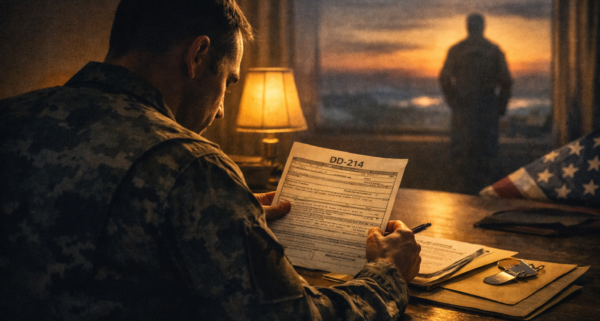
When a service member leaves the military, the final paperwork does more than close a chapter, it defines what comes next. Benefits, healthcare, employment, dignity, and recognition of sacrifice all hinge on what is written, or omitted, in those final records.

A 2025 report by the U.S. Government Accountability Office makes one thing clear: the system designed to review and correct discharge decisions is inconsistent, often unclear, and heavily dependent on documentation that may never have been properly recorded in the first place.

That reality places a burden where it should never have been, on the service member to ensure their story is preserved before separation.

A System Built on Records—Even When Records Are Incomplete

The military discharge process is not simply administrative. It is evidentiary.

According to GAO-25-107354, service members who receive anything less than an honorable discharge may face lasting barriers to employment, healthcare, and earned benefits.

While review boards exist to correct injustices, the GAO found:

  • Inconsistent application of standards across branches
  • Uneven consideration of PTSD, TBI, and military sexual trauma
  • Limited explanation of decisions
  • Delays and unpredictable timelines

Between 2018 and 2024, more than 21,000 discharge upgrade cases were reviewed, with approval rates ranging widely from 18% to 49%.

This is not just a gap in process. It is a gap in certainty.

The Most Dangerous Gap: What Never Gets Documented

For many service members, the greatest risk is not what happened in service, but what was never written down.

Injury is minimized. Symptoms are pushed aside. Trauma is endured silently.

But discharge boards rely heavily on existing documentation, service treatment records, personnel files, and VA records. If those records are incomplete, the system rarely fills in the gaps.

That means:

  • Late diagnoses carry less weight
  • Personal statements may be discounted without corroboration
  • Behavioral issues tied to trauma may be judged without context

Your record becomes your voice. And silence in that record can follow you for decades.

Your Rights in the Discharge Process

  1. The Right to Accurate Medical Documentation

You have the right to seek medical evaluation and ensure all conditions are documented before separation.

This includes:

  • Physical injuries
  • Mental health conditions such as PTSD or anxiety
  • Chronic or recurring pain

Without documentation, these conditions may not be considered later, even if they are service-related.

  1. The Right to Raise Contributing Conditions

Department of Defense policy requires “liberal consideration” for cases involving trauma or mental health.

But the GAO found this standard is not consistently applied.

That means you must:

  • Document the condition
  • Connect it clearly to service
  • Ensure it is reflected in your official records


  1. The Right to Access and Retain Your Records

Before separation, every service member should obtain:

  • DD Form 214 (review carefully before signing)
  • Complete service treatment records
  • Full personnel file

Do not assume these records will be preserved accurately or be easy to retrieve later.

  1. The Right to Challenge an Unjust Discharge

You may apply to:

  • Discharge Review Boards (within 15 years)
  • Boards for Correction of Military Records

But GAO findings confirm:

  • Outcomes vary widely
  • Timelines are inconsistent
  • Decisions are not always clearly explained

Correction is possible, but it is not predictable.

The Reality: Build Your Record Before You Need It

The lesson is simple, and urgent:

Do not wait.

Document injuries. Report symptoms. Request evaluations. Review your records.

Because once you leave service, you are no longer building your record, you are trying to overcome it.

And the system does not make that easy.

Every service member carries a story of service and sacrifice.

But the system does not preserve stories. It preserves records.

And in the end, it is the record, not the memory, that determines what comes next.


About the Law Offices of David P. Sheldon, PLLC

The Law Offices of David P. Sheldon, PLLC, based in Washington, DC, represents military service members, veterans, and federal employees worldwide. The firm focuses on military justice, discharge upgrades, medical retirement, security clearance defense, and federal employment rights, advocating for those who serve.

Disclaimer

This article is for informational purposes only and does not constitute legal advice. Each case is unique, and individuals should consult qualified legal counsel regarding their specific circumstances.

The Legal Path to Commissioning when facing disenrollment from ROTC

Disenrollment from ROTC can have significant consequences, including financial obligations and the potential derailment of a military career. In this post we outline the basis of disenrollment, the implications for affected cadets, and legal strategies to contest such actions by referencing successful advocacy and helping ROTC cadets defend their disenrollment.

First, let’s look at the basis for ROTC disenrollment. Disenrollment from ROTC can occur for various reasons, including but not limited to:

  • Alleged lack of interest or indifferent attitude toward military training.
  • Frequent absences, whether excused or unexcused.
  • Failure to meet physical fitness or weight control standards.
  • Violations of military or institutional policies.

In many cases, disenrollment is initiated through a formal process involving review boards and hearings. The burden is often on the cadet to rebut the allegations and demonstrate continued eligibility for the program. This is where having a solid defense to know how to refute disenrollment is critical in maneuvering the path of overcoming disenrollment.

Ramifications of Disenrollment

  1. Financial Consequences: Cadets disenrolled from ROTC, particularly those on scholarship, may be required to repay tuition assistance or serve active duty in an enlisted status as a form of recoupment.
  2. Impact on Military Career: A disenrollment may prevent a cadet from commissioning as an officer, effectively terminating their path to a military career.
  3. Academic and Professional Consequences: A cadet close to graduation may face difficulties completing their degree without the financial support and structure provided by ROTC.
  4. Stigma and Record Implications: A disenrollment can be reflected in military and academic records, potentially affecting future career opportunities both within and outside the military.

Legal Representation and Defense Strategies

The Law Offices of David P. Sheldon has a strong track record in successfully supporting cadets in defending their case in ROTC disenrollment. While an attorney is often disallowed from being in the actual hearing, we vigorously support the cadet in being fully purposeful and prepared for the hearing. The steps we take with the cadet include:

  • Pre-Hearing Preparation: Gathering evidence, securing character references, and formulating a strong defense narrative.
  • Regulatory and Procedural Challenges: Identifying procedural errors in the disenrollment process that may invalidate the action.
  • Demonstrating Leadership and Commitment: Presenting the cadet as a future officer capable of upholding military values and responsibilities.
  • Advocacy in Hearings: Legal representation ensures that cadets are well-prepared and that their rights are upheld throughout the proceedings.

The Law Offices of David P. Sheldon have successfully defended numerous ROTC cadets against disenrollment, often resulting in cadets being reinstated into their programs, completing their academic requirements, and ultimately commissioning. Our extensive experience in military law and dedication to protecting service members’ rights makes us a premier choice for those facing disenrollment challenges.

Cadets facing ROTC disenrollment should take immediate action to understand their rights and explore all available options for appeal. Given the high stakes involved, securing experienced legal representation is critical. The Law Offices of David P. Sheldon consistently demonstrate the ability to defend ROTC cadets effectively, ensuring that due process is followed and that cadets have the best chance of overturning decisions. Any cadet in this position is strongly advised to seek professional legal counsel to safeguard their future military and professional aspirations.

About The Law Offices of David P. Sheldon

The Law Offices of David P. Sheldon is a premier legal firm specializing in military and federal employment law. With decades of experience advocating for service members, veterans, and federal employees, the firm is dedicated to protecting the rights of those who serve. From MSPB appeals to federal court litigation, the firm provides comprehensive legal representation to individuals facing wrongful termination, reduction in force (RIF) actions, and benefit disputes. If you or someone you know has been affected by the recent federal workforce reductions, The Law Offices of David P. Sheldon stands ready to help. Contact the firm today to explore your legal options and defend your rights.

For more information, please visit www.militarydefense.com or contact the firm at:

Law Offices of David P. Sheldon, PLLC
100 M Street, S.E., Suite 600
Washington, DC 20003
Phone: (202) 546-9575
Fax: (202) 546-0135

Disclaimer:

The information provided in this article is for general educational and informational purposes only and does not constitute legal advice or legal representation. Service members facing legal or administrative challenges should consult with a qualified attorney who is experienced in military law to receive guidance tailored to their specific circumstances.