
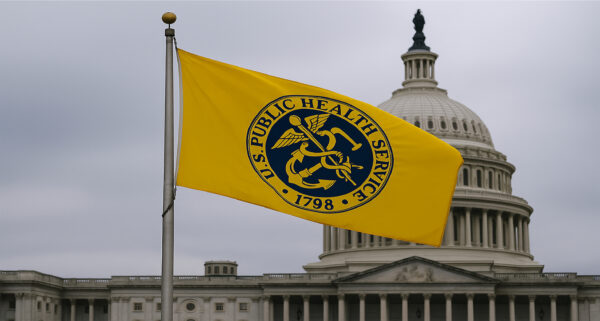
USPHS Retirement Pay Class Action Voluntarily Dismissed Following Restoration of Funding; Firm Remains Prepared to Act if Payments Are Disrupted Again

USPHS Retirees File for Retiree Benefits and Backpay

The Law Offices of David P. Sheldon, PLLC has voluntarily dismissed the 2025 class action lawsuit filed on behalf of U.S. Public Health Service (USPHS) retirees regarding delayed retirement pay during the federal government shutdown.

The dismissal follows the end of the shutdown and the restoration of appropriations, as well as the government’s issuance of full back pay for previously missed retirement payments. With funding restored and payments made, the case no longer presented a live case or controversy required for continued litigation.

“This was a voluntary dismissal driven by changed circumstances,” the firm explained. “Once appropriations were restored and retirees were paid the amounts owed, the legal basis for maintaining the action no longer existed.”

The firm carefully evaluated whether additional claims could be pursued, including potential recovery of interest for delayed payments, but determined that such claims are not legally viable under existing law. As a result, no remaining damages could be asserted at this time.

Preservation of Rights and Readiness to Act

The voluntary dismissal does not waive or release any future claims. The firm emphasized that it remains prepared to take immediate legal action should the government again fail to appropriate funds for USPHS retirement pay or delay payments following a future shutdown.

“The underlying issue has not been resolved structurally,” the firm noted. “If retirement payments are disrupted again, we stand ready to act without delay.”

Congressional Advocacy Remains Critical

The firm also underscored that lasting protection for USPHS retirees can only be achieved through legislative reform. Unlike other uniformed services, USPHS officers continue to face unequal treatment during full government shutdowns.

Retirees are strongly encouraged to engage in congressional outreach to their Senators and Representatives to advocate for statutory changes that would:

  • Equalize USPHS retirement protections with other uniformed services
  • Ensure uninterrupted retirement payments during future shutdowns
  • Remove retirement pay from vulnerability to annual appropriations lapses

Staying Engaged

Although there is no active class action at this time, the Law Offices of David P. Sheldon, PLLC will continue monitoring funding developments and shutdown risk. Retirees who wish to remain informed or indicate continued interest in future action are encouraged to stay connected.

Contact Us
202-546-9575
www.militarydefense.com


Delay. Defer. Defend. Your Legal Rights Under IRR and National Guard Orders

Are you in the IRR or National Guard and just received activation orders?

With the potential call up of tens of thousands of those of you who have been marking time in the Individual Ready Reserve (IRR), the National Guard or the Army Reserves for almost a decade now, one needs to act carefully to ensure that you consider your options. You may have established a career, a family, and the responsibilities that come with those things when suddenly you are faced with activation and deployment orders. Your world just blew up. Now what?

Recent events in the Middle East portend activation and deployment orders for thousands, if not a 100,000 service members by the end game. Individuals who have served in the National Guard or Reserves may do so believing their commitment will likely remain restricted to weekends or a few weeks a year. While activation and deployment orders are always possible, these soldiers, sailors, Marines, and airmen may not be prepared, especially those who serve in the IRR, to activate and deploy.

Reservists and members of the National Guard should certainly take note and, of course, have a plan in place, especially if they are not in a position to deploy because of work and/or family obligations. But Congress has also allowed for service members to request delay and exemption from orders, through the delay and exemption board. But you must meet the statutory and regulatory bases. And, like everything, timing is critical.

It is important for Reserve and Guard members to understand the time frames in which they may request a delay or deferment in reporting, or an exemption from active duty, since untimely requests may not be processed, and even timely requests can be severely truncated by not understanding the rules and regulations that govern delay and exemption boards. It is also important to have an understanding of the differences between the types of requests and how they may affect a Reserve or Guard member.

The process varies depending on the military department involved, although if denied, generally appeals are available. Having an experienced attorney from the get-go can be critical since members may not be aware of exactly what information they need to provide before a request is considered. Although the process begins with a phone call or a form which may seem simple enough to complete, it is important to know what information a board is looking for in order to provide the strongest application possible. If past conflicts have taught us anything, it is that National Guard members and reservists need to be prepared. Timing is critical. The bottom line is that before you call the number on your orders to the delay and exemption board, let alone submit the form that governs, consult the rules and regulations that apply — or, better yet — call a qualified legal counsel that can assist you in making the very best case for a delay and exemption of your activation and deployment.