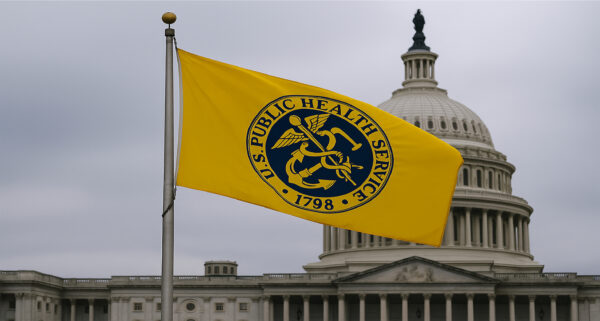
Indigenous Peoples’ Day: Honoring USPHS Officers Serving Tribal Communities

On Indigenous Peoples’ Day, Law Offices of David P. Sheldon, PLLC Honors USPHS Officers Serving Tribal Communities

Washington, D.C. — On Indigenous Peoples’ Day, the Law Offices of David P. Sheldon, PLLC recognizes the history, cultures, contributions, and enduring sovereignty of Indigenous peoples across the United States, while paying special tribute to the U.S. Public Health Service Commissioned Corps officers whose public service brings them into communities across Indian Country.

For many USPHS officers, service is deeply connected to the health and well-being of American Indian and Alaska Native communities.

Commissioned Corps officers serve within the Indian Health Service (IHS), at federal health facilities, and alongside Tribal health programs and urban Indian organizations. They work as physicians, nurses, pharmacists, dentists, engineers, scientists, behavioral health professionals, environmental health specialists, and in many other professional roles.

Some serve in remote communities. Others spend much of their careers working within the same regions, building professional relationships with patients, families, Tribal health leaders, and local health professionals.

Their work is not simply a temporary deployment. For many officers, it is a career of public service.

A Uniformed Service with a Distinct Public Health Mission

The USPHS Commissioned Corps is one of the nation’s uniformed services, but its mission is different from that of the Armed Forces. Its officers use their professional skills to protect health, respond to emergencies, and provide critical services to communities across the country.

That mission has a particularly important connection to the Indian Health Service.

IHS reported in 2026 that it is home to the largest number of USPHS Commissioned Corps officers serving anywhere in the federal government. Those officers contribute to a health system that serves approximately 2.8 million American Indian and Alaska Native people through a nationwide network of federal and Tribal health facilities and urban Indian organizations.

Those numbers tell only part of the story.

Behind them are public health professionals practicing medicine, managing pharmacies, providing dental and behavioral health care, improving sanitation and environmental health, responding to emergencies, developing health programs, and helping communities maintain continuity of care.

The work requires professional skill. It also requires an understanding that service in Tribal communities occurs within a unique government-to-government relationship between Tribal Nations and the United States.

Service Built on Partnership

The relationship between the federal government and Tribal Nations carries legal, historical, and public health responsibilities that extend far beyond any single holiday.

USPHS officers working through IHS become part of the daily effort to fulfill those responsibilities.

Federal policy also allows Commissioned Corps officers assigned to IHS to serve with Tribal health programs operated by Tribes and Tribal organizations. These assignments are based on agreements between IHS and the participating Tribe or Tribal organization, an important recognition that effective health care is built through partnership.

On Indigenous Peoples’ Day, that distinction matters.

This day should not simply be about recognizing Indigenous history. It is also an opportunity to recognize the communities, governments, health professionals, and public servants doing the work today.

For the Law Offices of David P. Sheldon, PLLC, that includes recognizing members of the USPHS Commissioned Corps.

Honoring Those Who Serve

The Law Offices of David P. Sheldon, PLLC has the privilege of representing members of the uniformed services, including officers of the U.S. Public Health Service Commissioned Corps.

We understand that a uniform is more than a symbol.

Behind it is a professional career, a commitment to public service, and, for many USPHS officers, a willingness to work wherever their expertise is most needed.

For officers serving American Indian and Alaska Native communities, that commitment may mean practicing in rural or geographically isolated areas, responding to public health
USPHS Retirement Pay Class Action Voluntarily Dismissed Following Restoration of Funding; Firm Remains Prepared to Act if Payments Are Disrupted Again

USPHS Retirees File for Retiree Benefits and Backpay

The Law Offices of David P. Sheldon, PLLC has voluntarily dismissed the 2025 class action lawsuit filed on behalf of U.S. Public Health Service (USPHS) retirees regarding delayed retirement pay during the federal government shutdown.

The dismissal follows the end of the shutdown and the restoration of appropriations, as well as the government’s issuance of full back pay for previously missed retirement payments. With funding restored and payments made, the case no longer presented a live case or controversy required for continued litigation.

“This was a voluntary dismissal driven by changed circumstances,” the firm explained. “Once appropriations were restored and retirees were paid the amounts owed, the legal basis for maintaining the action no longer existed.”

The firm carefully evaluated whether additional claims could be pursued, including potential recovery of interest for delayed payments, but determined that such claims are not legally viable under existing law. As a result, no remaining damages could be asserted at this time.

Preservation of Rights and Readiness to Act

The voluntary dismissal does not waive or release any future claims. The firm emphasized that it remains prepared to take immediate legal action should the government again fail to appropriate funds for USPHS retirement pay or delay payments following a future shutdown.

“The underlying issue has not been resolved structurally,” the firm noted. “If retirement payments are disrupted again, we stand ready to act without delay.”

Congressional Advocacy Remains Critical

The firm also underscored that lasting protection for USPHS retirees can only be achieved through legislative reform. Unlike other uniformed services, USPHS officers continue to face unequal treatment during full government shutdowns.

Retirees are strongly encouraged to engage in congressional outreach to their Senators and Representatives to advocate for statutory changes that would:

  • Equalize USPHS retirement protections with other uniformed services
  • Ensure uninterrupted retirement payments during future shutdowns
  • Remove retirement pay from vulnerability to annual appropriations lapses

Staying Engaged

Although there is no active class action at this time, the Law Offices of David P. Sheldon, PLLC will continue monitoring funding developments and shutdown risk. Retirees who wish to remain informed or indicate continued interest in future action are encouraged to stay connected.

Contact Us
202-546-9575
www.militarydefense.com


Law Offices of David P. Sheldon Advocates for Amendment to SB93 to Expand Tax Benefits for Uniformed Services Retirees

Law Offices of David P. Sheldon Advocates for Fair Tax Treatment of All Uniformed Service Retirees in Montana

Washington, D.C. – The Law Offices of David P. Sheldon, a leading firm in military and veteran legal advocacy, is actively supporting an amendment to Montana Senate Bill 93 (SB93) to ensure that all uniformed service retirees, including those from the U.S. Public Health Service (USPHS) and the National Oceanic and Atmospheric Administration (NOAA) Corps, receive equitable tax benefits.

Currently, SB93 provides a partial tax exemption on retirement income for military retirees who meet specific residency requirements. However, the bill excludes retired members of the USPHS and NOAA Corps, despite their official classification as part of the United States Uniformed Services under 10 U.S.C. 101.

Proposed Amendment to SB93

The Law Offices of David P. Sheldon is advocating for a critical amendment to:

Expand eligibility to include all uniformed services as defined by federal law.

Modify SB93’s language to reflect the full scope of eligible retirees, including USPHS and NOAA Corps personnel.

Remove the five-year limitation and extend the benefits permanently beyond 2033.

Why This Matters

The U.S. Public Health Service Commissioned Corps (USPHS) has served Montana and the nation for over a century, leading public health initiatives, emergency responses, and critical healthcare services—especially in underserved communities. Despite this, USPHS retirees remain excluded from Montana’s proposed tax relief, even though they receive the same pay and benefits as their military counterparts.

Montana residents can take action now by urging their legislators to support the amendment. A one-page fact sheet with key details about SB93’s requested changes is available.

How You Can Help

✔ Contact Montana state legislators and request their support for the SB93 amendment.
✔ Use our pre-drafted email template to easily reach out to your representatives [insert link].
✔ Spread the word on social media using #SB93 and tagging relevant policymakers.

About the Law Offices of David P. Sheldon

The Law Offices of David P. Sheldon is a nationally recognized firm specializing in military law, veterans’ rights, and administrative advocacy. With decades of experience fighting for service members and their families, our firm remains committed to securing justice and fair treatment for those who have served.

For media inquiries or legal assistance, please contact:

Law Offices of David P. Sheldon, PLLC
MilitaryDefense.com
202-546-9575

Disclaimer:

The information provided in this press release is for general educational and informational purposes only and does not constitute legal advice or legal representation. Service members facing legal or administrative challenges should consult with a qualified attorney who is experienced in military law to receive guidance tailored to their specific circumstances.