
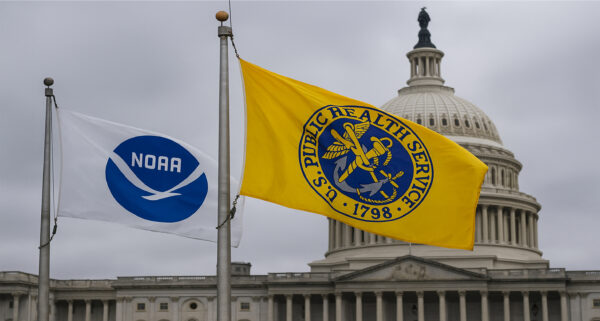
Pending Legal Action: USPHS and NOAA Retirees Left Without Pay During Government Shutdown

Pending Legal Action: USPHS and NOAA Retirees Left Without Pay During Government Shutdown

Washington, D.C. — October 15, 2025

The Law Offices of David P. Sheldon, PLLC, is examining the legal basis for a class action lawsuit on behalf of retired officers and annuitants of the U.S. Public Health Service (USPHS) and the National Oceanic and Atmospheric Administration (NOAA) who may not receive their retirement pay during the ongoing federal government shutdown.

While most uniformed service retirees—including those from the Department of Defense (“DoD”) and the Coast Guard—will continue to receive their earned retirement benefits through the Military Retirement Fund (“MRF”), USPHS and NOAA retirees are excluded from that system. Their payments are instead drawn from agency-specific discretionary appropriations, which halt when Congress fails to pass a continuing resolution or budget.

This funding disparity leaves USPHS and NOAA retirees vulnerable to the political process, despite their equal standing as uniformed service members under federal law (10 U.S.C. § 101(a)(4)). The claims would potentially be subject to review in the U.S. Court of Federal Claims and would challenge this inequity and seek both immediate restoration of withheld pay. and a declaratory judgment establishing that these retirees’ benefits are mandatory entitlements protected from budgetary suspension.

“No retiree should lose pay simply because their service fell under a different department seal,” said David P. Sheldon, founding attorney. “These men and women served under the flag of the United States just like their DoD and Coast Guard counterparts—and the government’s inaction has real human consequences.”

Who Is Affected

  • Included: Retirees and annuitants of the USPHS and NOAA Commissioned Corps who did not receive their scheduled retirement or survivor payments during the shutdown period.
  • Not Included: Retirees of the Army, Navy, Air Force, Marine Corps, Space Force, and Coast Guard, whose payments are statutorily protected through the MRF.
  • Potential Expansion: Federal civilian retirees may be affected indirectly but are not part of this pending action.

Legal Recourse for Affected Retirees

Eligible retirees may pursue the following avenues of relief:

  1. Class Participation:
    Retirees who have experienced nonpayment of retirement benefits may seek inclusion in the pending class action once filed. The case will argue that USPHS and NOAA retirement pay statutes (42 U.S.C. § 212, § 213a; 33 U.S.C. § 853) are money-mandating under the Tucker Act (28 U.S.C. § 1491), giving the U.S. Court of Federal Claims jurisdiction to order payment and interest.
  2. Administrative Inquiry:
    Retirees should retain all correspondence and payment statements from the Coast Guard Pay & Personnel Center (PPC), which processes payments for USPHS and NOAA retirees. Written confirmation of nonpayment or delayed disbursement strengthens future claims.
  3. Individual Filing (Optional):
    Some retirees may choose to file an individual claim or mandamus petition if they experience unique financial hardship or are excluded from the class definition. Such cases may also assert violations of the Anti-Deficiency Act and Equal Protection principles under the Fifth Amendment’s Due Process Clause.
  4. Legislative Advocacy:
    In parallel, affected retirees may contact congressional representatives to urge the adoption of a statutory parity amendment—similar to the FY 2021 NDAA inclusion of the Coast Guard in the MRF—that would permanently protect retirement pay for USPHS and NOAA retirees.

Legal Background

The Anti-Deficiency Act (31 U.S.C. § 1341) prohibits the government from obligating funds not yet appropriated. However, mandatory entitlements such as Social Security and MRF-based military pensions continue during shutdowns because Congress has permanently appropriated those funds.
USPHS and NOAA retirees fall into a legal gap: their authorizing statutes require that pay “shall be paid,” but Congress never created a corresponding permanent appropriation. As a result, the agencies’ payment authority vanishes when appropriations lapse—despite statutory entitlement.

The forthcoming lawsuit will argue that “shall be paid” imposes a nondiscretionary duty, making retirement pay an obligation of the United States independent of annual funding. The government’s failure to pay, therefore, constitutes an unlawful withholding of compensation earned through federal service.

Statement from Counsel

“Congress has recognized eight uniformed services, not five branches and three exceptions,” said Annie Morgan, senior military defense counsel. “Parity must mean protection. If one uniformed retiree is paid during a shutdown, all should be.”

How to Get Involved

Retirees or survivors of the USPHS or NOAA Commissioned Corps who have missed or delayed payments due to the shutdown are encouraged to contact The Law Offices of David P. Sheldon, PLLC at militarydefense.com for updates on the case and guidance on preserving their claims.

Disclaimer

This post is for informational purposes only. It does not constitute legal advice, nor does it create an attorney-client relationship. The lawsuit described herein has not yet been filed. Individuals should seek personalized legal guidance regarding their eligibility and options.


 

Government Pushes Reconsideration in Airman’s Landmark Reversal- Defense Holds Ground

Montana Air

Government Pushes Reconsideration in Airman’s Landmark Reversal — Defense Holds Ground

Just weeks after the Court of Appeals for the Armed Forces (CAAF) issued a unanimous ruling overturning the wrongful conviction of Senior Airman whose life was derailed by withheld evidence, the government is attempting to roll back the decision.

On September 15, 2025, the CAAF found that prosecutors violated Brady v. Maryland by withholding exculpatory evidence and destroying investigative files, ultimately denying SrA Bryce Roan a fair trial. That ruling restored his rank, pay, and dignity after years of injustice.

Now, the Air Force Government Trial and Appellate Division has filed a Petition for Reconsideration, arguing that the Court overlooked evidence and that the exoneration was premature.

The Government’s Position

In its October 8 reply, the government contends that SrA Roan “failed to show” any admissible proof that dimethylhexylamine (DMHA), the ingredient found in the pre-workout powder central to the case, could cause a false positive for cocaine. The brief dismisses the cumulative evidence recognized by the Court, claiming the “missing link” in Roan’s defense is scientific proof and that no witness could testify that DMHA could trigger such a false reading.

The government further asserts that because Roan’s roommate, SSgt N.W., did not use the DMHA defense after being granted a continuance in his own trial, the theory lacks credibility, arguing that if the defense were viable, it would have been used then.

The Defense Fires Back

In a powerful response filed October 6, the defense team led by Senior Military Defense Attorney Annie W. Morgan, rejected the government’s attempt to relitigate settled law.  She argued that the request for reconsideration was nothing more than “a refusal to accept accountability,” emphasizing that Supreme Court precedent requires courts to assess all suppressed evidence cumulatively, not isolate it piecemeal.

“Reconsideration is not a second bite at the apple,” the defense brief stated. “It is an audacious attempt to recast accountability as error.”

The defense brief reaffirms that the withheld evidence, including destroyed files, undisclosed interviews, and internal Air Force communications that stripped Roan of the ability to raise an innocent ingestion defense. The filing underscores that it was government misconduct, not defense deficiency, that created the evidentiary gap the government claims was overlooked.

“Having failed to disclose, failed to preserve, and failed to confront its obligations,” wrote, “the Government now faults this Court for holding it accountable.”

What’s Next

With both sides’ briefs now before the CAAF, the nation’s highest military court will determine whether to grant reconsideration or stand by its unanimous ruling. For SrA Roan, the case is about more than legal precedent, it’s about reclaiming a life and career nearly lost to bureaucratic indifference and prosecutorial overreach.

About the Law Offices of David P. Sheldon, PLLC

The Law Offices of David P. Sheldon, PLLC, based in Washington, D.C., is a leading firm representing service members, federal employees, and veterans before military and federal courts. The firm is nationally recognized for its work defending those whose rights and careers have been jeopardized by unjust actions within the military justice system.

Disclaimer

This release is for informational purposes only and does not constitute legal advice. Past results do not guarantee similar outcomes.

A Veteran’s Fight for Justice Continues in Federal Court Against the U.S. Navy

Veteran’s Fight for Justice Continues in Federal Court Against the U.S. Navy

A decorated U.S. Navy veteran has taken his fight for justice to the U.S. Court of Appeals for the D.C. Circuit, challenging what he contends is an unfair and unlawful disability rating that stripped him of the retirement benefits he earned through combat service. Represented by attorney Dylan Thayer of the Law Offices of David P. Sheldon, PLLC, the case asks the appellate court to correct a series of errors by the Navy’s Physical Disability Board of Review (PDBR).

A Story of Service and Sacrifice

This veteran served honorably as a Petty Officer First Class in covert reconnaissance squadrons, flying dozens of combat missions across Iraq, Afghanistan, and the Balkans. His role placed him in direct danger, tracking enemy positions, calling in strikes, and witnessing devastation at close range.

One mission in particular, an air campaign that resulted in over 180 enemy combatants killed in action, left lasting scars. In the months that followed, he developed the hallmarks of post-traumatic stress disorder (PTSD): intrusive memories, nightmares, anxiety, and depression. By 2007, Navy doctors determined his PTSD was permanent, ending his career as a flight technician.

Despite his clear diagnosis, the Navy awarded him only a 10% disability rating, far below the 50% rating mandated by federal law (VASRD § 4.129) for service-related PTSD severe enough to cause separation from service. That rating meant severance pay instead of medical retirement, a decision that has denied him lifetime benefits for over 15 years.

A Long Legal Battle

The veteran sought relief through the PDBR, which in 2022 admitted his PTSD was service-connected and warranted a retroactive 50% rating. Yet the Board simultaneously cut his rating back to 10% without ever conducting a follow-up medical examination, contradicting both statute and regulation.

Federal district court upheld the Navy’s decision earlier this year, prompting the veteran to appeal. His case now rests with the D.C. Circuit, where his attorneys argue that the Navy’s actions were arbitrary, capricious, and contrary to law and that the proper remedy is full medical retirement.

“This case is about more than numbers on a chart,” said Dylan Thayer, lead counsel. “It is about honoring the sacrifices of those who served in combat, ensuring that the law is applied fairly, and correcting years of injustice.”

Broader Implications

The outcome of this appeal could have lasting implications for thousands of veterans who were medically separated with low ratings between 2001 and 2009, a period Congress has acknowledged was plagued by systematic under-rating of combat-related disabilities.

For this veteran, the case is deeply personal. “After everything he gave in service to his country, he deserves the benefits promised under law,” Thayer added.

Disclaimer

This press release is for informational purposes only and does not constitute legal advice. Reading this release does not create an attorney–client relationship. Every case is unique, and results depend on the facts and circumstances of each matter.

About the Law Offices of David P. Sheldon, PLLC

The Law Offices of David P. Sheldon, PLLC, based in Washington, D.C., is a nationally recognized boutique law firm representing service members, federal employees, and veterans in complex military and federal employment matters. With decades of combined experience, the firm advocates for those facing injustice in courts-martial, boards of inquiry, correction boards, security-clearance cases, and federal appeals.

Army Family Files Federal Lawsuit Over Privacy Act Violations After Unlawful Release of Records

Privacy Act

A married Army couple has filed suit in the U.S. District Court for the District of Columbia, alleging the Department of the Army unlawfully released sensitive personal information protected under federal law. At the heart of the case is a military police report that contained unredacted details about the family, including Social Security numbers, Department of Defense identification numbers, dates of birth, and the names of their minor children.

The couple contends that the release of this information, without their knowledge or consent, directly violated the Privacy Act of 1974, 5 U.S.C. § 552a, which prohibits government agencies from disclosing personal records contained within a “system of records” absent a written request or authorization. The law makes clear that any intentional or willful release of protected data that causes harm opens the door to civil liability.

Here, the unredacted report was transmitted to a third party during a private custody dispute. Not only was the disclosure made without any lawful basis, but the Army itself later conceded through its Installation Management Command that the report had been released in violation of federal law. The complaint alleges the release was willful and intentional, even occurring after the Army employee responsible received a system-generated warning about disseminating personally protected information.

Legal precedent strengthens the family’s claim. In Doe v. U.S. Department of Justice and Chambers v. U.S. Department of the Interior, the D.C. Circuit confirmed that unlawful disclosures causing adverse effects, such as financial costs or emotional distress, are actionable. The complaint cites these principles in establishing all four required elements of a Privacy Act damages claim:

  1. The police report was a record within a system of records.
  2. The Army improperly disclosed the record.
  3. The disclosure was willful and intentional.
  4. The plaintiffs suffered adverse effects, including more than $20,000 in legal fees and lasting emotional harm.

“This is not just a technical violation,” said their counsel, Dylan Thayer of the Law Offices of David P. Sheldon, PLLC. “When the Army released a document it was explicitly forbidden to share, it violated a fundamental promise of privacy and accountability. The consequences for this family were immediate and severe.”

The lawsuit seeks damages, attorneys’ fees, and other relief under the Privacy Act, sending a clear message: military families, like all Americans, are entitled to the full protections Congress enacted to keep their personal information secure.

Disclaimer

This release is for informational purposes only and does not constitute legal advice. Viewing or sharing this content does not create an attorney–client relationship.

About the Law Offices of David P. Sheldon, PLLC

The Law Offices of David P. Sheldon, PLLC is a premier boutique law firm based in Washington, D.C., representing service members, veterans, federal employees, and their families nationwide. With decades of combined experience, the firm advocates for justice in military, administrative, and federal courts.

Federal Medical Malpractice Settlement Reached After Administrative Denials, Federal Filings, and Painstaking Advocacy

Army Pilot Wins FTCA Medical Malpractice

Federal Medical Malpractice Settlement—Fox Army Health Center, Redstone Arsenal, Alabama

A Life Forever Changed: Settlement Brings Justice, But Not the Years Lost

After years of relentless legal battles, a long-awaited settlement has been reached in a medical malpractice case brought under the Federal Tort Claims Act (FTCA) against the United Army. Represented by attorney Dylan Thayer of the Law Offices of David P. Sheldon, PLLC, the client, a retired service member and federal civilian employee, faced a devastating medical injustice that will forever shorten his life.

For years, the client entrusted military medical providers with his annual flight physicals, a critical requirement for his career. These examinations were supposed to safeguard not just his professional readiness, but his health. Yet, despite his family history of prostate cancer and his repeated disclosures of that risk, military medical providers at Fox Army Health Center, Redstone Arsenal, Alabama failed to perform the basic and recommended PSA testing for three consecutive years.

The consequence was catastrophic. By the time the cancer was discovered, it was Stage 4 and terminal, with metastasis spread to the bones and spine. His prognosis, once filled with promise and years of service ahead, was now tragically shortened.

The Veteran pursued justice not for financial gain, but for accountability and recognition of the harm done. His fight exposed systemic failures in military healthcare, failures that left him without the chance for earlier treatment that could have extended his life.

“This is a case about accountability and dignity,” said Attorney Dylan Thayer. “Our client trusted the system designed to protect him, and the system failed him. While the settlement offers some measure of justice, it comes at a heartbreaking cos, years of life lost that no legal resolution can restore.”

The settlement marks the conclusion of a legal journey that spanned years of administrative denials, federal filings, and painstaking advocacy. It is a victory that carries both relief and sorrow: relief that justice has been recognized, and sorrow that justice came too late to change the ultimate outcome.

This case highlights a critical reminder for military and civilian healthcare systems alike: adherence to medical standards is not optional. The costs of negligence are not measured in dollars alone, but in human lives and the time unjustly taken from them.

About the Law Offices of David P. Sheldon, PLLC:

The Law Offices of David P. Sheldon, PLLC, based in Washington, D.C., is a national law firm dedicated to representing service members, veterans, and federal employees in matters involving military justice, administrative law, federal employment, and medical malpractice. The firm has built a reputation for delivering results in complex cases where the stakes are life, liberty, and livelihood.

Disclaimer:

This press release is for informational purposes only and does not constitute legal advice. Reading this release does not create an attorney-client relationship.


OPINION: Silencing Women in Service Weakens America’s Strength

Image adapted from the Defense Advisory Committee on Women in the Services (DACOWITS), U.S. Department of Defense, 2013 DACOWITS Report (public domain).

OPINION: Silencing Women in Service Weakens America’s Strength

By the Law Offices of David P. Sheldon, PLLC

A Step Backward

Defense Secretary Pete Hegseth’s decision to shut down the Defense Advisory Committee on Women in the Services (DACOWITS) is not just about ending an advisory group. It is part of a broader push to reshape the image of the military under a narrow “warrior ethos.” In doing so, it risks violating the rights of service members and weakening national security.

For nearly 75 years, DACOWITS gave women in uniform a voice inside the Pentagon, flagging problems with equipment, training, health care, and readiness. Its closure silences that voice. Even more troubling, it signals a willingness to roll back decades of progress where women have earned the right, through law and sacrifice, to serve in every capacity, including combat.

And this was not theoretical progress. DACOWITS directly shaped the military’s ability to function effectively. As of 2025, approximately 94% of DACOWITS recommendations have been either fully or partially adopted by the Department of Defense since its creation in 1951. Those changes, from equipment design to personnel policies, had real, measurable impacts on readiness and national security. Closing the committee risks losing a proven engine of reform.

The Legal Reality

Hegseth does not have the legal power to remove women from combat or other positions simply because of their sex. Congress repealed combat-exclusion laws years ago, and the Supreme Court has made clear that discrimination based on gender requires an “exceedingly persuasive justification.” Any attempt to bar women would trigger immediate lawsuits and constitutional challenges under the Fifth Amendment’s equal-protection guarantee.

Uniformed service members—whether Army, Navy, Space Force, NOAA, or the U.S. Public Health Service—fall under Title 10. That means their rights are protected by federal law, and any blanket policy to exclude them based on sex would be unlawful.

Security Consequences

This is more than a legal fight. Removing women from full participation in service threatens national security. Research consistently shows that diverse teams perform better, especially in complex missions overseas and at home. By closing down advisory committees and silencing voices, the Pentagon narrows its talent pool at a time when recruiting and retention are already at crisis levels.

For non-armed services like the USPHS and NOAA, which often deploy alongside the military in disaster zones or global health missions, the chilling effect is real. Labeling inclusion efforts as “woke” undermines critical coordination and risks sidelining officers who are already vital to national response efforts.

A Dangerous Precedent

Beyond the issue of gender, the new directive restricting service members’ ability to speak at outside events and panels further shortens the lines of communication between the Pentagon and the public. When commanders control not just operations but also outside speech, transparency suffers. Service members—military, federal, or Tribal—are left with fewer avenues to raise concerns, seek reforms, or expose wrongdoing.

The Path Forward

Commanders and service members who find themselves targeted by discriminatory policies are not without recourse. They can:

  • File Equal Opportunity complaints
  • Pursue Inspector General investigations
  • Petition their respective Boards for Correction of Military or Naval Records (ABCMR, BCNR, etc.)
  • Seek judicial review where appropriate

Our firm stands ready to defend these rights. Title 10 protections apply across the spectrum of uniformed service, and no secretary can erase them by memo.

Conclusion

Rolling back opportunities for women under the guise of “readiness” is both unlawful and unwise. America is strongest when all who are willing and able to serve are judged on merit, not gender. Shuttering transparency and silencing voices threatens readiness, justice, and the very values the military and federal service are sworn to uphold.

References, Resources & Citations

  • Politico, Hegseth shutters Pentagon women’s advisory group, clamps down on outside appearances (Sept. 2025) Politico
  • Hegseth dissolves women’s military committee over ‘divisive feminist agenda’ (The Guardian, Sept 23 2025) The Guardian
  • Hegseth ‘proudly’ terminates Women, Peace, and Security program supported by Trump (Washington Post, Apr 2025) Center for Strategic and International Studies, Women, Peace, and Security Act of 2017 and DoD Implementation (2017–2024 reports) Washington Post
  • Georgetown Institute for Women, Peace and Security (GIWPS), commentary on WPS strategy rollbacks (2025) GIWPS
  • Department of Homeland Security Report on the Implementation of the Women, Peace, and Security (WPS) Act (2022) DHS
  • Department of State Implementation Plan for the U.S. Strategy on Women, Peace, and Security Department of State
  • Women, Peace and Security: Strategic Framework and Implementation Plan (DoD, 2020) Policy Brief
  • Women, Peace, and Security Act of 2017 (Public Law 115-68) Congress
  • DACOWITS Annual Reports to the Secretary of Defense (archival, 1951–2024) DACOWITS
  • Title 10, U.S. Code, governing armed and uniformed services Cornell
  • Department of Defense Inspector General and GAO reports on military recruiting and readiness (2023–2025) GAO Readiness Reports


Army Veteran Wins Medical Retirement After Long Fight for Justice

After fighting for over 10 years an army veteran gets justice

After more than a decade of pain, appeals, and repeated denials, a U.S. Army veteran has finally secured justice. On September 12, 2025, following a formal hearing before the Physical Evaluation Board (PEB), the Board recognized what years of medical evidence had already made clear: the veteran’s combat-related injuries rendered him unfit for service and entitled him to a medical retirement.

This decision marks the end of a grueling journey that began with a Humvee accident in Iraq in 2008, where the soldier sustained traumatic brain injury, multiple orthopedic injuries, and post-traumatic stress disorder. Rather than receiving the disability evaluation process required by Army regulations, he was left in limbo for years on temporary medical profiles, eventually separated at the end of his service contract in 2011 without the medical retirement he deserved. Despite his documented conditions, which later earned him a 100% permanent and total disability rating from the Department of Veterans Affairs, the Army refused to grant him retirement benefits. For over a decade, he fought through the Army Board for Correction of Military Records and multiple PEB reviews, compiling an extensive record of medical evidence, VA ratings, and legal arguments to prove what should have been recognized years ago, that he was permanently unfit for service. The member even filed suit in District Court, obtaining a remand, which led to his ultimate victory.

“This case demonstrates the perseverance of a soldier who refused to let bureaucracy erase his sacrifice,” said Attorney Dylan Thayer, who represented the veteran. “Our client gave everything for his country, and after years of struggle, the system has finally acknowledged that he was entitled to a medical retirement from the very beginning. It is an honor to stand by him in securing this result.”

The Board’s decision not only restores the veteran’s dignity but also grants him critical benefits, including retirement pay, health care, and backdated entitlements. It sends a broader message that service members should not have to fight for years to obtain the care and recognition that the law already promises them.

About the Law Offices of David P. Sheldon, PLLC

The Law Offices of David P. Sheldon, PLLC, based in Washington, D.C., represents U.S. service members, veterans, and federal employees in military and federal employment law matters, including courts-martial defense, PEB/MEB representation, ABCMR appeals, and security clearance defense. The firm is dedicated to correcting injustices and protecting the rights of those who serve.

Disclaimer

This press release is for informational purposes only and does not constitute legal advice. Reading this release does not create an attorney-client relationship.


Court of Appeals for the Armed Forces Overturns Airman’s Conviction; Restores Honor and Career

Montana Air

The Law Offices of David P. Sheldon, PLLC announced today a significant victory before the United States Court of Appeals for the Armed Forces (CAAF), which unanimously reversed the wrongful conviction of an Airman wrongfully convicted of cocaine use.  The unanimous decision found that prosecutors had wrongfully failed to disclose exculpatory evidence under Brady v. Maryland.

This decision likely secures more than three years of back pay and allowances for the Airman and, most importantly, removes his criminal conviction, ensuring he will be honorably discharged.

From Injustice to Vindication

The young Airman faced a devastating court-martial conviction in 2021 at Little Rock Air Force Base after the government withheld and destroyed critical evidence that could have exonerated him. While one of his co-accused was acquitted and another not even charged, the Airman was left with a court martial conviction, “bad paper” discharge, denied appellate review, and forced to rebuild his life working at a Home Depot.

After his initial Article 69 petition was denied, the Law Offices of David P. Sheldon, PLLC took the case pro bono. When the Air Force Court of Criminal Appeals affirmed the conviction, Senior Military Defense Attorney Annie Morgan, argued the appeal before the CAAF in Spring of 2025.

This morning, the CAAF issued its unanimous decision, ruling that the lower court erred in dismissing withheld exculpatory evidence, a clear violation of Brady v. Maryland. The Court found the government’s destruction of investigative files and failure to disclose evidence fundamentally undermined the fairness of the trial.

A Voice for All Service Members

“This case reaffirms that every service member, no matter their rank, deserves a fair trial,” said Annie Morgan, Senior Military Defense Attorney at the Law Offices of David P. Sheldon. “Our client stood alone for years, but today the Court has restored his honor and ensured that justice prevails.”

Case Impact

The Court set aside both the findings and the sentence, underscoring that suppressed evidence of potential innocent ingestion and investigative misconduct should have been disclosed.

This ruling strengthens due-process protections across the armed forces and sends a clear message that the government must honor its constitutional discovery obligations.

About the Law Offices of David P. Sheldon, PLLC

The Law Offices of David P. Sheldon, PLLC, based in Washington, D.C., is a nationally recognized firm representing military service members, federal employees, and veterans. With a focus on courts-martial defense, medical retirement boards, and appeals before military and federal courts, the firm is committed to safeguarding the rights, careers, and honor of those who serve.

Disclaimer

This release is for informational purposes only and does not constitute legal advice. Past results do not guarantee a similar outcome. No attorney-client relationship is created by this announcement.


Army Chaplain Files New ABCMR Petition Following Court Victory

Army Chaplain Fights for Justice

A Step Forward in Restoring Honor and Correcting Injustice

An Army Chaplain has filed a new application with the Army Board for Correction of Military Records (ABCMR) seeking the removal of a General Officer Memorandum of Reprimand (GOMOR) from her official record. This filing follows her decisive federal court victory earlier this summer, when the U.S. District Court for the District of Columbia found that the Army’s prior refusal to grant relief was “arbitrary and capricious” and remanded her case to the Board

A Career of Service, a Battle for Justice

The Chaplain’s story is one of resilience, faith, and dedication to the soldiers she served. After joining active duty in 2016, she rose to become a Battalion Chaplain in the 101st Airborne Division. Her record included consistent high marks for performance and leadership, along with deep personal commitments to the spiritual and moral well-being of her troops

In 2022, following an administrative dispute with a subordinate soldier, she received a GOMOR. While the Army initially attempted to end her career, a Board of Inquiry later determined she should be retained, recognizing that her conduct did not rise to the level of separation. Even so, the reprimand remained in her permanent record, a stain that hindered her advancement despite subsequent “highly qualified” evaluations and strong endorsements from peers and leaders

In February 2024, the ABCMR itself unanimously recommended removing the reprimand, citing her remorse, strong performance, and the unfair severity of the GOMOR. But in April 2024, that recommendation was overturned by the Deputy Assistant Secretary of the Army. The Chaplain challenged the decision in federal court, and on July 14, 2025, the District Court sided with her, ordering the case returned to the Board for proper reconsideration

Moving the Ball Forward

Now, with her latest ABCMR filing, the Chaplain is seeking to finish what began three years ago: the full restoration of her record and her honor.

“This case is about more than one reprimand,” said her attorney, Dylan Thayer, of the Law Offices of David P. Sheldon, PLLC. “It is about ensuring that a decorated chaplain’s career is not defined by an isolated incident, especially after she has demonstrated unwavering integrity, remorse, and continued excellence in service.”

For the Chaplain, the filing is not simply about personal vindication. It is about correcting the record so that her service is remembered for what it truly is faithful, compassionate, and dedicated to the soldiers she was called to serve.

About the Law Offices of David P. Sheldon, PLLC

The Law Offices of David P. Sheldon, PLLC, based in Washington, D.C., is nationally recognized for its representation of service members, veterans, and federal employees. The firm has extensive experience in military law, corrections of military records, courts-martial defense, and federal employment litigation.

Disclaimer

This press release is for informational purposes only and does not constitute legal advice. Viewing this information does not create an attorney-client relationship.