
OPINION: Silencing Women in Service Weakens America’s Strength

Image adapted from the Defense Advisory Committee on Women in the Services (DACOWITS), U.S. Department of Defense, 2013 DACOWITS Report (public domain).

OPINION: Silencing Women in Service Weakens America’s Strength

By the Law Offices of David P. Sheldon, PLLC

A Step Backward

Defense Secretary Pete Hegseth’s decision to shut down the Defense Advisory Committee on Women in the Services (DACOWITS) is not just about ending an advisory group. It is part of a broader push to reshape the image of the military under a narrow “warrior ethos.” In doing so, it risks violating the rights of service members and weakening national security.

For nearly 75 years, DACOWITS gave women in uniform a voice inside the Pentagon, flagging problems with equipment, training, health care, and readiness. Its closure silences that voice. Even more troubling, it signals a willingness to roll back decades of progress where women have earned the right, through law and sacrifice, to serve in every capacity, including combat.

And this was not theoretical progress. DACOWITS directly shaped the military’s ability to function effectively. As of 2025, approximately 94% of DACOWITS recommendations have been either fully or partially adopted by the Department of Defense since its creation in 1951. Those changes, from equipment design to personnel policies, had real, measurable impacts on readiness and national security. Closing the committee risks losing a proven engine of reform.

The Legal Reality

Hegseth does not have the legal power to remove women from combat or other positions simply because of their sex. Congress repealed combat-exclusion laws years ago, and the Supreme Court has made clear that discrimination based on gender requires an “exceedingly persuasive justification.” Any attempt to bar women would trigger immediate lawsuits and constitutional challenges under the Fifth Amendment’s equal-protection guarantee.

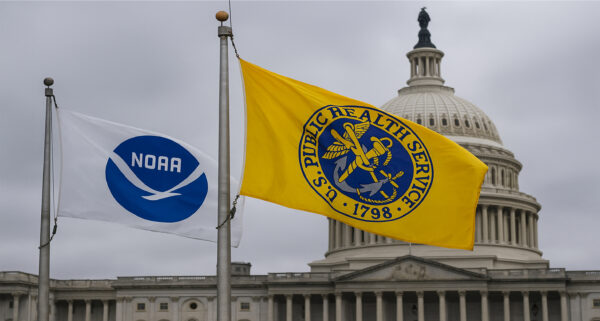
Uniformed service members—whether Army, Navy, Space Force, NOAA, or the U.S. Public Health Service—fall under Title 10. That means their rights are protected by federal law, and any blanket policy to exclude them based on sex would be unlawful.

Security Consequences

This is more than a legal fight. Removing women from full participation in service threatens national security. Research consistently shows that diverse teams perform better, especially in complex missions overseas and at home. By closing down advisory committees and silencing voices, the Pentagon narrows its talent pool at a time when recruiting and retention are already at crisis levels.

For non-armed services like the USPHS and NOAA, which often deploy alongside the military in disaster zones or global health missions, the chilling effect is real. Labeling inclusion efforts as “woke” undermines critical coordination and risks sidelining officers who are already vital to national response efforts.

A Dangerous Precedent

Beyond the issue of gender, the new directive restricting service members’ ability to speak at outside events and panels further shortens the lines of communication between the Pentagon and the public. When commanders control not just operations but also outside speech, transparency suffers. Service members—military, federal, or Tribal—are left with fewer avenues to raise concerns, seek reforms, or expose wrongdoing.

The Path Forward

Commanders and service members who find themselves targeted by discriminatory policies are not without recourse. They can:

  • File Equal Opportunity complaints
  • Pursue Inspector General investigations
  • Petition their respective Boards for Correction of Military or Naval Records (ABCMR, BCNR, etc.)
  • Seek judicial review where appropriate

Our firm stands ready to defend these rights. Title 10 protections apply across the spectrum of uniformed service, and no secretary can erase them by memo.

Conclusion

Rolling back opportunities for women under the guise of “readiness” is both unlawful and unwise. America is strongest when all who are willing and able to serve are judged on merit, not gender. Shuttering transparency and silencing voices threatens readiness, justice, and the very values the military and federal service are sworn to uphold.

References, Resources & Citations

  • Politico, Hegseth shutters Pentagon women’s advisory group, clamps down on outside appearances (Sept. 2025) Politico
  • Hegseth dissolves women’s military committee over ‘divisive feminist agenda’ (The Guardian, Sept 23 2025) The Guardian
  • Hegseth ‘proudly’ terminates Women, Peace, and Security program supported by Trump (Washington Post, Apr 2025) Center for Strategic and International Studies, Women, Peace, and Security Act of 2017 and DoD Implementation (2017–2024 reports) Washington Post
  • Georgetown Institute for Women, Peace and Security (GIWPS), commentary on WPS strategy rollbacks (2025) GIWPS
  • Department of Homeland Security Report on the Implementation of the Women, Peace, and Security (WPS) Act (2022) DHS
  • Department of State Implementation Plan for the U.S. Strategy on Women, Peace, and Security Department of State
  • Women, Peace and Security: Strategic Framework and Implementation Plan (DoD, 2020) Policy Brief
  • Women, Peace, and Security Act of 2017 (Public Law 115-68) Congress
  • DACOWITS Annual Reports to the Secretary of Defense (archival, 1951–2024) DACOWITS
  • Title 10, U.S. Code, governing armed and uniformed services Cornell
  • Department of Defense Inspector General and GAO reports on military recruiting and readiness (2023–2025) GAO Readiness Reports


Privacy and Power: National Guard Protections Under the Privacy Act Remain Vital in Today’s Environment

Federalizing the Reserves
Photo By Tech. Sgt. Andrew Enriquez –
This image was released by the United States National Guard with the ID 250815-Z-EZ983-1008

In 2009, the D.C. Circuit Court of Appeals confronted a seemingly technical, but critically important question: Does the Privacy Act protect members of federally recognized National Guard units when they are not on active federal duty?

The case, In re Sealed Case, No. 07-5251 (D.C. Cir. 2009), involved a Vermont Army National Guard member whose sensitive personal information was improperly disclosed. Represented by David P. Sheldon, the appellant challenged the government’s attempt to carve out the National Guard from the Privacy Act’s protections whenever guardsmen were not on federal activation orders.

The government argued that state Guard units, when not federalized, were “state entities” beyond the Privacy Act. The district court agreed and dismissed the case. On appeal, however, the D.C. Circuit reversed, holding that the statutory structure of Title 10 and the Privacy Act compelled the opposite conclusion: a National Guard unit is always part of the Army National Guard of the United States (ARNGUS), which in turn is a reserve component of the Department of the Army, a “military department” expressly covered by the Privacy Act.

Judge Kavanaugh’s Concurrence

The panel opinion was authored by Judge David Tatel, with a separate concurring opinion by Judge Brett Kavanaugh. Judge Kavanaugh agreed with the outcome but emphasized a streamlined statutory approach. He underscored that the Department of the Army is plainly an “agency” under the Privacy Act and that federally recognized Guard units, by definition, fall under the Army’s umbrella. His concurrence dismissed attempts to overcomplicate the statutory analysis, warning that Congress had already spoken clearly: Guard units federally recognized under Title 10 remain tied to the Army’s command structure and thus remain subject to federal obligations under the Privacy Act.

David P. Sheldon’s Argument

In oral and written arguments, David P. Sheldon advanced the principle that privacy protections must travel with the soldier, regardless of whether a Guard unit is under state or federal command. “The dignity of service members requires no less than full protection of their private information, whether they are standing guard at home or serving abroad,” Sheldon argued in the case.

That position carried the day, shaping precedent for thousands of Guard members across the nation.

Why It Matters Today

The reasoning in In re Sealed Case resonates even more strongly in the present environment:

  1. Expanded Federal Utilization of the Guard.  Guard units are increasingly activated for missions that blur federal and state roles—border enforcement, pandemic response, natural disaster relief, and civil unrest. Their entwinement with federal operations makes the distinction between “state” and “federal” duty even less meaningful. Kavanaugh’s statutory reading—that federally recognized units are always part of ARNGUS—fits today’s operational realities.
  2. Growing Data Vulnerabilities.  With AI systems, electronic health records, and broad interagency data sharing, the risk of wrongful disclosure or algorithmic error in Guard members’ personal information has grown exponentially. The Privacy Act, designed to check exactly these risks, must remain robust.
  3. Current Administration’s Military Policies.  Recent administrations, including the current one, have leaned heavily on Guard forces for politically sensitive missions. Attempts to sidestep federal accountability by pointing to “state status” would threaten Guard members’ rights at precisely the moment they need federal protection most.

Conclusion

The D.C. Circuit’s 2009 decision, argued by David P. Sheldon and joined in judgment by Judge Brett Kavanaugh remains good law. Its logic has only gained strength. The Privacy Act applies to the National Guard not as a matter of policy preference, but because Congress has mandated it. In an age of unprecedented reliance on the Guard and unprecedented risks to personal data, this precedent serves as a vital safeguard for those who serve.

References & Resources

  • In re Sealed Case, No. 07-5251, 551 F.3d 1047 (D.C. Cir. 2009). govinfo.gov 
  • Perpich v. Department of Defense, 496 U.S. 334 (1990).  Justia USSC
  • Privacy Act of 1974, 5 U.S.C. § 552a. Justice.gov
  • Title 10, U.S. Code §§ 101(a)(6), 10101, 10105, 10106, 10107. govinfo.gov
  • Army Regulation 340-21, The Army Privacy Program. Download
  • Defense Privacy Board, Applicability of the Privacy Act to National Guard Records (1992). PCLT

Disclaimer

This publication is for informational purposes only and does not constitute legal advice. Reading this article does not create an attorney-client relationship. Service members and federal employees facing Privacy Act or related issues should consult with qualified legal counsel regarding their specific circumstances.

About the Law Offices of David P. Sheldon, PLLC

Based in Washington, D.C., the Law Offices of David P. Sheldon, PLLC is a nationally recognized firm dedicated to defending the rights of service members, federal employees, and veterans. From courts-martial to federal employment disputes, medical retirement cases, and Privacy Act litigation, our attorneys combine deep knowledge of military and federal law with an unwavering commitment to justice.

Drug Boats: Where Questions of Lethality and Legality Meet — New Analysis From USNI

Full analysis on DOD Bombing of Valenzuelan Drug TrafficOn 2 September 2025, the U.S. military carried out a precision strike against
a suspected drug-smuggling vessel. (Department of Defense)

Drug Boats: Where Questions of Lethality and Legality Meet — New Analysis From USNI


Delve into the intricate intersection of maritime law enforcement and lethal force in “Drug Boats: Where Questions of Lethality and Legality Meet.” Co-authored by Annie Morgan, a Senior Military Attorney at the Law Offices of David P Sheldon, PLLC, this thoughtful examination draws on Annie’s distinguished background—including appearances before the War Courts at Guantánamo Bay, the Court of Military Commissions Review, and the D.C. Circuit.


Together, the article navigates the thorny legal terrain surrounding drug interdiction by sea, weighing the consequences of policy, precedent, and power. Insightful, timely, indispensable.


Read the full article

Drug Boats: Where Questions of Lethality and Legality Meet
By Annie W. Morgan, Esq. and James Halsell
September 2025
Proceedings
Vol. 151/9/1,471


Uncleared and Present Danger: What the Latest Security Clearance Revocations Mean for Your Career

The Bigger Picture: What Just Happened?

Uncertain Futures

When news broke that Director of National Intelligence Tulsi Gabbard had revoked the clearances of thirty-seven current and former officials, many people shrugged, thinking it only affected Washington insiders. But the truth is far more unsettling. This decision is a reminder that the single document that allows someone to enter a secure building, open a classified file, or work on a sensitive project can be taken away in an instant.

For anyone working in the federal government, the military, or with a defense contractor, a security clearance is not just a piece of paper, it is the lifeline of their career. Without it, doors close. Positions disappear. Contracts collapse. Future employment is stalled-out.

Why Security Clearances Are So Critical

Imagine building a career around years of specialized training, loyalty to your country, and a deep knowledge of national security issues. Now imagine that, overnight, all of it is put on hold because your clearance is gone. For most, losing a clearance doesn’t just mean being moved to a different desk. It often means being placed on unpaid leave, reassigned to a job that doesn’t exist, or let go entirely.

Contractors are hit even harder. When one person on a project loses clearance, the whole contract may fall apart. Teams can be dismantled, deadlines missed, and jobs lost, not because of poor performance, but because the government decided that someone no longer had the “key” to the classified world.

The Legal Fallout and Career Risks

These recent revocations raise serious legal concerns. In the normal course of business, an employee whose clearance is questioned has the right to know the reasons and respond before any decision is final. When that process is skipped, due process itself is undermined. That isn’t just unfair, it is potentially unlawful.

There is also the matter of privacy. Federal law, through the Privacy Act of 1974, is designed to protect the personal information of government employees. By publicly naming those whose clearances were revoked, officials may have crossed a legal line. Beyond the legalities, the reputational damage is enormous. Once someone is known as having “lost their clearance,” future job prospects in government or contracting become uncertain, even if the decision was never justified in the first place.

Why This Matters for Everyone With a Security Clearance

Security clearances have always been viewed as neutral, based on trust, judgment, and reliability, not politics or personalities. The recent actions challenge that tradition, and the ripple effect spreads quickly. If professionals begin to believe their careers can be destroyed without explanation, many of the best and brightest will walk away from government service. The talent pool shrinks, morale drops, and national security itself can be weakened.

For individuals, the lesson is clear: your clearance is your career. Protect it as you would protect any other professional license or credential. And if it is ever challenged, act quickly. With the right legal representation, it is possible to appeal and, in some cases, restore a security clearance. But time matters, and experience matters even more.

Where We Come In

At the Law Offices of David P. Sheldon, PLLC, we have seen firsthand the devastation a clearance revocation can bring to a family. Paychecks stop, benefits vanish, and years of hard work are suddenly in jeopardy. We have dedicated our practice to helping federal employees, contractors, and service members fight back when their livelihoods are at risk. Our experience spans every corner of the clearance process, from responding to initial concerns to challenging wrongful decisions in court.

Reading List & Resources

About the Law Offices of David P. Sheldon, PLLC

Based in Washington, D.C., our firm is nationally recognized for defending the rights of service members, federal employees, and contractors. Whether you face a security clearance revocation, a military board action, or a federal employment dispute, our attorneys bring decades of experience to protect your career, your livelihood, and your future.

Disclaimer

This article is for informational purposes only and does not constitute legal advice. Each case is unique, and you should consult with an attorney regarding your specific situation.

Meet the Power Team: Linda & LeAnn – Our Legal Superheroes

Super Heroes Linda and LeAnn

At the Law Offices of David P. Sheldon, PLLC, we believe every great law firm has its champions. For us, those champions are none other than Linda Tiller and LeAnn Hendrick—a dynamic duo who bring extraordinary strength, insight, and dedication to our clients. Together, they are the ultimate power team: unstoppable in their pursuit of justice, fearless in the face of challenges, and unwavering in their commitment to excellence.

Linda Tiller: The Strategist

With decades of experience navigating the complexities of federal and military law, Linda has a sharp mind that sees every angle. Known for her meticulous preparation and deep knowledge of procedure, she is the strategist who maps out the battlefield and ensures our clients are always steps ahead. Her superpower? Turning complex legal tangles into clear, winnable strategies.

LeAnn Hendrick: The Advocate

LeAnn brings unmatched energy, compassion, and tenacity to every case. Clients feel her dedication instantly—she listens, she empowers, and she fights as though each client’s cause were her own. Her superpower? Transforming client concerns into powerful advocacy that resonates in the courtroom and beyond.

A Force for Our Clients

When Linda and LeAnn join forces, their talents amplify. They balance precision with passion, intellect with empathy, and strategy with action. Think of them as the Justice League of our firm—protecting the rights of service members, veterans, and federal employees with the courage and determination of true heroes.

At the end of the day, Linda and LeAnn aren’t just part of our team—they are the shield and the sword for our clients. Their combined strength makes us proud to say:

L & L: We Get the Job Done!

VA to Terminate Collective Bargaining Agreements

Veteran Affairs Cancels Contracts for Collective Bargaining


A federal appeals court on August 1, 2025 allowed 21 agencies—including Justice, State, Defense, Treasury, and Health & Human Services to end collective bargaining agreements. They ruled delaying the executive order would have hurt operations, and they saw no explicit anti-union intent. Now, VA has just taken this even further: on August 6, it formally terminated collective bargaining agreements for most VA bargaining-unit employees—except police, firefighters, and other security staff—as permitted under the same executive order. The VA argued this will let staff spend more time serving veterans and help managers promote strong performers and address poor performance—using funds and time formerly devoted to union activities instead

What the Court and VA Action Mean

  • Federal agencies now have the legal green light to cancel union contracts and set working conditions without union negotiation.
  • VA’s move means most union protections are gone, putting federal workers in more vulnerable positions.
  • This comes amid broader RIFs and staffing changes—many employees may face reassignments or termination with fewer channels to challenge decisions.

Why This Matters to You

If you’re a federal or VA employee:

  • You may no longer have union protections for grievance processes, job security, or discipline.
  • These changes happen at a time when many agencies are already cutting jobs or restructuring under secretive RIF processes.
  • It’s now even more critical to know your rights, keep detailed records, and seek legal help when your work status changes—especially for those affected by RIFs or disciplinary actions.

About the Law Offices of David P. Sheldon, PLLC:
The Law Offices of David P. Sheldon, PLLC, based in Washington, D.C., is dedicated to providing exceptional legal representation to military service members and federal employees facing legal challenges. Specializing in military justice, veterans’ rights, and federal employment law, we are committed to advocating for the rights and well-being of our clients. For more information, please visit our website at www.militarydefense.com.

Event Reminder


Disclaimer: This article is for informational purposes and does not form an attorney-client relationship. Please consult an attorney for personalized legal advice.


Sources Cited

  • Appeals Court lifts injunction on ending federal bargaining rights Reuters
  • VA terminates collective bargaining contracts for most bargaining-unit employees VA Press

Federal Employment Law Virtual Town Hall on Monday, August 19 at 2:00 PM ET

Federal Employment Town Hall Hosted by MLPN August 19, 2025

Attorney David P. Sheldon and Annie Morgan to Join Expert Panel for Federal Employment Law Zoom Town Hall on August 19, 2025 @ 1 PM CT/2 PM ET for Virtual Town Hall

Question and Answer Panel for MLPN

David P. Sheldon, founding attorney at the Law Offices of David P. Sheldon, PLLC, and Annie Morgan, Senior Military Attorney at the firm, will speak on a national expert panel during a Federal Employment Law Virtual Town Hall on Monday, August 19 at 2:00 PM EST. The event, hosted by the Military Law Practitioners Network (MLPN).

The panel will address how ongoing legal developments, including agency-driven contract terminations and the erosion of union protections, are impacting job security, due process rights, and available legal remedies for federal workers.

Panelist Profiles

David P. Sheldon
As the founder of a nationally recognized federal and military law firm based in Washington, D.C., Mr. Sheldon has decades of experience representing service members and federal employees in complex legal forums, including MSPB, federal courts, and Boards for Correction of Military Records. He is a trusted advocate in RIF appeals, wrongful discharge, and employment record correction.

Annie Morgan
A Senior Military Attorney at the Law Offices of David P. Sheldon, Annie Morgan brings extensive litigation experience on behalf of service members and federal workers. Her work includes advocating before military boards and defending clients facing termination, discharge review, and misconduct allegations.

Published Resources & Articles By Law Offices of David P Sheldon, PLLC

  • Fighting for Your Rights as a Federal Employee: Challenging Unjust Terminations – Outlines procedural protections under Title 5, VEOA, and the MSPB, and action steps for RIF victims
  • Displaced Federal Workers: Preparing grievances and appeals, challenging improper RIFs – Best practices and timelines for appeals and legal avenues
  • Federal Employees Facing Wrongful Termination and Reinstatement – Advises on clearing personnel records, appeals, and preserving future benefits

Event Details: Federal Employment Law Q&A:  A Town Hall Meeting with David P. Sheldon, Law Offices of David P. Sheldon, PLLC, Washington DC

About the Law Offices of David P. Sheldon, PLLC

Established in Washington, D.C., this national firm specializes in military and federal employment law, advising service members, veterans, and federal employees on wrongful termination, RIF challenges, disability appeals, and record corrections. The firm’s experience spans MSPB, BCMR, federal courts, and administrative appeals  .

Contact & More Info:
Law Offices of David P. Sheldon, PLLC
100 M Street SE, Suite 600, Washington, DC 20003
(202) 546‑9575 • www.militarydefense.com

Disclaimer

This town hall is for informational and illustrative purposes only and does not establish an attorney-client relationship.  Attendees with individual legal needs are encouraged to consult a qualified attorney.


Federal Employee Protections Weaken as Federal Workers Lose Bargaining Rights

Courts Allow for Cancelling Collective Bargaining

A recent court decision has made it harder for federal employees to protect their jobs and working conditions.

On August 1, 2025, a federal appeals court said that 21 federal agencies can cancel union contracts and take away employee bargaining rights. These rights helped workers speak up about unfair treatment, file complaints, and work with their agencies to solve problems. Now, those protections are at risk—especially for employees working in national security–related jobs like Defense, State, Treasury, and HHS.

This ruling comes at a time when many federal employees are already facing massive layoffs (called RIFs) and sudden changes in leadership. Some agencies have removed top officials, while others are quietly planning job cuts. This has made federal jobs more uncertain than ever.

What Did the Court Say?

The court allowed agencies to cancel collective bargaining agreements, which are like contracts between workers and their employers. These agreements often include:

  • Protections against unfair firings
  • Ways to challenge poor treatment
  • Rules about promotions and job assignments

Now, agencies can remove these protections without negotiating with unions.

Why It Matters

This ruling has real consequences:

  • You might not be able to challenge unfair treatment as easily.
  • Agencies can change your job, move you, or even fire you—without union help.
  • If you’ve been affected by a RIF, your chances to fight back could be more limited.

Even if you’re a good worker, your agency may cut your position or change your role without much notice. And with union protections weakened, you may have fewer tools to protect your rights.

What’s Being Done?

The Law Offices of David P Sheldon, PLLC in Washington, D.C., will speak at a national Federal Employment Law Town Hall on August 19. The event is hosted by the Military Law Practitioners Network (MLPN) and will offer legal insight for federal workers like you. David P Sheldon and Annie Morgan will be panelists at the Virtual Town Hall.

David P. Sheldon
As the founder of a nationally recognized federal and military law firm based in Washington, D.C., Mr. Sheldon has decades of experience representing service members and federal employees in complex legal forums, including MSPB, federal courts, and Boards for Correction of Military Records. He is a trusted advocate in RIF appeals, wrongful discharge, and employment record correction.

Annie Morgan
A Senior Military Attorney at the Law Offices of David P. Sheldon, Annie Morgan brings extensive litigation experience on behalf of service members and federal workers. Her work includes advocating before military boards and defending clients facing termination, discharge review, and misconduct allegations.

The Law Offices of David P Sheldon, PLLC has spent decades defending federal employees, veterans, and service members. The firm helps workers:

  • Challenge unfair RIFs
  • Appeal terminations
  • Clear their records
  • Fight for reinstatement and back pay

The upcoming panel will explain what your rights are, what the courts are doing, and how you can still protect yourself—even as the law changes.

What You Can Do Now

  • Know your rights – Even with union limits, laws like Title 5 and the Merit Systems Protection Board (MSPB) still offer protections.
  • Keep good records – Save emails, memos, and anything related to your job, duties, or changes in your position.
  • Talk to a lawyer – Especially if you were affected by a RIF or believe you were unfairly targeted.

Join the Free Town Hall Event

Monday, August 19, 2025
2:00 PM EST
Zoom (Virtual Event) Link
https://us02web.zoom.us/j/2604808511?pwd=R3lyWnFHUjc2eW5vR01RUXBUK2F0UT09&omn=81483855549

Meeting ID: 260 480 8511
Passcode: 1Rehvs

Hosted by the Military Law Practitioners Network (MLPN)
Submit your questions in advance!


About the Law Offices of David P Sheldon, PLLC

The firm is based in Washington, D.C. T fights for service members and federal workers in all forums—MSPB, federal courts, military boards, and more. If your job is on the line, he and his team know how to defend it.

Disclaimer: This opinion is for informational purposes only and does not create an attorney-client relationship. For legal advice specific to your case, speak with an attorney.

Rights of Transgender Service Members Denied Early Retirement Benefits

Air Force Denies Transgender Service Members Early Retirement: Legal Implications and Rights

Rainbow pride flag

On August 4, 2025, the U.S. Air Force issued a decision to rescind approvals for early retirement benefits under Temporary Early Retirement Authority (TERA) for transgender service members who had already been granted the opportunity to retire with full benefits. These service members, many of whom had served nearly 20 years, had planned their retirements based on the assurances provided by previous approvals. However, the Air Force’s recent decision to withdraw these approvals, along with the directive to either voluntarily separate or face involuntary discharge without retirement benefits, has left these individuals facing uncertain futures.

This decision comes amid a contentious political environment surrounding transgender rights in the military. Under the Biden administration, the military had taken steps to reverse the transgender ban implemented by the Trump administration, allowing transgender service members to serve openly. However, this decision by the Air Force to rescind the retirement benefits seems to represent a stark reversal, despite the Biden administration’s earlier efforts to support the rights of LGBTQ+ individuals in the armed forces.

The legal questions surrounding this issue are significant. Service members who had relied on the government’s initial promise of early retirement with benefits could argue that this action constitutes a breach of contract. They may also invoke the legal principle of promissory estoppel, which protects individuals from harm when they have relied on a promise to their detriment. The rescission of these benefits, after individuals had already planned their retirements based on the government’s assurances, suggests a legal vulnerability for the government, as they may be required to honor the commitments made to these service members.

Furthermore, the denial of retirement benefits specifically to transgender service members raises concerns under the Equal Protection Clause of the Fourteenth Amendment. The government has a responsibility not to discriminate based on gender identity unless it can show a compelling governmental interest. In this case, the rescission of benefits, particularly when other military personnel are allowed such benefits, may be seen as discriminatory. Additionally, the abrupt denial of earned retirement benefits could also be challenged as a violation of the Due Process Clause of the Fifth Amendment, which protects against the arbitrary deprivation of property without due process of law.

This situation is further complicated by the existence of executive orders and administrative policies. The Biden administration had previously issued an executive order reversing the transgender military ban in January 2021, ensuring that transgender individuals could serve openly. However, the decision by the Air Force to rescind these benefits suggests a disregard for both the current administration’s policies and the legal protections that were established to ensure equal treatment for transgender service members.

For those affected, there are several potential legal remedies. One option is to pursue administrative appeals within the Department of Defense, challenging the rescission of retirement benefits. Another option is seeking judicial review in federal court to challenge the decision on constitutional and administrative law grounds. In some instances, affected service members may even consider a class action lawsuit, particularly if the number of those affected is significant, as a way to address the systemic nature of the policy.

In conclusion, the rescission of early retirement benefits for transgender service members raises important legal questions. The actions of the U.S. Air Force seem to directly contradict the legal precedents and executive orders established in favor of transgender rights. As a result, affected service members have viable legal options to challenge this decision. They may seek redress through administrative appeals, judicial review, or class action litigation, depending on the specifics of their case.

References:

  • Reuters, “U.S. Air Force Denies Early Retirement to Group of Transgender Service Members” Link
  • Newsweek, “Air Force Denies Transgender Troops Early Retirement Pay” Link
  • The Hill, “Air Force Denies Transgender Troops Retirement” Link

Disclaimer:
This article does not constitute legal advice. For specific legal guidance or concerns, it is recommended to consult an attorney specializing in military law or constitutional rights.

About the Law Offices of David P. Sheldon, PLLC:
The Law Offices of David P. Sheldon, PLLC, based in Washington, D.C., is dedicated to providing exceptional legal representation to military service members and federal employees facing legal challenges. Specializing in military justice, veterans’ rights, and federal employment law, we are committed to advocating for the rights and well-being of our clients. For more information, please visit our website at www.militarydefense.com.