

They Served Anyway: Black Americans, Military Service, and the Measure of a Nation

Remembering and honoring our uniformed military service members

There is a through-line in American history that does not bend with convenience or recognition. It is written not in speeches or proclamations, but in uniforms worn under unequal laws, in hands that steadied rifles and medical instruments alike, in discipline upheld even when dignity was denied.

Black Americans have served this nation in every war it has fought. They served when freedom was still theoretical. They served when segregation was official policy. They served when the nation asked for loyalty but offered exclusion in return. And they continue to serve today, across every branch of the Armed Forces, in combat and non-combat roles, armed and unarmed, visible and unseen.

This is not a side story of American military history. It is one of its central truths.

Long before full citizenship was recognized, Black Americans were already defending the idea of America itself. During the Civil War, the formation of the United States Colored Troops marked a turning point not only in the war’s outcome, but in the nation’s moral trajectory. More than 180,000 Black men enlisted in the Union Army, with thousands more serving in the Navy. They fought for a country that still questioned their humanity, knowing that defeat meant the permanence of bondage, not only for themselves, but for generations to come.

After the war, service did not yield equality. Instead, it produced new battlegrounds. Black soldiers were organized into segregated regiments, later known as the Buffalo Soldiers, and sent westward to patrol frontiers, build infrastructure, protect settlements, and fight in conflicts few Americans today remember. Their professionalism was unquestioned by those who served beside them, yet they were routinely barred from advancement and leadership. Even so, they stayed.

When the United States entered World War I, Black Americans again stepped forward. The 369th Infantry Regiment, famously known as the Harlem Hellfighters, spent more time in front-line trenches than any other American unit of comparable size. They fought under French command because their own military would not fully integrate them. They returned home as heroes abroad,and second-class citizens at home.

World War II magnified the contradiction. America fought fascism overseas while maintaining segregation within its own ranks. Yet Black service members met that contradiction not with withdrawal, but with excellence.

In the skies over Europe, the Tuskegee Airmen dismantled myths that had been used for decades to justify exclusion. Their success was measured not in propaganda, but in discipline, skill, and mission completion. On the ground, the 761st Tank Battalion pushed through some of the war’s fiercest fighting, earning respect the system had long withheld.

Black Marines trained at Montford Point, under conditions designed to discourage them. Instead, they laid the foundation for the fully integrated Marine Corps that exists today.

And amid this history, Black women served with distinction, often without recognition. The 6888th Central Postal Directory Battalion, the only all-Black, all-female unit deployed overseas during World War II, was tasked with clearing years of backlogged mail. Their work restored morale across entire theaters of war. They did it under segregation, sexism, and wartime pressure and completed the mission ahead of schedule.

Acts of individual heroism also forced institutional reckoning. When Doris Miller, serving as a mess attendant aboard the USS West Virginia, took up a weapon during the attack on Pearl Harbor and helped save wounded sailors, the Navy could no longer justify excluding Black service members from combat roles while demanding combat courage.

Change, when it came, it came late. Harry S. Truman signed Executive Order 9981 in 1948, formally desegregating the Armed Forces. But that order did not create equality, it acknowledged what Black service members had already proven for generations.

Today, Black men and women serve across every military branch, in command positions, in legal and medical corps, in logistics, intelligence, cyber operations, and frontline combat roles. Their service strengthens readiness. Their leadership shapes doctrine. Their presence makes the institution more honest.

Black History Month is not about asking whether Black Americans belong in the military. History has already answered that question. It is about recognizing that the Armed Forces have been shaped fundamentally and permanently by those who served anyway.

Disclaimer:
This content is intended for educational and informational purposes and reflects historical records from government and museum sources. It does not constitute legal advice.

When Treatment Becomes a Liability: Why Veterans Must Reject Disability Policies That Punish Care

Veteran Affairs

For veterans and service members living with service-connected injuries and illnesses, treatment is not optional. Medication often stands between stability and crisis, between daily functioning and permanent deterioration. Any policy that treats medical care as a factor that reduces entitlement rather than evidence of ongoing disability strikes at the core of the promise made to those who serve.

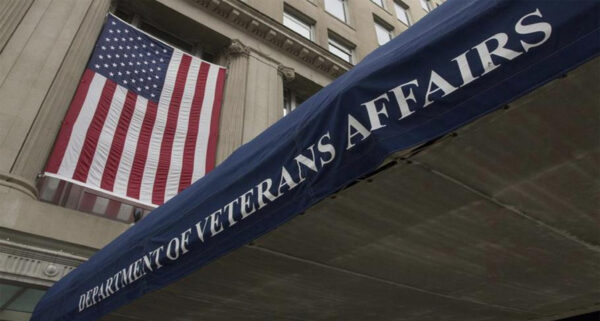
That is why the Department of Veterans Affairs interim final rule titled “Evaluative Rating Impact of Medication” sparked such immediate and forceful backlash. The rule was issued on February 17 without input from veterans’ groups and with “immediate effect,” meaning it applied to all claims or appeals filed on or after that date.  It required medical providers evaluating disabilities to consider how a veteran functions while medicated, rather than on the underlying severity and permanence of the service-connected condition.  If a treatment or medication lowered the level of disability, the rating must be based on that lower level.

This approach misunderstands both medicine and service. Medication does not erase injury. It masks symptoms, manages pain, stabilizes mental health, and in many cases introduces serious side effects that themselves limit employment, cognition, mobility, and quality of life. Measuring disability through a medicated snapshot ignores the full reality of what veterans endure every day.

More troubling still, the rule placed veterans in an impossible position. If disability ratings depend on medicated performance, veterans may feel pressured to refuse treatment, discontinue medication, or endure unmanaged symptoms to prove the seriousness of their condition. That is not a theoretical concern. Veterans routinely face scrutiny during evaluations, and even subtle incentives can shape behavior when benefits, health care access, and family stability are at stake.

Disability compensation exists to acknowledge loss, not compliance. It recognizes that service-connected conditions carry lifelong consequences regardless of how diligently a veteran pursues treatment. A policy that effectively penalizes veterans for following medical advice undermines the very purpose of the system.

The response from the veteran community reflected this reality. Tens of thousands of comments flooded the Federal Register within days. Veterans, advocates, clinicians, and service organizations raised alarms about fairness, legality, and safety. The message was clear. Veterans should never be punished for seeking care.

In response, VA Secretary Collins announced that the VA would continue collecting public comment, but the rule would not be enforced. While this pause is significant, it does not erase the broader concern, especially in light of Secretary Collins’ statement that the public was mischaracterizing the rule as having a negative effect on veterans. Rules can be proposed again. Interpretations can quietly shift. Administrative changes often move faster than public awareness.

For service members approaching separation, veterans navigating disability claims, and federal and civil servants whose careers and retirements depend on accurate medical assessments, vigilance is essential. Disability determinations frequently serve as the gateway to retirement eligibility, employment protections, health care continuity, and financial security. Policies that narrow or redefine those determinations without full transparency put lives in limbo.

Defending veterans’ rights requires more than reacting after harm occurs. It requires sustained scrutiny of regulatory changes, meaningful public engagement, and a firm insistence that medical treatment never be weaponized against those who rely on it.

The covenant between the nation and those who serve does not end when a prescription is filled. It endures precisely because service-connected injuries endure. Any policy that forgets that truth deserves to be challenged early and often.

About

The Law Offices of David P. Sheldon, PLLC, based in Washington, DC, represents service members, veterans, and federal and civil employees in matters involving military justice, disability retirement, VA benefits, federal employment law, constitutional rights, and privacy protections. The firm advocates nationally for those whose service places them at the intersection of health, employment, and federal policy.


Disclaimer

This opinion piece is provided for informational and educational purposes only and does not constitute legal advice. Individuals should consult qualified legal counsel regarding their specific circumstances.


References

Official Government Source

Evaluative Rating Impact of Medication (Federal Register, Interim Final Rule)
https://www.federalregister.gov/documents/2026/02/17/2026-03068/evaluative-rating-impact-of-medication

News Coverage

VA halts implementation of controversial disability rating rule following backlash (Military Times)
https://www.militarytimes.com/veterans/2026/02/19/va-halts-implementation-of-controversial-disability-rating-rule-following-backlash/

VA to consider medical management of symptoms in determining disability ratings (Military Times)
https://www.militarytimes.com/veterans/2026/02/18/va-to-consider-medical-management-of-symptoms-in-determining-disability-ratings/

In rare move, Veterans Affairs pulls back on controversial disability rule (Washington Post)
https://www.washingtonpost.com/politics/2026/02/19/veteran-affairs-disability-rule/

Veterans and Advocacy Statements

VFW Demands VA Rescind Disability Rating Rule Change (Veterans of Foreign Wars)
https://www.vfw.org/media-and-events/latest-releases/archives/2026/2/vfw-demands-va-rescind-disability-rating-rule-change

DAV statement on halting of VA rule (Disabled American Veterans)
https://www.dav.org/learn-more/news/2026/dav-statement-on-the-halting-of-va-rule/

NCOA Formal Opposition to VA Medication Based Ratings Rule
https://www.ncoausa.org/news/ncoa-submits-formal-opposition-to-va-ifrr

Additional Background

New VA Rule Ties Disability Ratings to Medicated Symptoms (Military.com)
https://www.military.com/benefits/veterans-health-care/new-va-rule-ties-disability-ratings-medicated-symptoms-drawing-fire-veterans-groups.html

Judge Reasserts the First Amendment and Protects Veteran Voices

Defending the Constitution

In a striking rebuke to the Pentagon’s attempt to punish Senator Mark Kelly, U.S. District Judge Richard Leon blocked the Defense Department from reducing Kelly’s retired rank and pension, a decision that should reverberate well beyond this one lawsuit.

At the heart of Judge Leon’s order is a simple constitutional truth: free speech is not a conditional benefit to be revoked when the government disagrees with the message. Leon’s ruling affirms that principle in the face of an unprecedented effort to penalize a retired service member for publicly urging troops to refuse unlawful orders.

Leon made clear in earlier hearings that this isn’t just an ordinary dispute about retirement benefits. He questioned Pentagon lawyers about their legal foundation, noting pointedly that what the government was asking the court to endorse was something “the Supreme Court…has never done.” That skepticism was not just procedural; it was a signal that the framing of this case threatened long-established First Amendment norms.

By granting Kelly’s motion for a preliminary injunction, Leon has done more than protect one senator’s livelihood. He has sent a message to the executive branch: You cannot weaponize military status to chill speech that is at the core of democratic debate. The government’s effort to reduce Kelly’s rank and retirement pay for exercising his right to speak plainly about unlawful orders was, as Leon’s ruling implies, exactly the sort of retaliatory overreach our constitutional framework is designed to prevent.

In a political climate where disputes over national security and military policy are intense and often divisive, judges must be guardians first of the Constitution, not partisans of the outcry. Judge Leon’s decision, grounded in fundamental First Amendment principles, reminds us that veterans do not surrender their civic voice when they leave active service.

Judge Leon closed his opinion with this sage advice:

“ Rather than trying to shrink the First Amendment liberties of retired, Secretary Hegseth and his fellow Defendants might reflect and be grateful for the wisdom and expertise that retired servicemembers have brought to public discussions and debate on military matters in our Nation over the past 250 years. If so, they will more fully appreciate why the Founding Fathers made free speech the first Amendment in the Bill of Rights! Hopefully this injunction will in some small way help bring about a course correction in the Defense Department’s approach to these issues.“