
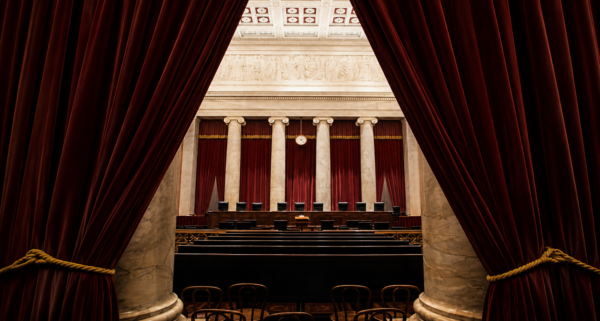
Former Navy Officer Seeks Supreme Court Review of D.C. Circuit Decision Interpreting 10 U.S.C. § 624(d)(5)
The Law Offices of David P. Sheldon, PLLC filed a Petition for Writ of Certiorari asking the Supreme Court of the United States to review a significant military personnel law case involving the interpretation of federal promotion statutes, Congressional authority over the armed forces, and the constitutional balance between the legislative and executive branches.
The petition was filed on behalf of Lieutenant Ernest F. Mitchell, U.S. Navy, who challenges decisions by the Board for Correction of Naval Records, the U.S. District Court for the District of Columbia, and the U.S. Court of Appeals for the D.C. Circuit concerning the Navy’s handling of his promotion to Lieutenant Commander. The petition presents a single constitutional question: whether the courts improperly nullified Congress’s express statutory limitation on military promotion delays contained in 10 U.S.C. § 624(d)(5).
The Supreme Court filing follows the D.C. Circuit’s March 13, 2026 decision affirming the lower court’s ruling that Lieutenant Mitchell was not promoted “by operation of law” despite remaining on the promotion list beyond the statutory 18-month limitation established by Congress.
A Question Affecting Military Officers Across the Armed Forces
At the heart of the petition is a straightforward question with potentially broad implications for military personnel:
Congress enacted a statute providing that an officer’s appointment “may not be delayed” beyond eighteen months after the date the officer otherwise would have been appointed. Lieutenant Mitchell argues that when the government exceeds that statutory deadline, Congress intended the promotion process to conclude and the appointment to take effect. The petition contends that the D.C. Circuit’s interpretation effectively reads the statutory deadline out of existence and leaves military officers without a meaningful remedy when the government violates the law.
The petition further argues that the case presents an important separation-of-powers issue involving Congress’s constitutional authority to “make Rules for the Government and Regulation of the land and naval Forces.”
Representation
Lieutenant Mitchell continues to be represented by David P. Sheldon, founder of the Law Offices of David P. Sheldon, PLLC.
What the Legal Team Expects to Advance
The Supreme Court petition seeks more than relief for a single officer. The case presents an opportunity for the Court to clarify:
- Whether Congress may impose enforceable deadlines on military promotion delays;
- Whether courts may effectively nullify statutory protections by finding no remedy for an acknowledged violation;
- The proper balance between Congressional authority over military personnel systems and executive appointment powers;
- The rights of service members who have been nominated, Senate-confirmed, and then subjected to administrative delays beyond limits established by federal law.
The case presents a recurring question affecting thousands of military officers whose careers, promotions, retirement calculations, and future opportunities may depend upon the faithful application of federal promotion statutes. The petition argues that only the Supreme Court can provide uniform guidance on the meaning and enforceability of 10 U.S.C. § 624(d)(5).
Statement from the Legal Team
“This petition asks whether statutory protections enacted by Congress have real force or merely symbolic value,” said David P. Sheldon. “When Congress establishes a deadline governing military promotions, service members deserve to know whether that deadline means what it says. We believe this case presents an important constitutional question worthy of Supreme Court review.”
About the Law Offices of David P. Sheldon, PLLC
The Law Offices of David P. Sheldon, PLLC represents military service members, veterans, federal employees, and uniformed service professionals worldwide in courts-martial, military administrative proceedings, correction board matters, security clearance cases, federal employment disputes, appellate litigation, and federal court actions.
For more information, visit www.militarydefense.com.
Disclaimer
The materials contained in this release are provided for informational purposes only and do not constitute legal advice. Filing a petition for certiorari does not guarantee Supreme Court review. Every case is unique, and prior results do not guarantee future outcomes. Reading this release does not create an attorney-client relationship.